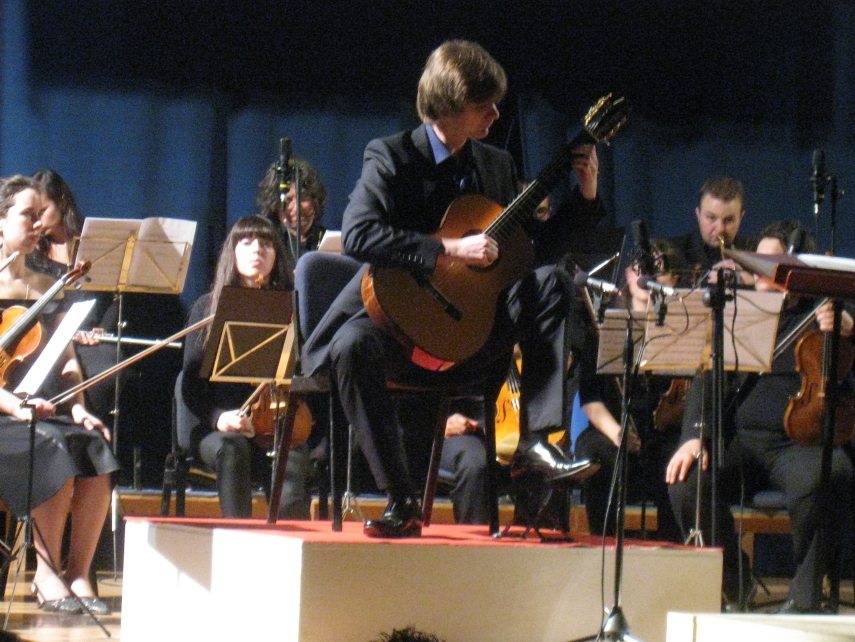
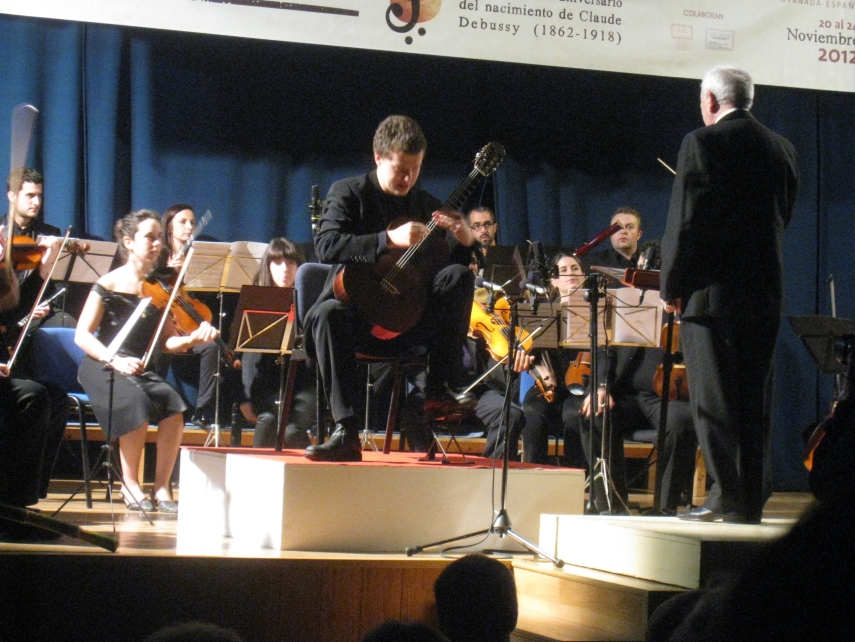
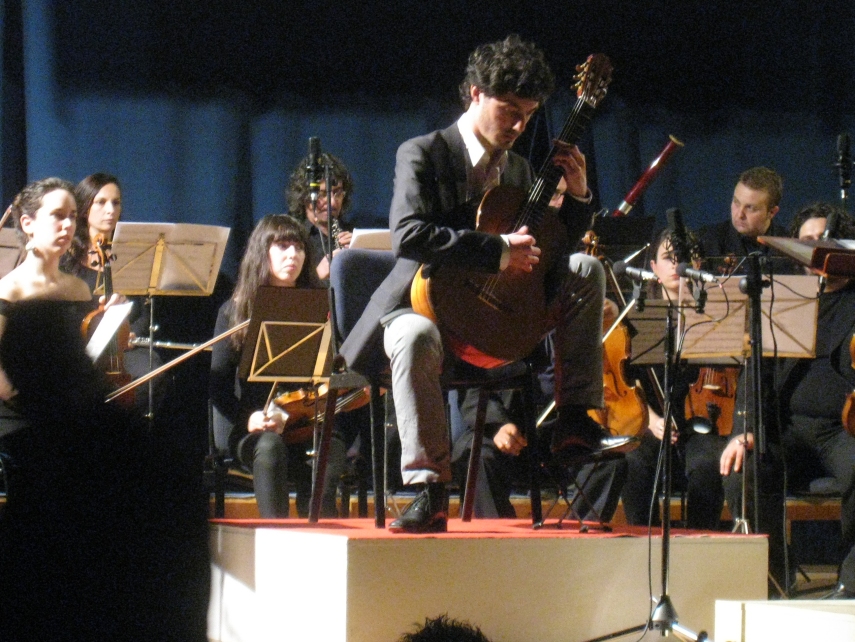
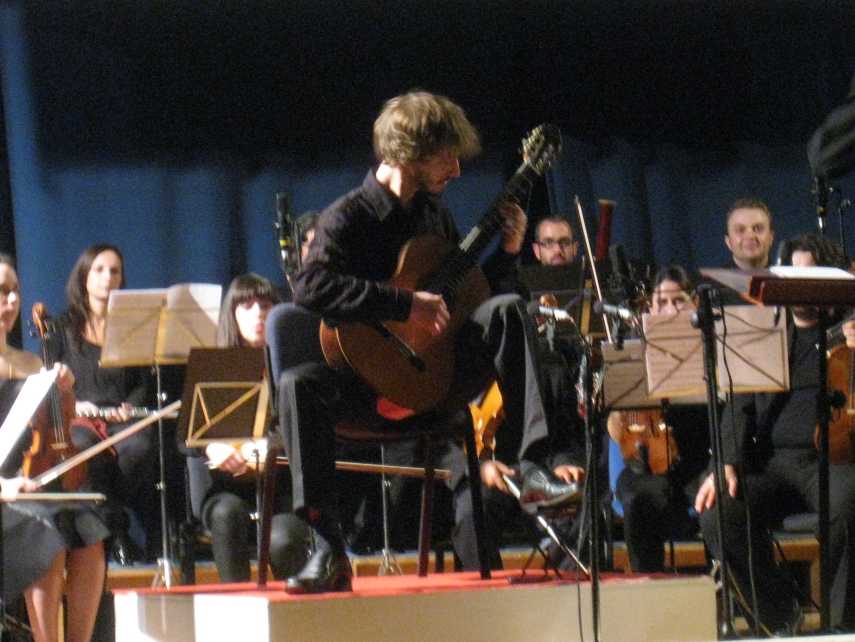
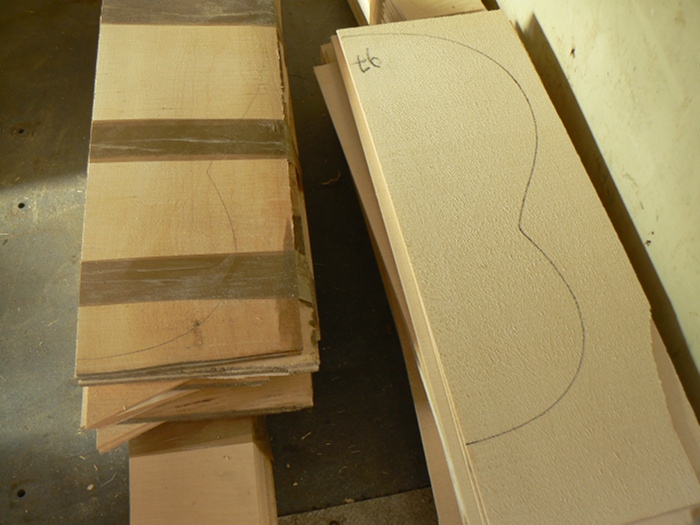
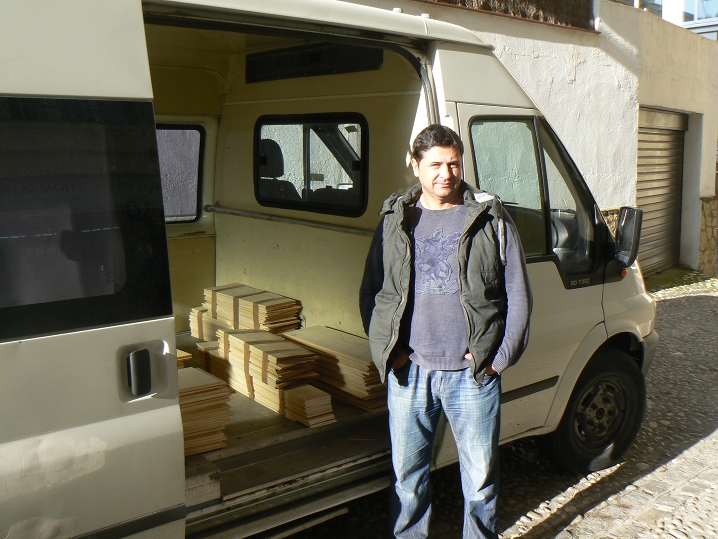
Here is the official news in Spanish. For 28 years now the town of La Herradura on the coast of Granada province has hosted a competition for guitarists under 35 which bears the name of El Maestro himself. We went down for the finals last night and heard four versions of Fantasia para un Gentilhombre by Rodrigo. I liked the Romanian Mircea Stefan Gogoncea (better sound as well as better playing) but the jury (made up of professional guitarists unlike myself) chose Gabriel Bianco from France and his Smallman. I must admit that there was a problem with the oboe during M. Bianco’s performance and he might have played better under different circumstances. As a matter of fact the piece he played after the prize ceremony was excellent. The photos were taken with no flash of course and from quite a ways back but the press got some good shots so look them up if you are interested. Second prize went to Gogoncea and third went to Anton Baranov from Russia.
One thing I found quite interesting while perusing the programme was the list of past winners. It reads like a who’s who of the classical guitar world. If there are any typos blame it on the OCR software.
CERTAMEN – 1985
1°. Desierto.
2º. D. Wulfin Lieske (Alem. Federal).
3°. D. Carlos Trepat Domínguez (España).
IICERTAMEN-1986
1°. D. José Fernández Bardesio (Uruguay).
2°. D. Wulfin Lieske (Alem. Federal).
3°. D. M°. Esther Guzmán Blanco (España).
III CERTAMEN -1987
1°. D. M. Esther Guzmán Blanco (España).
2°. D. Marco Schmidt (Alem. Federal).
3°. D. Eduardo Baranzano Fernández (Uruguay).
IV CERTAMEN -1988
1°. Desierto.
2°. D. Claudio Marcotulli (Italia).
3°. D. Geert Classens (Bélgica).
1 CONCURSO DE COMPOSICIÓN
1°. Desierto.
V CERTAMEN.1989
1°. D. Francesco Moccia (Italia).
2°. D. Eduardo Baranzano Fernández (Uruguay).
3°. D. Carmen M.a Ros Abellán (España).
D. AIex Garrobé Marqui (España).
II CONCURSO DE COMPOSICIÓN —
1°. Desierto.
VI CERTAMEN -1990
1°. D. Joaquín Clerch (Cuba).
2°. D. Francisco Cuenca Morales (España).
3°. D. José Guerola Casas (España).
III CONCURSO DE COMPOSICIÓN
1°. Zul de D. José Manuel Fernández (España)
VII CERTAMEN -1991
1°. D. Edoardo Catemario (Italia).
2°. D. Fabio Pedroso Zanon (Brasil).
3°. D. José Guerola Casas (España).
IV CONCURSO DE COMPOSICIÓN
1°. Magie de D. Nuccio D’Angelo (Italia)
VIII CERTAMEN -1992
1°. Desierto.
2°. D. Satashi Oba (Japón).
3°. D. Anders Karlsson (Suecia).
D. César Hualde Resano (España).
V CONCURSO DE COMPOSICIÓN
1°. Desierto
IX CERTAMEN 1993
1°. D. Franz Halasz (Alemania).
2°. D. Denis Azabagic (Bosnia – Herzegovina).
3°. D. Zoran Dukic (Zogreb – Croacia).
VI CONCURSO DE COMPOSICIÓN
1°. Força de D. Juan A. Moreno (España)
X CERTAMEN -1994
1°. Desierto.
2°. D. Denis Azabagic (Bosnia – Herzegovina).
3°. D. Margarita García Escarpa (España).
VII CONCURSO DE COMPOSICIÓN
1°. Melisma – Jondo de D. José María Benavente (España)
Xl CERTAMEN -1995
1.° Desierto.
2º. D. Denis Azabagic (Bosnia – Herzegovina).
3.° D. Christian Saggese (Italia).
VIII CONCURSO DE COMPOSICIÓN
1°. Talea de D. José Manuel Fernández (España)
XII CERTAMEN -1996
1 .° D. Zoran Dukic (Zagreb – Croacia).
2.° D. Christiari Saggese (Italia).
D. Denis Azabagic (Bosnia).
3º. D. Michael Kujawa (Alemania).
IX CONCURSO DE COMPOSICIÓN
1°. Entoada de D. Alexandre de Faria (Brasil)
XIII CERTAMEN -1997
1°. Desierto.
2°. D. Giulio Tampalini (Italia).
3°. D. Antonio Duro Herrera (España).
D. Enrique Solinís Azpiazu (España).
X CONCURSO DE COMPOSICIÓN
1°. Regreso a Jan Mayen de D. Enrique Igoa (España)
XIV CERTAMEN – 1998
1°. D. Ricardo Jesús Gallén García.
2°. D. Christian Saggese.
3°. Desierto.
XI CONCURSO DE COMPOSICIÓN
1°. Sonata Porteña de D. Luis Eduardo Bravo (Argentina)
XV CERTAMEN – 1999
1°. D. Christian Saggese (Italia)
2°. D. Dejan Ivanovic (Bosnia-Herzegovina).
3°. Desierto.
XII CONCURSO DE COMPOSICIÓN
1°. La misma Luz de Entonces de D. Marco Smaili (España)
XVI CERTAMEN – 2000
1°. D. Goran Krivocapic (Yugoslavia).
2°. D. Grzegorz Krawiec (Polonia).
3°. D. Mauricio Díaz Alvarez (México).
XIII CONCURSO DE COMPOSICIÓN
1°. Five Pieces de D. Virginio ZocateIli (Italia)
INTERPRETACIÓN : D. Dejan lvanovic (Bosnia-Herzegovina).
XVII CERTAMEN – 2001
1°. D. Dejan Ivanovic (Croacia)
2°. D. Ramón Carnota Méndez (España).
3°. D. Jérerny Jouve (Francia).
XIV CONCURSO DE COMPOSICIÓN
1°. El Jardín de Lindaraja de D. Eduardo Morales Caso (Cuba)
INTERPRETACIÓN : D. José Javier Navarro Lucas (España).
XVIII CERTAMEN – 2002
1°. Desierto
2.° D. Roman Viazovskiy (Ucrania).
3.° D. Fotis Koutsothodoros (Grecia).
D. Ramón Carnota Méndez (España).
XV CONCURSO DE COMPOSICIÓN
1°. Westward Voyage de D. James Lentini (Estados Unidos)
INTERPRETACIÓN: D. Ander Ciernen Oien (Noruega)
XX CERTAMEN – 2003
1°. D. Ander Ciernen Oien (Noruega).
2°. D. Rarnón Carnota Méndez (España).
3°. D. Roman Viazovskiy (Ucrania)
XVI CONCURSO DE COMPOSICIÓN
1°. Hechizos de D. Mauricio Arenas Fuentes (Chile) INTERPRETACIÓN: D. Rornan Viazovskiy (Ucrania)
XX CERTAMEN – 2004
1°. Desierto.
2°. D. Alen Garagic (Bosnia).
D. Marco Tarnayo (Cuba).
3°. D. Isabel Montesinos (España).
D. David Martínez García (España).
XVII CONCURSO DE COMPOSICIÓN
1°. Alter Ego 1 de D. Evis Sarnrnoutis (Chipre)
PREMIO LEO BROUWER: D. Jan Depreter (Bélgica)
XVIII CONCURSO DE COMPOSICIÓN – 2005 1°. Retorna de D. Javier Farías Caballero (Chile)
XXII CERTAMEN – 2006
1°. D. Andrey Parfinovich (Rusia).
2°. Desierto.
3°. D. Shani Invar (Israel).
XIX CONCURSO DE COMPOSICIÓN
1°. Crornático de D. Jorge Miguel González (España)
PREMIO LEO BROUWER: D. Andrey Parfinovich (Rusia)
XXIII CERTAMEN – 2007
1°. D. Bertrand Pietu (Francia)
2°. D. Esteban Espinoza Norarnbuena (Chile)
3°. D. Juan Ignacio Rueda (España)
D. Dirnitri lllarionov (Rusia)
XX CONCURSO DE COMPOSICIÓN
lº. Homenaje a Frank Martin de D. Antonio Domínguez Buitrago
(España)
PREMIO LEO BROUWER: D. Alesandro Benedetelli (Italia)
PREMIO JJ.MM. D. Andrea González Caballero (España)
XXIV CERTAMEN – 2008
1º. D. Otto Tolonen (Finlandia)
2°. D. Gustavo Costa (Brasil)
3°. Dña. Paola Requena Toulouse (España) D. Ah Arango Marcano (Cuba)
XXI CONCURSO DE COMPOSICIÓN
1°. Temple y Puya de D. Héctor González (Cuba)
PREMIO LEO BROUWER: D. Otto Tolonen (Finlandia)
PREMIO JJ.MM. : D. Jerzy Chwastyk (Polonia)
XXV CERTAMEN -2009
1°. D. Dimitri Illarionov (Rusia)
2°. D. Gustavo Costa (Brasil)
3°. Dña. Iva Nezic (Croacia)
XXII CONCURSO DE COMPOSICIÓN: Desierto
PREMIO LEO BROUWER: Jerzy Chwastyk (Polonia)
PREMIO JJ.MM. : Dña. Anna Likhacheva (Rusia)
XXVI CERTAMEN – 2010
1°. D. Emerson Salazar (Chile)
2°. D. Gustavo Costa (Brasil)
3°. D. Jerzy Chwastyk (Polonia)
PREMIO LEO BROUWER: D. Emerson Salazar (Chile)
PREMIO JJ.MM. : D. José Casallas (Colombia)
XXVII CERTAMEN – 2011
1°. D. Renato Serrano (Chile)
2°. D. Esteban Espinoza (Chile)
3°. D. András Csaki (Hungría)
PREMIO LEO BROUWER: D. Renato Serrano (Chile)
PREMIO JJ.MM. : D. Luis Guevara (Chile)
PREMIO DE COMPOSICIÓN: Desierto

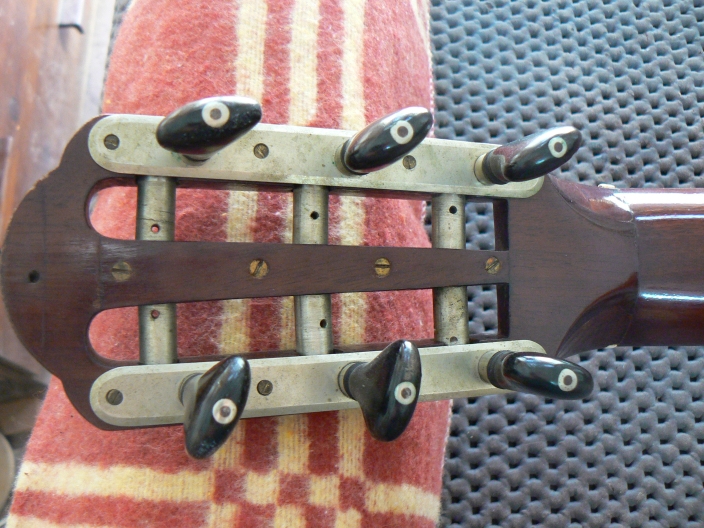
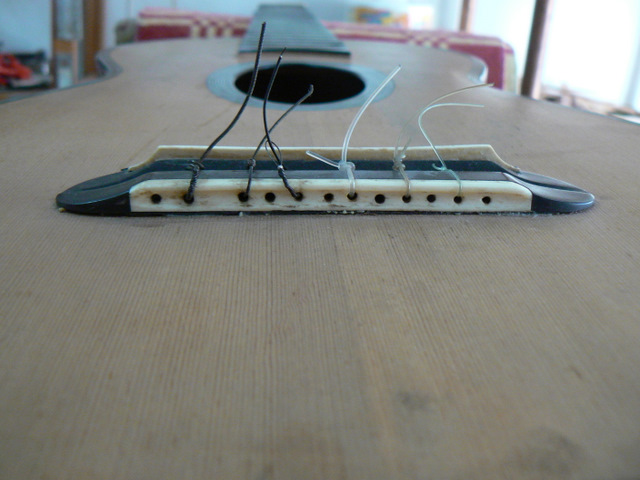 notice the placement of the second hole for the sixth string. This surprised me and made me think that the twelve holes might be a later addition by someone else, however, I found photos of other Laprévottes with the same configuration.
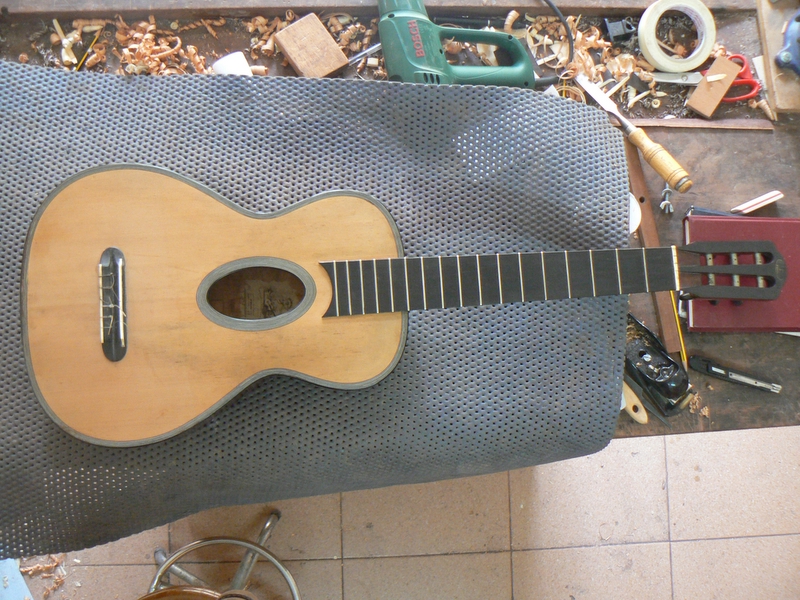
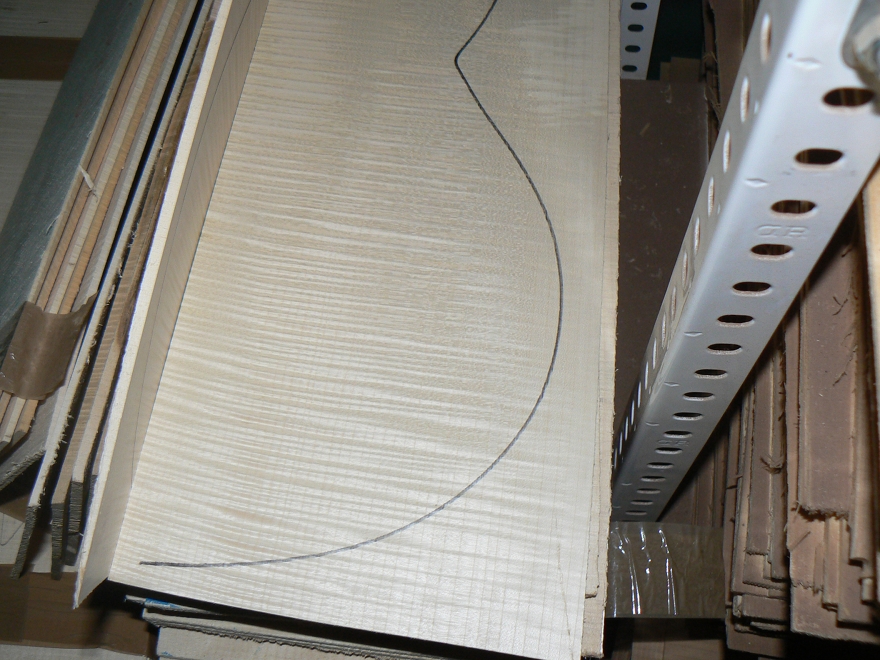
 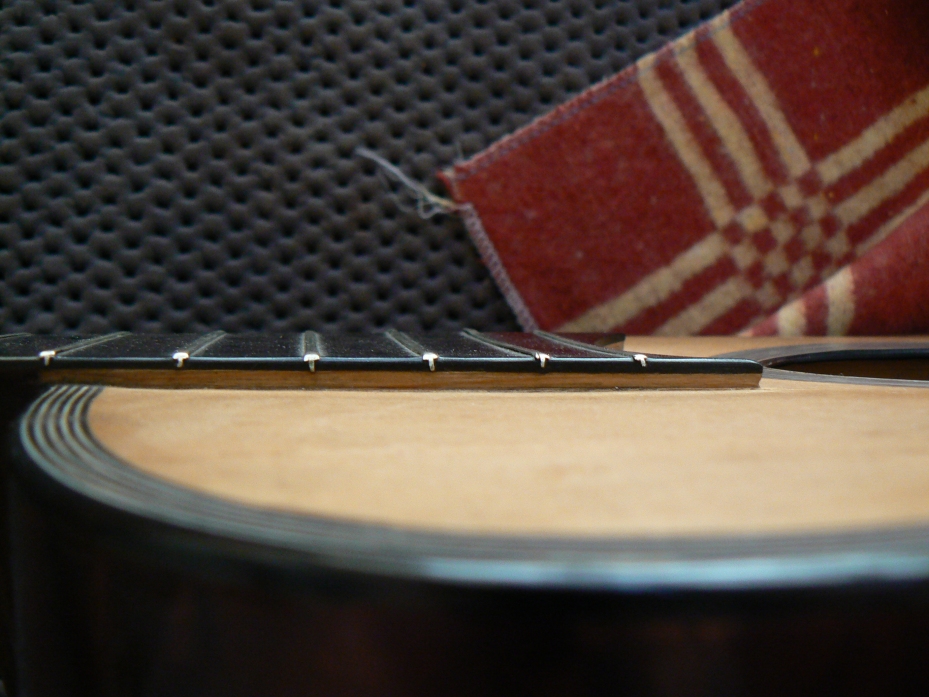 I wouldn’t call this an elevated fingerboard but it could well have given later makers the idea to raise the fretboard. As for the four violin-inspired bars, there is a maker here in Granada who claims to have developed an original system of bracing consisting of exclusively longitudinal bracing. Sorry, anything but original. Carved backs on guitars is perhaps more a feature of antiques than it is of modern heavy back-light top combinations, the violin maker turned guitar maker was quite common back in Laprévotte’s time.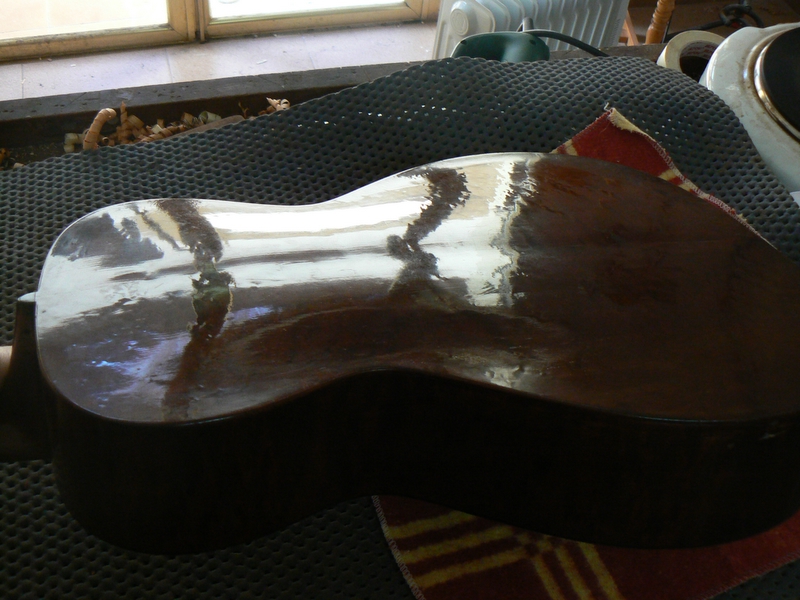
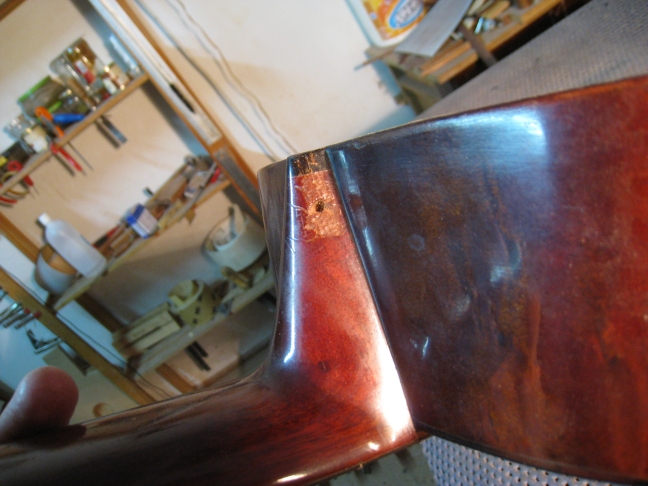 Aguado had at least one Laprévotte (the one in a museum in Madrid is purportedly his) and he is seen playing a very similar one on the cover of his method.
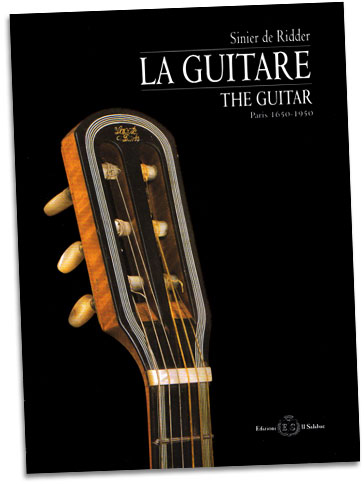
 Among those whom I contacted about this guitar there are those who suspect that this guitar might have belonged to Aguado. Other great features of this guitar include the invisible neck to head joint and the hidden machine heads, both of which were (first?) used by Lacôte.