
I am working to finish these guitars as soon as I can because I have to start on 4 Torres copies. The Torres model is what everyone seems to want these days. 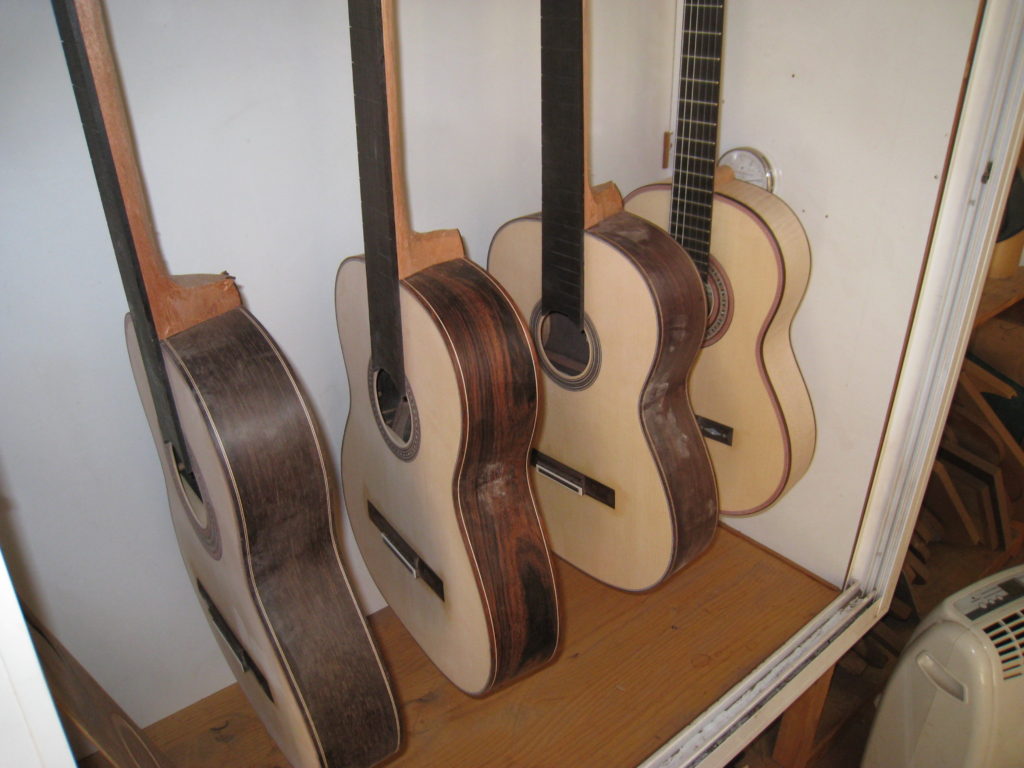
These ones are going to Germany, China, Australia and Madrid. I’m taking a little longer to finish these because of other committments but I will be prioritizing the workshop again starting March 1st.
Category Archives: Guitar making
Spain’s Musical Library
Biblioteca Musical Victor Espinós
Some things can only be found in the nation’s capital and this one was worth the visit. I was asked to do a technical investigation of a guitar housed in this library and travelled to Madrid with my measuring tools and cameras. 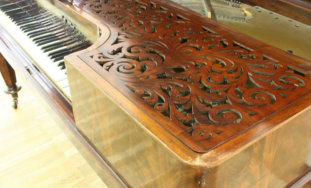 The collection of instruments is very interesting but most of the pieces are not on display due to space constraints. With some luck, when the building works are finished there will be an exhibition space.
 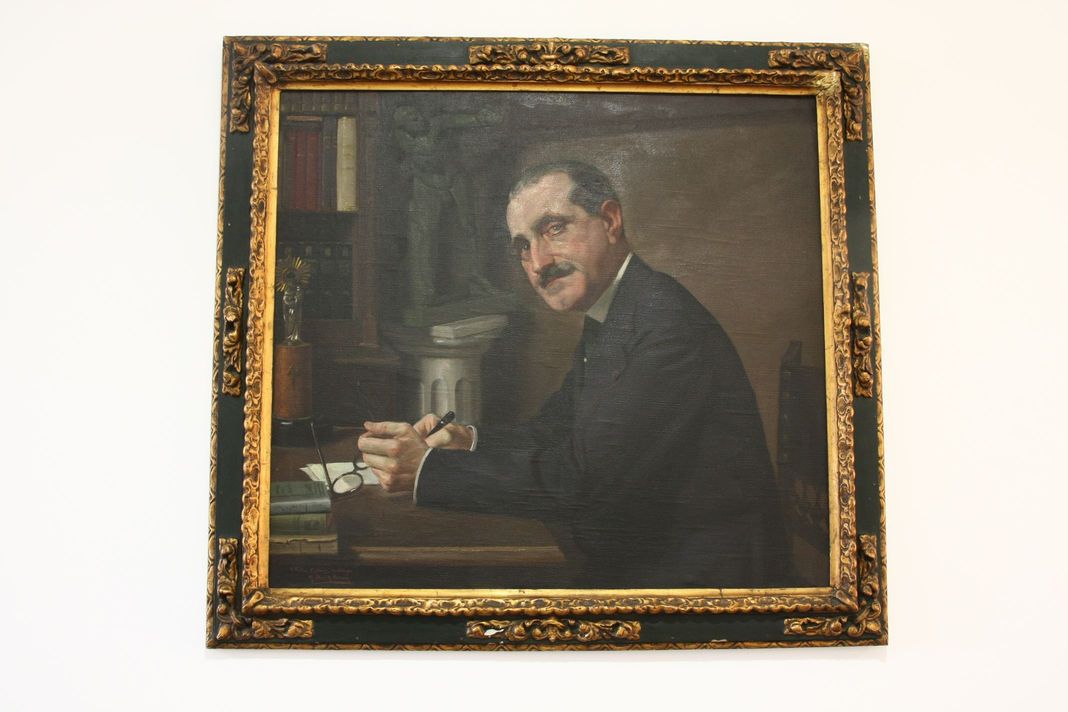 The library was founded in 1919 and Victor Espinós, the man behind it and its first director expressed its principal objective thus: “… evitar que una vocación artística, o el afán de alcanzar un noble medio de vivir, puedan verse estrangulados por la miseria”. Loosely translated it means “to allow the underprivileged to aspire to an artistic career and a noble way of life”. In addition to the enchanting staff the library has another big draw, not only do they loan sheet music and books but also musical instruments! Andrés Segovia even donated a guitar to be offered on loan. Needless to say it was never loaned to library users. It was however used for at least one concert and sent out to exhibitions.
I won’t say anything about the guitar I went to examine but the information will be published this spring and I will have something to say about it here for sure.
Pretty Guitar Books
I believe that most of you who read this blog like books about guitars as I do and one of the things we like best are nice photographs of the guitars. If you have all the other ones you had better rush and out and get this one too. I just got it the other day so I can’t say much about it but it definitely qualifies as a pretty guitar book. I have included the list of guitars that is found on the back cover and the legend which shows the measurements included.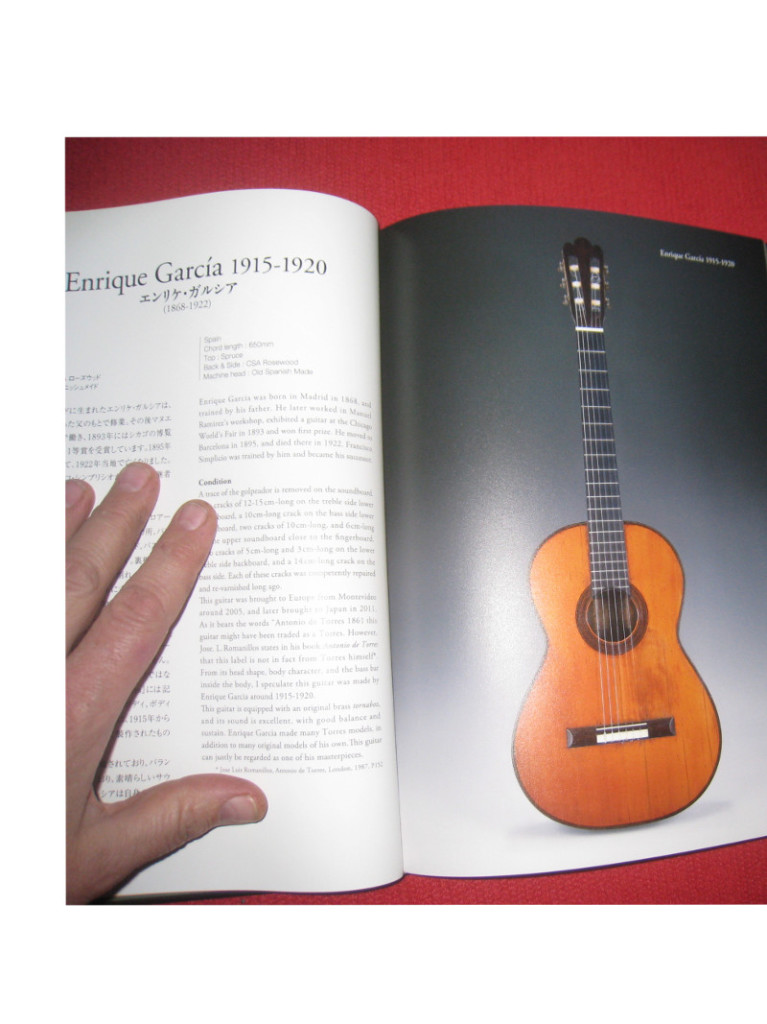
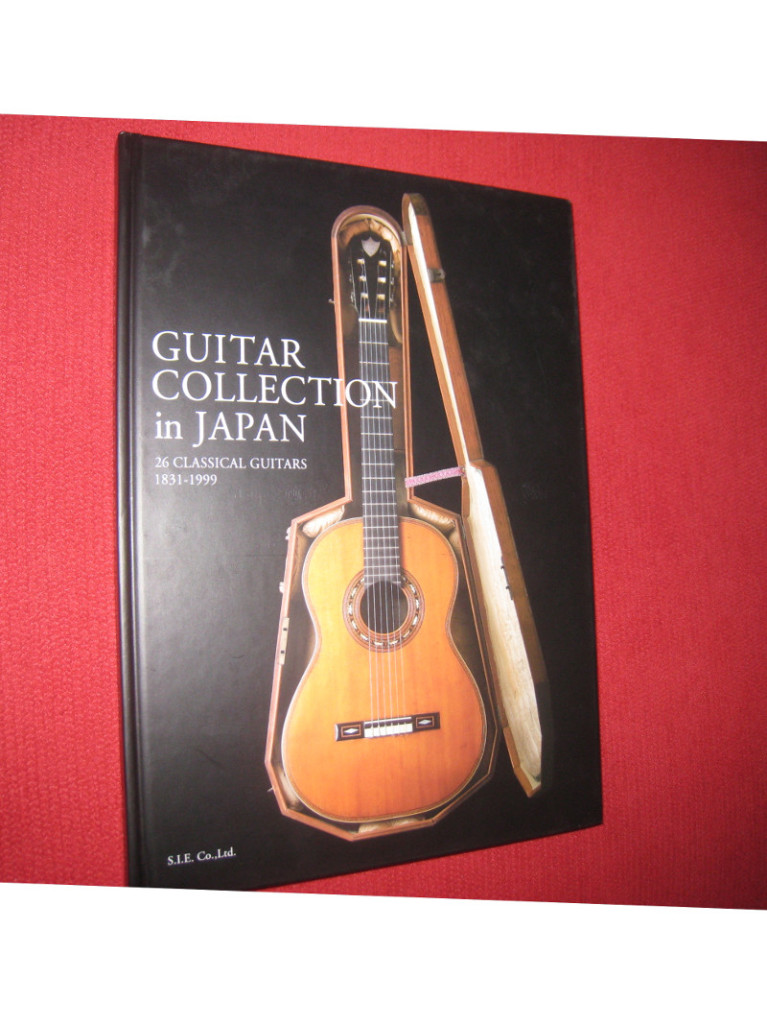
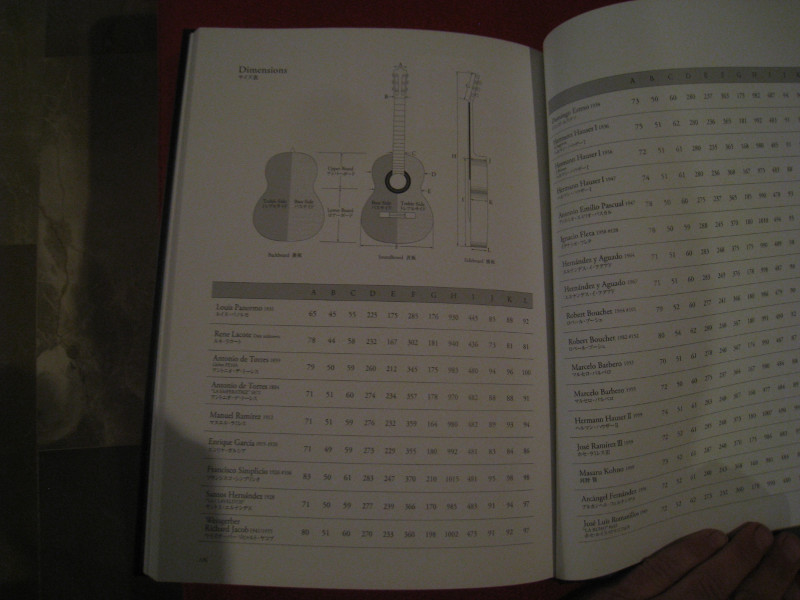
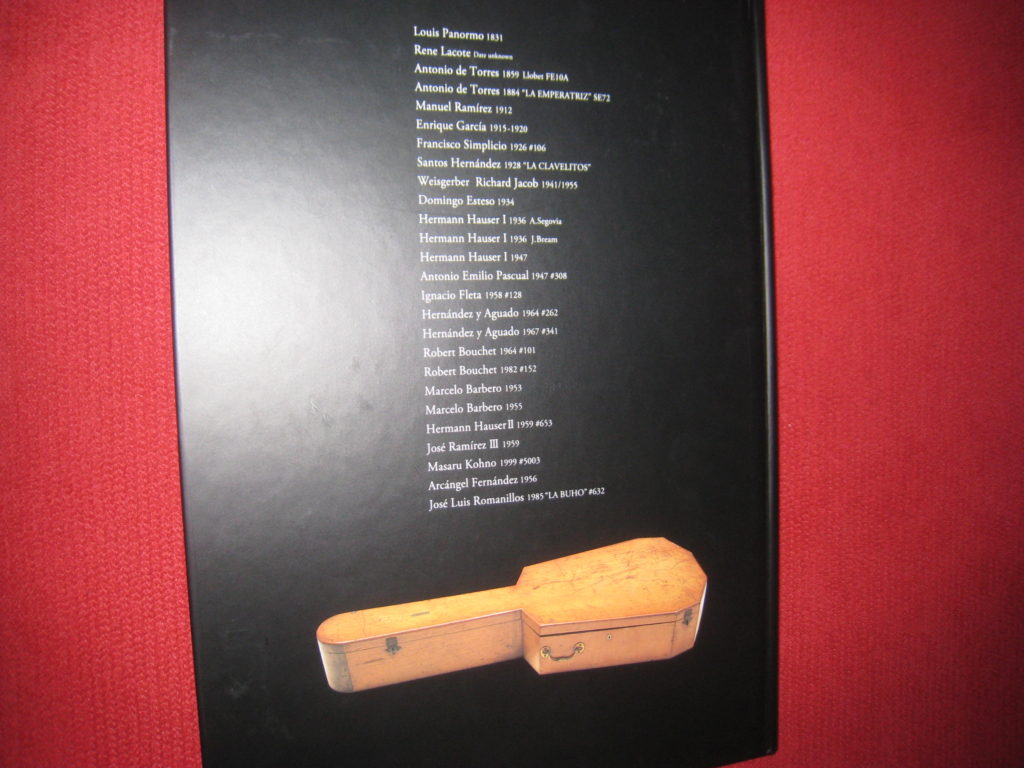 A friend got me this copy so I can’t tell you where to get one.
Three-piece backs
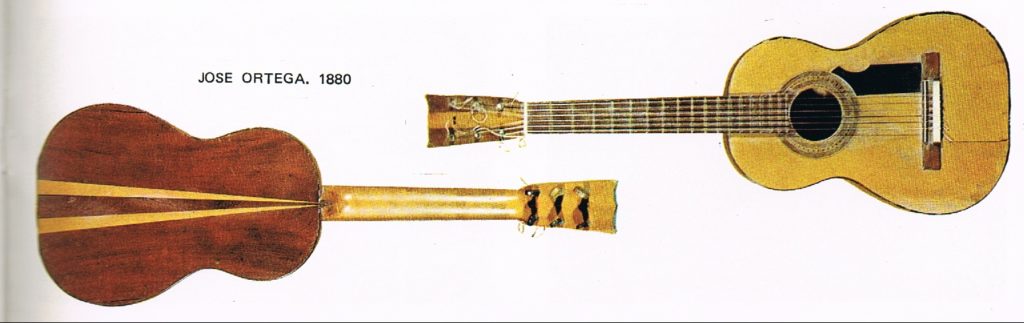
One of the characteristics of the early Granada School was the way they used darts, inserts and in general multiple pieces for their backs. Some still do it today but it is not so much a signature of Granada. Here are some photos, mostly from “Un siglo de la guitarra granadina” by Manuel Cano, a sixteen page supplement from 1975. One must assume that these backs were composite for economic reasons especially given the hard times in Andalucia back then but many of them are so nicely laid out that a lay-person would surely never consider that possibility.
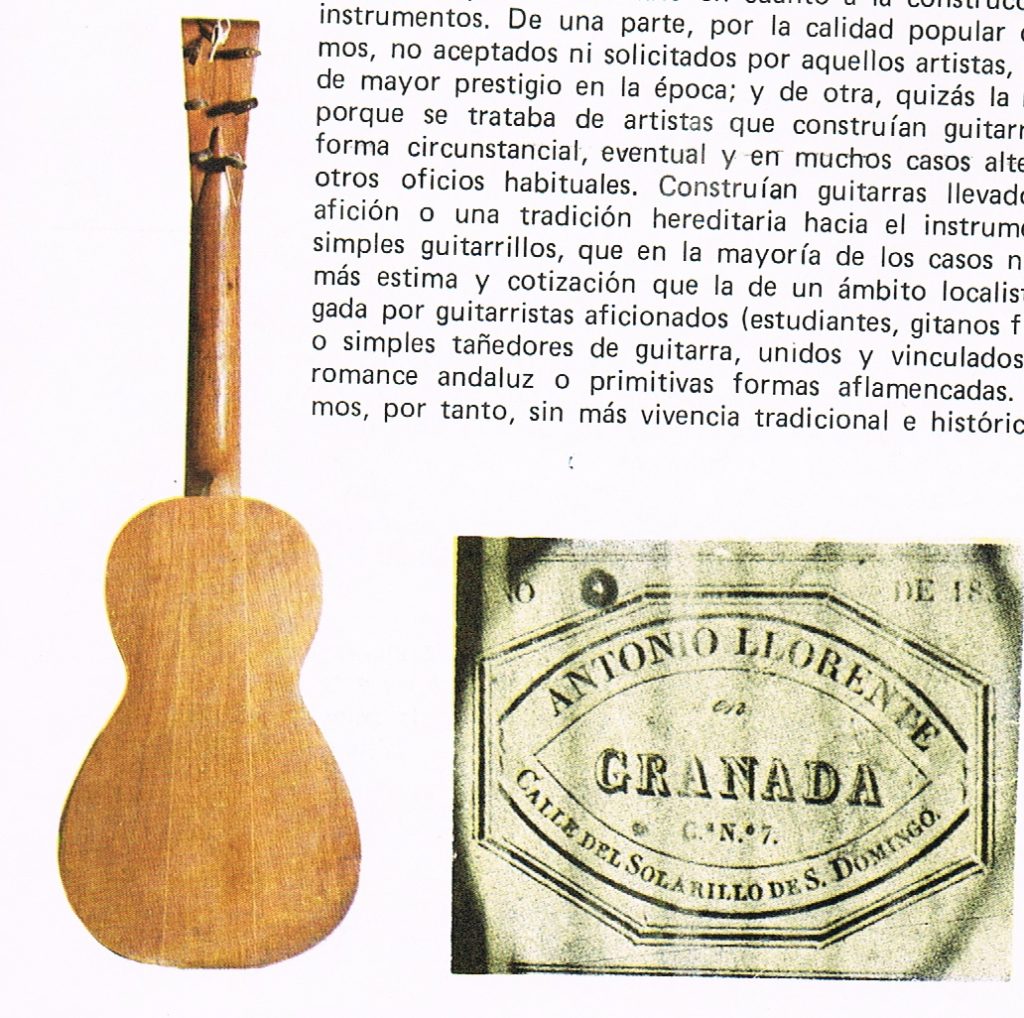
Antonio Llorente 1835

Agustín Caro 1820
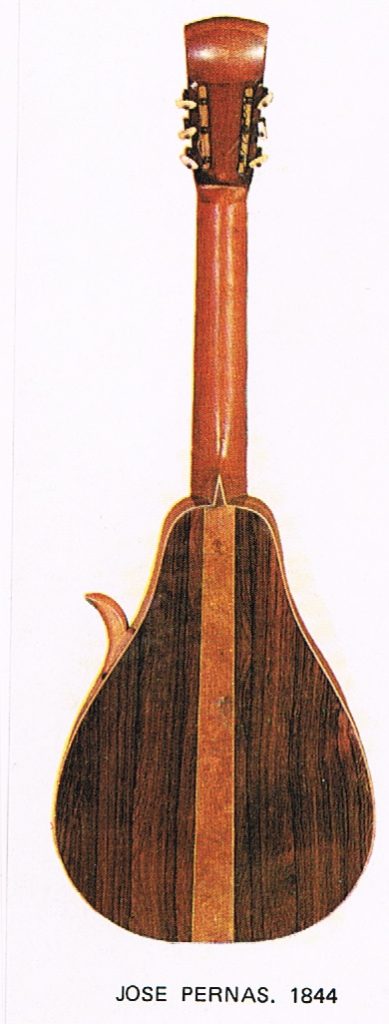
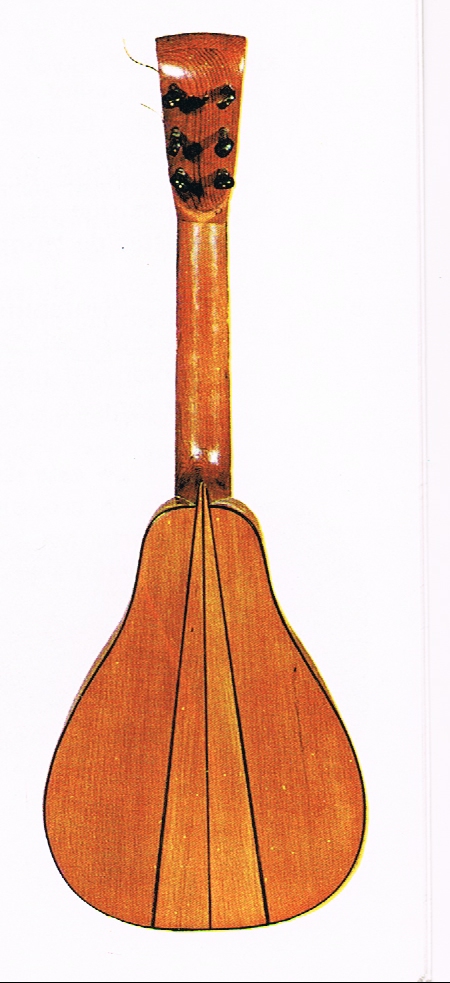
José Pernas 1859
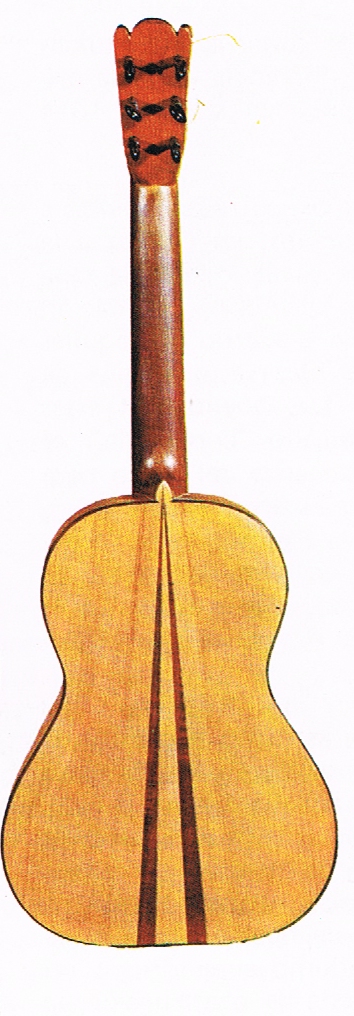
José Pernas 1865
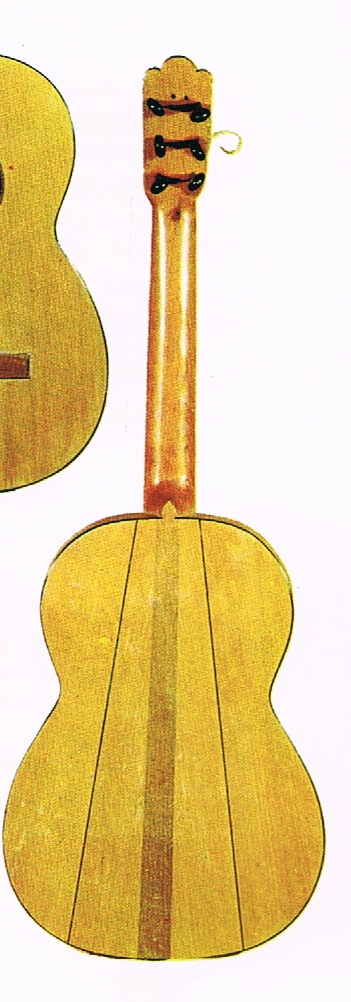
Benito Ferrer 1891
Rondalla and the traditional spanish strings
 The most common musical formation 30 years ago in this part of Spain was the “rondalla”, a group of players using bandurrias, laudes and guitars. The guitar was of course the rythmic accompaniment and the smallest (bandurria) was the the solo voice. Dances, parties and any social event would see at the very least a group of three players and in the case of a concert there might be as many as fifty. The larger groups often had a few bass guitars too. Today, choirs, orchestras and marching bands have become more common but you can still see groups, recordings and even festivals dedicated to the spanish string trio.
The relationship between these three instruments was a very important one also for the guitar-maker. Years ago everyone started out building all three instruments but today very few makers build fine bandurrias and laudes. Very few musicians are looking for a bandurria that costs in the thousands of Euros.
The book that I talk so much about tells the story of Benito Ferrer who played the bandurria for dances and how that led him to starting a workshop which in a way resulted in the consolidation of the Granada School of Guitar-making.
The trade has changed in many ways over the years and this is just one of the things that has been lost in the specialization. The older guitar-makers here in Granada are fond of telling us how a guitar-maker must know how to choose a standing tree, fell it, cut it up to dry, maximize the number of sets and then store them for seasoning. Of course these days very few have that luxury or knowledge. One of the reasons for the excellent tradition in Granada is that almost all of the makers who started in the 70s or earlier came from wood-working trades, specifically cabinet-making.