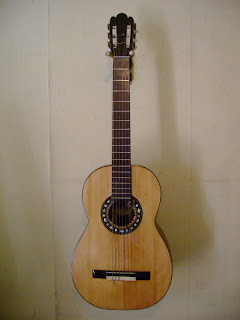
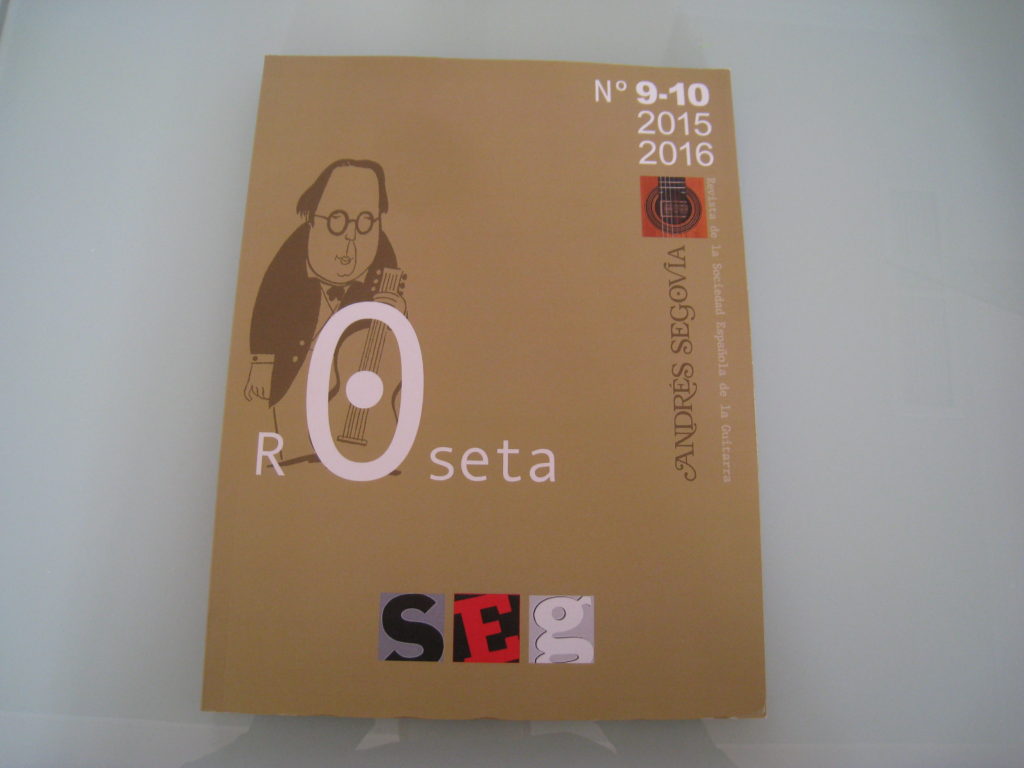
 This story starts with the discovery by Javier Riba of a Vicente Arias guitar in Granada and his subsequent visit to my workshop for my impressions of the guitar. My examination of the guitar and subsequent refret of the guitar led to two things, a copy of the guitar made by myself and an article in the Spanish Guitar Society’s (SEG) journal “Roseta” authored by Javier Riba and myself. This is one of the many reasons Leopoldo Neri asked me to collaborate on this year’s monographic issue on Segovia for Roseta. Here is the table of contents so that you can see just how interesting this issue is.
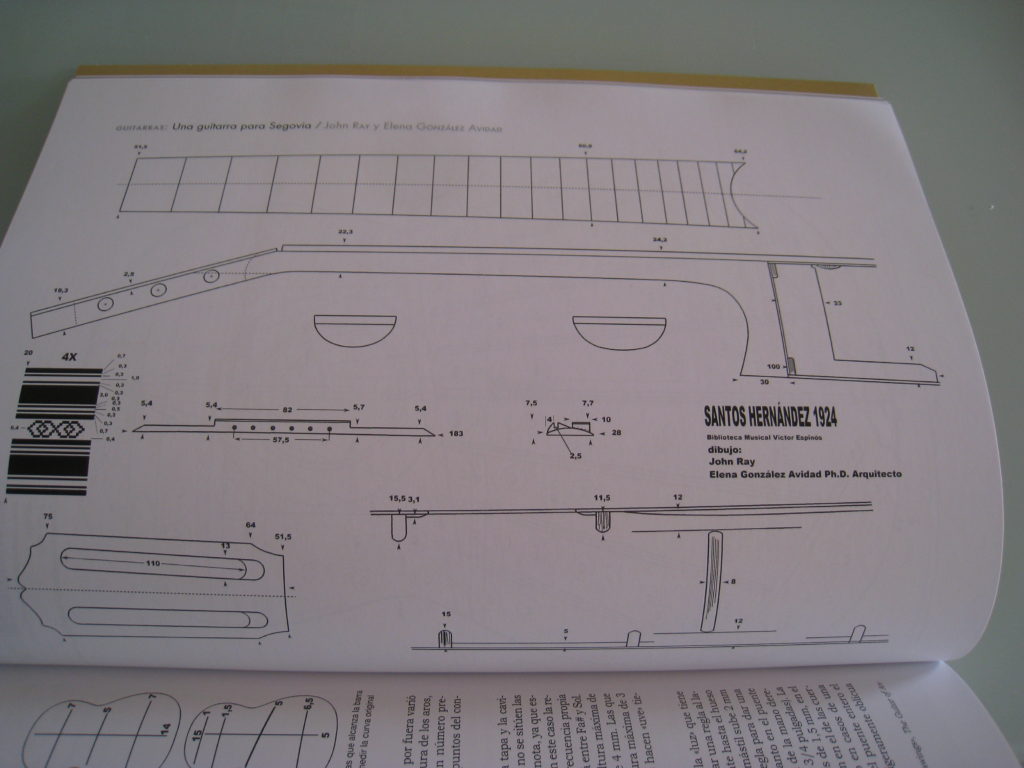
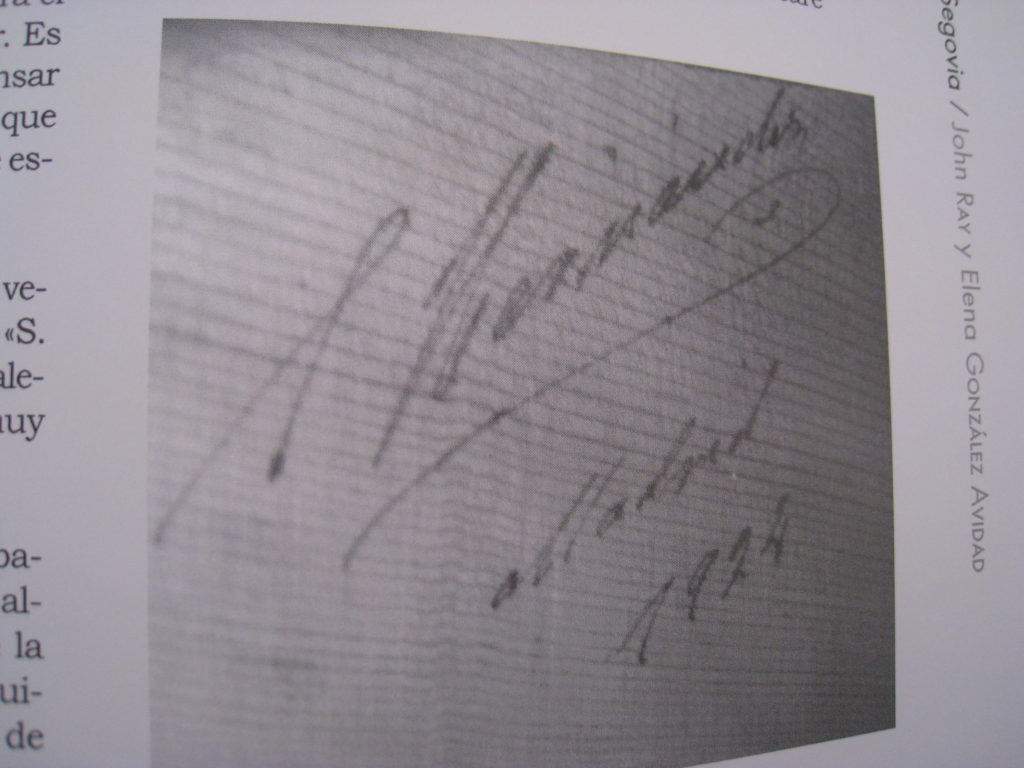
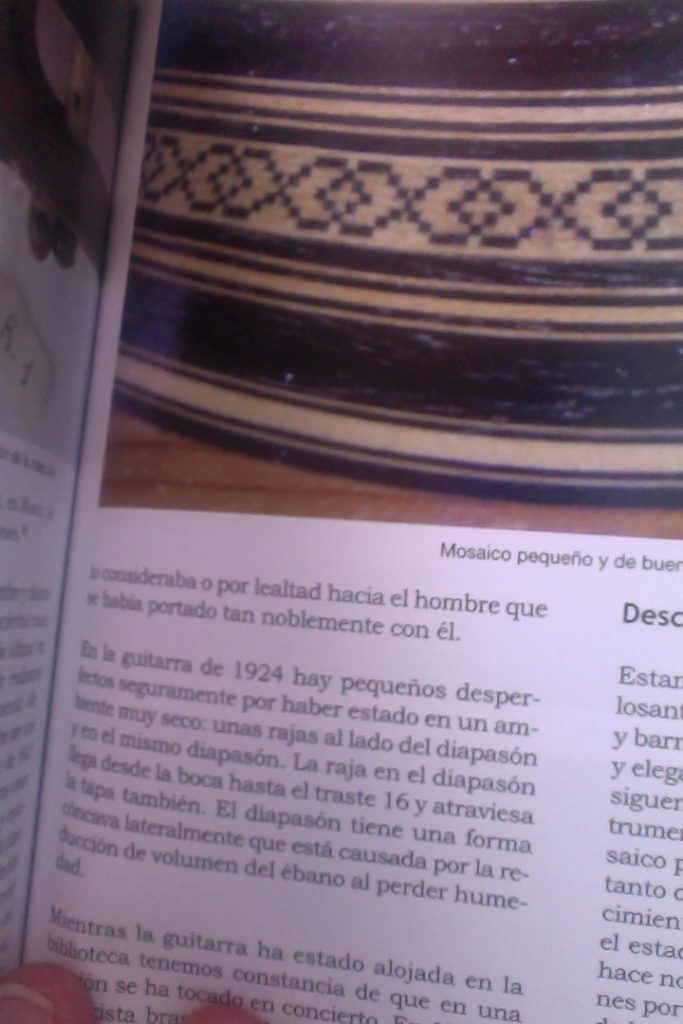
 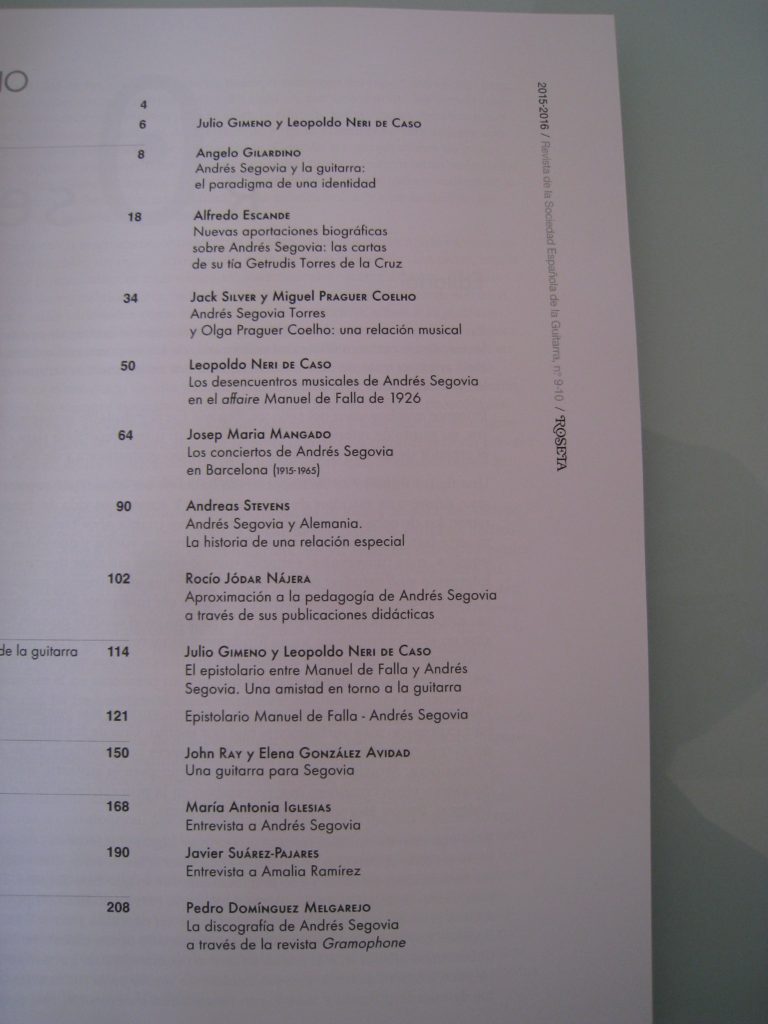 Sorry, only available in Spanish. In september of 2014 and thanks to the information of Julio Gimeno, I decided on the 1924 Santos in the collection of the Biblioteca Musical “Victor Espinós” in Madrid. This guitar was donated by Segovia to the library in 1932. I was able to learn a little about Santos, Segovia’s true opinion of him and a lot about this particular guitar. Just to give the article a bit more substance I decided to draw a full-size plan and include it in the article. One full day with my specialty tools turned out not to be enough and i had to go back to Madrid at a later date to fill in a few blanks which came up after I started building my first copy. There is nothing like an acid test to tell you what you are missing. As with anything worthy, this issue took a long time to put together but it is finally here. The magazine itself has a copy of the plan at page size just for illustration but not nearly so useful as the full-size ones.
The plan I drew is the property of the SEG so I only have permission to send it to readers of this issue. Once you have your issue of Roseta you can write to me and I will send you the file which will allow you to print the plans. johnguitar(at)johnguitar.com The file was designed to be printed “as is” with no adjustments necessary although it never hurts to use a ruler to check the x and y lines on each page. My co-author Elena González made the final drawing using drafting software.
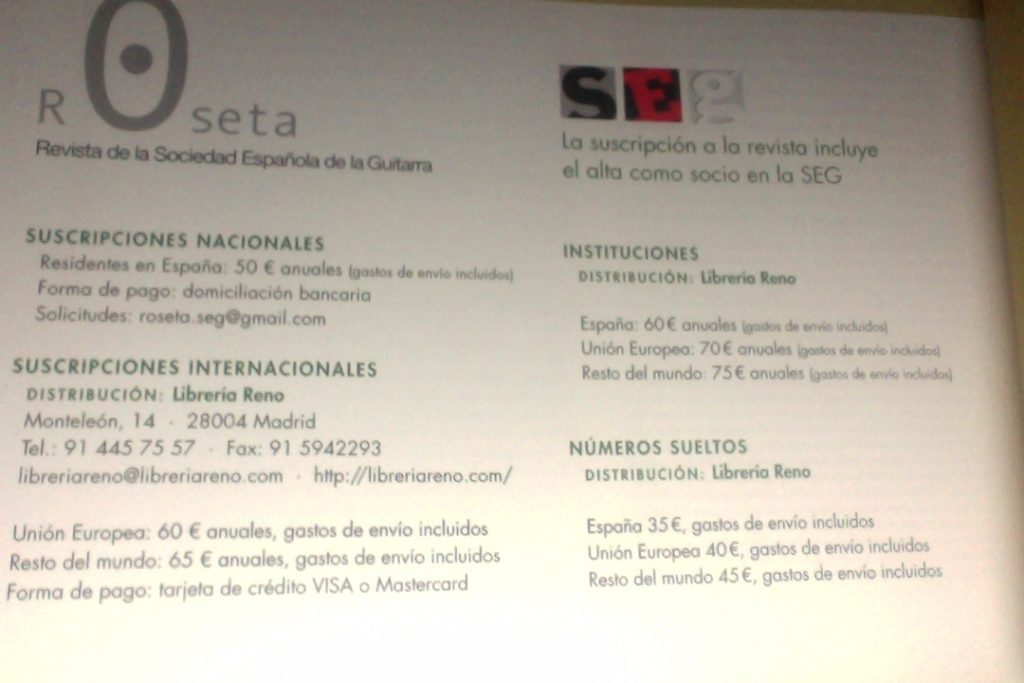 Copies can be ordered from the Reno bookshop in Madrid or you can become a member of the SEG and receive the issues as they come out in return for your membership fee. This is a double issue so the price is higher than usual. I have already made a copy of this guitar and I can say that the thicknesses and measurements of this guitar work very well. I am working on the fourth copy now and I think I will be making this model for many years to come.