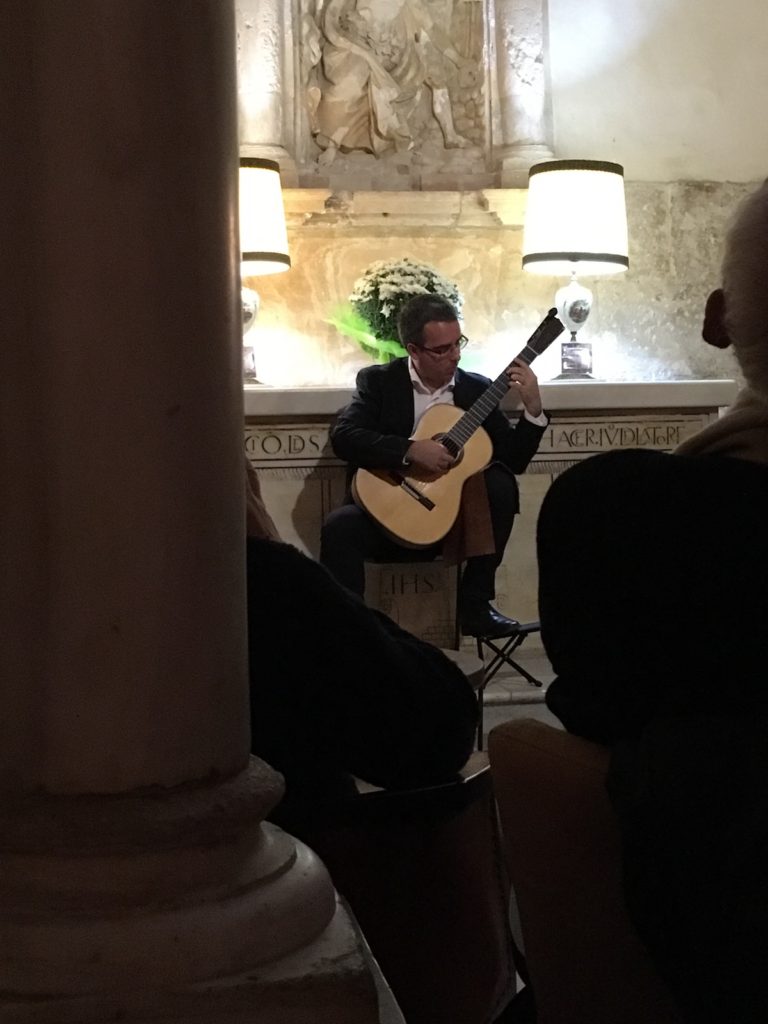
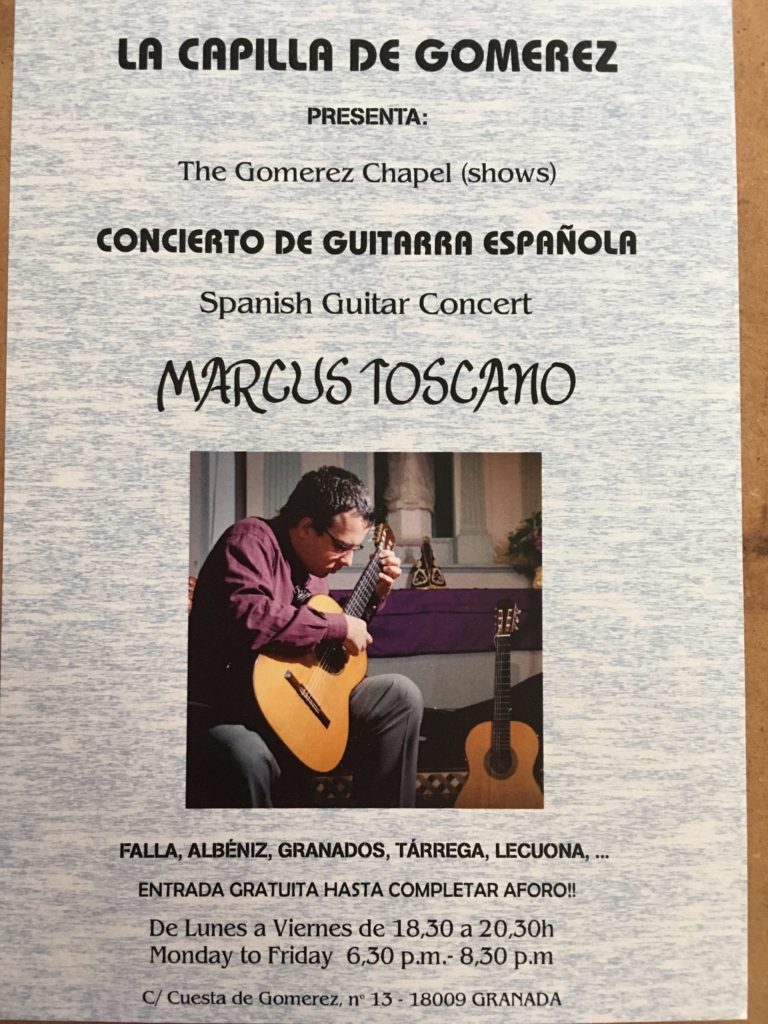
 Marcus Toscano is a Brazillian guitarist who moved to Granada two or three years ago and has been filling the city with music since then. Recently he began performing at the Palacio de Gomerez near Plaza Nueva with a spanish repertoire and lately on a Marcelo Barbero guitar. In October he started an exciting series of concerts which he will play on guitars made by Granada makers. The first one was on a Juan Miguel Carmona in October and this month he will play on one of mine on December 10th. I have included a video which we recorded in my workshop earlier this year on a copy of Santos Hernández. Torre Bermeja by Albeniz.
José Ángel Chacón Tenllado
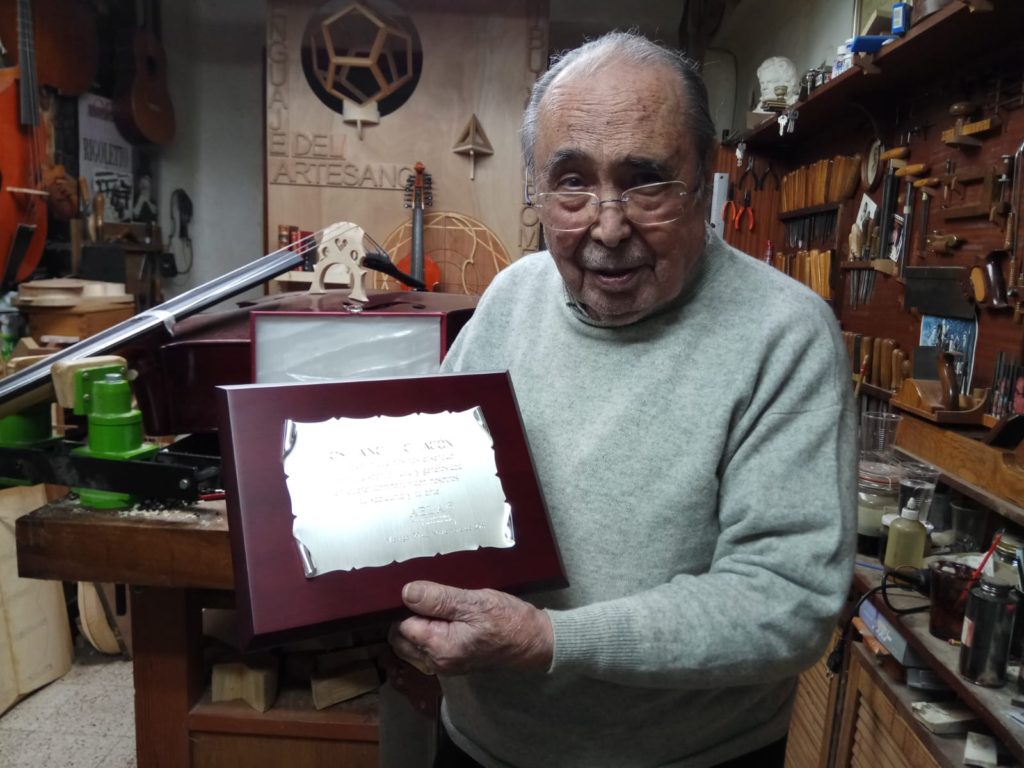 It’s one thing to be honored by the town hall, the provincial government or the powers that be but another thing entirely to have your peers recogise you and your work while you are still able to do it. The Spanish association of Luthiers and Bow-makers (AELAP) pays hommage to José Ángel Chacón Tenllado today. Chacón, in addition to being a great luthier, created a school of lutherie in Málaga and started many young people on the road to a successful career in lutherie. I was one of those eager students many years ago.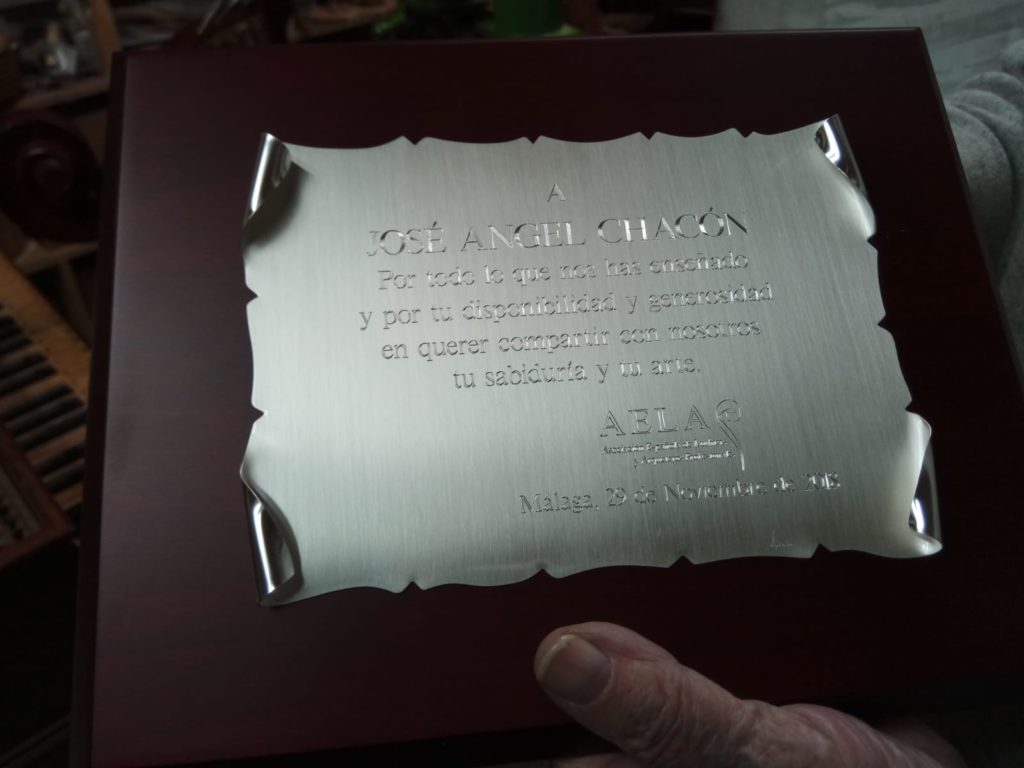
Over the years José Ángel Chacón has received awards such as the Silver medal of the Fine Arts from the spanish government, the first Master Artisan title to a luthier from the regional andalusian government and was the first luthier to serve in the Andalusian Artisan Committee. He has taught at the University of Granada, has written several books about lutherie, has served as president of AELAP and is now honorary president. However, the true testament to his human quality is the number of great instruments, restauraciones, students, friends and pure passion that we see around him to this day. Thank you maestro.
Juan Román Padilla
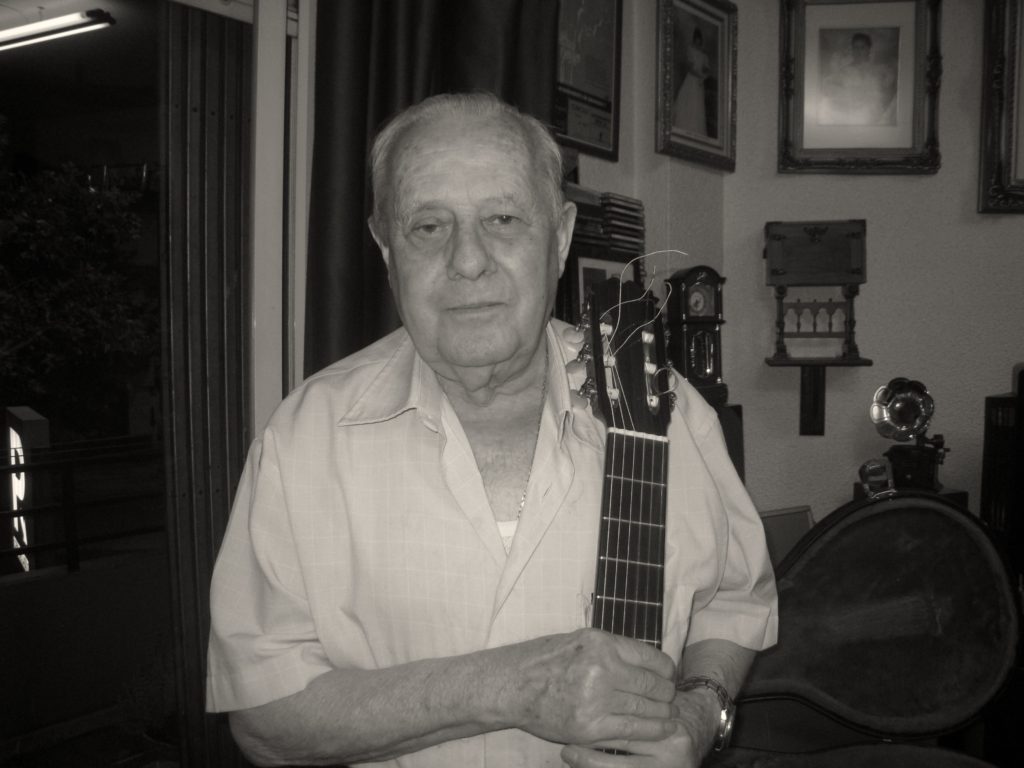 Granada has lost another important figure in the guitar world: Juan Román Padilla. October 18th of this year was the last day in the life of the dean of the Granada guitar-makers. Among the most interesting episodes in his life are a series of visits to Marcelo Barbero who was a friend of his father’s, selling guitars to japanese and german dealers and ordering guitars from the struggling duo of Antonio Marín and Manuel Bellido. His father was a well-known flamenco guitarist whose stage name was Juanico de Chauchina and inspired him to begin making guitars. Like so many other makers of his generation he began his working life as a cabinet-maker or “ebanista” as the Spanish have it. His first guitar was made in 1949 during the dominance of Eduardo Ferrer and Manuel de la Chica in the Granada guitar. The Asociación de Guitarreros de Granada thanks him for his work in spreading the influence of Granada and preparing the groundwork for the thriving school we have here today.
John Ray
Ray, John (ed.): La escuela granadina de guitarreros, Granada: Diputación Provincial de Granada, 2014.
Actividades en el Museu de la Música de Barcelona
As you probably know, the Museum of Music in Barcelona has a great guitar collection including Fletas, Garcia, a few Torres, Pagés and many other spanish guitars. But what is a museum without programmed activities and the dissemination of knowledge? Here are currently planned activities at the Museum. Activities Among them is a series of talks offered by my friend Antonio Manjon, a guitar-maker 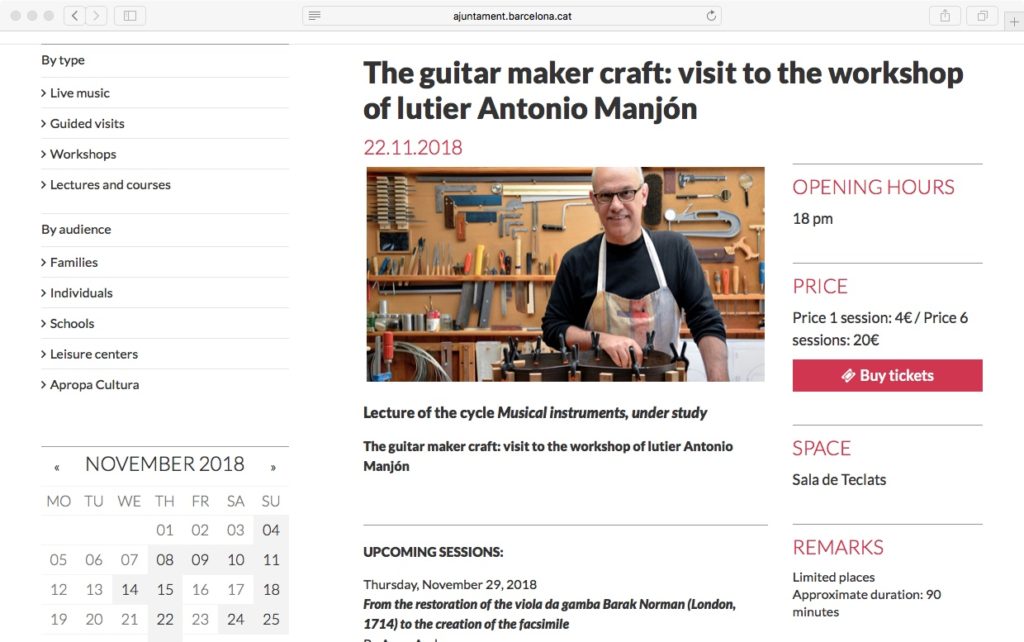 from the area who is a frequent visitor to the Museum, especially to the guitar collection where we have studied many of the guitars.
Juan Miguel Carmona
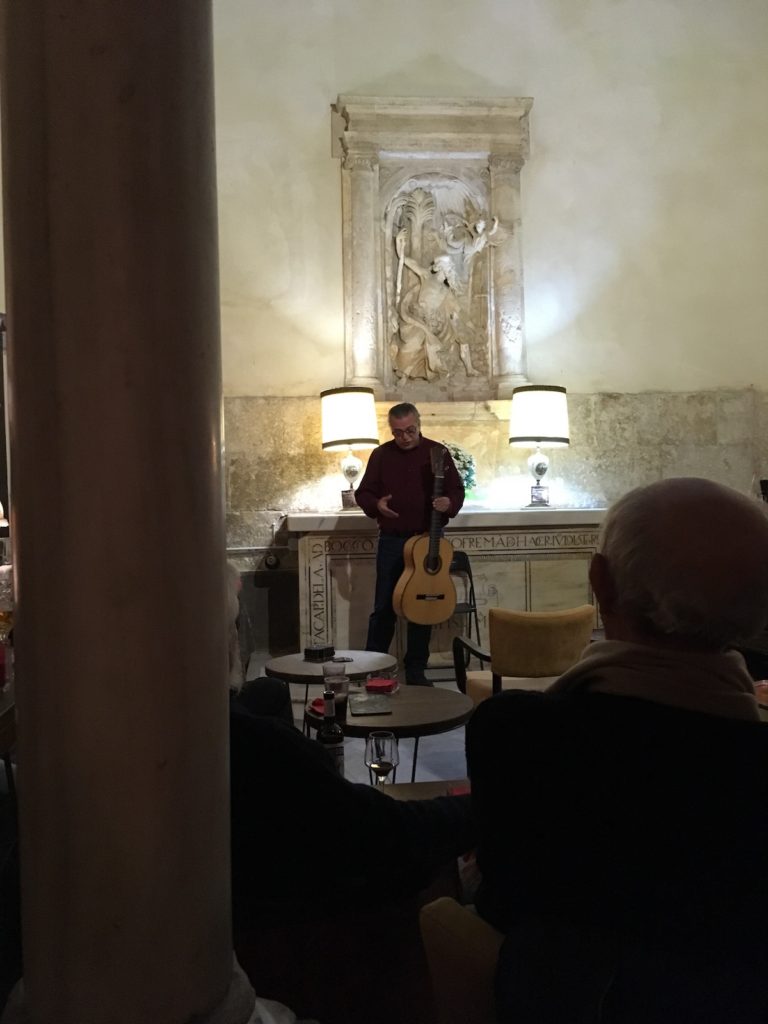 Granada’s Palacio de Gomerez was host on the 19th of October to the presentation of the new 40th anniversary model by Juan Miguel Carmona. One of the founders of the “official” Escuela Granadina de Guitarreros, Juan Miguel has been a part of the Granada guitar-making and flamenco scene since his father (a french polisher of guitars) sent him to the workshop of Manuel Bellido at the tender age of 14. The guitar was the star of the evening although also present were guitar-makers Francisco Manuel Díaz and his son Francis, José López Bellido, Juan Manuel García as well as Dr. Erhard Hanen and supportive friends and family.