
I love Santos Hernández guitars but I don’t get a chance very often to see one up close and to play and hear it. Alberto Cuéllar brought this one in just a few days ago because he knew I would want to see it. I was in a hurry to see how it sounds so I even forgot to look inside at the bracing. 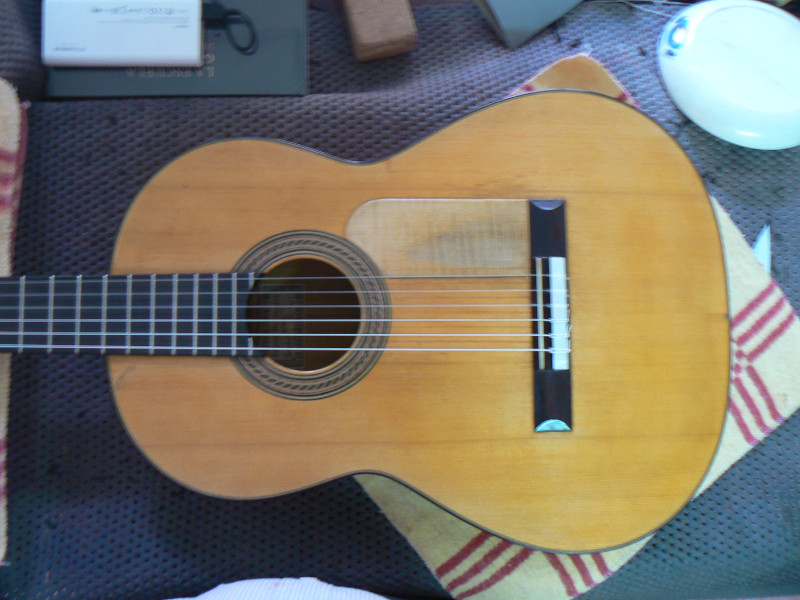 As always it is impeccably made and light and responsive. This one was in very good shape and as I always say if the architecture of the guitars survives then it will still sound good (if it did in the beginning of course). Some people say that he made a different rosette for each guitar and I can tell you although he seems to have made a lot you can be sure that a true artisan would be more efficient than that.
 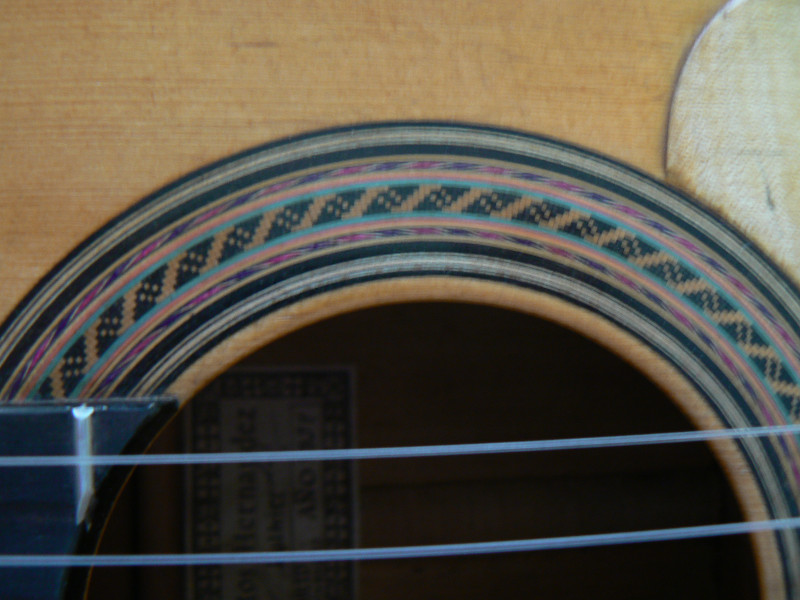 Alberto is absolutely thrilled with this guitar and I find myself agreeing that this is a particularily great one.
 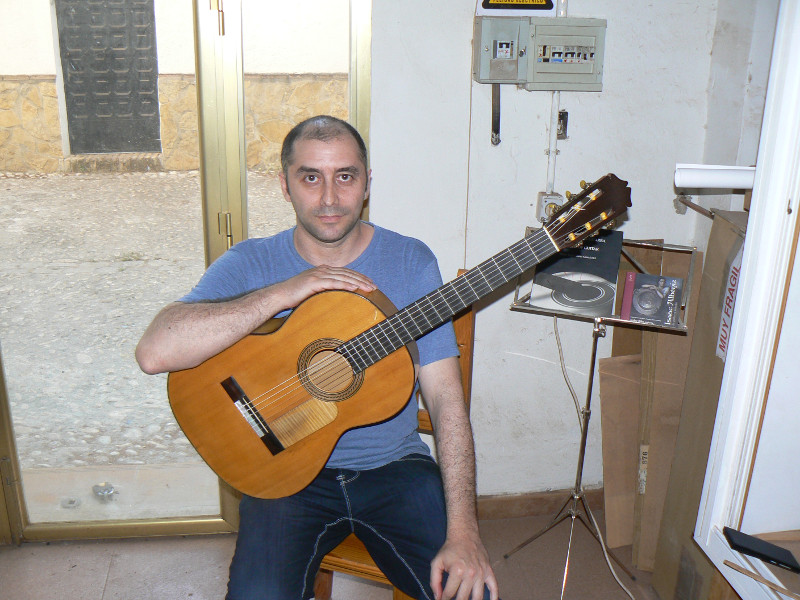 The video is the best we could do on short notice and will hopefully give you an idea as to how it sounds.
Author Archives: johnray
Misprints and errors
I suppose it is inevitable that in a book of this type there will be some errors committed, be they oversights or ghosts in the machine during layout or printing. The first to come to the attention of the provincial government is the following:
The shop of Daniel GIl de Avalle is in the plaza del Realejo and not in the plaza Fortuny as stated on page 186.
Granada Guitar-makers
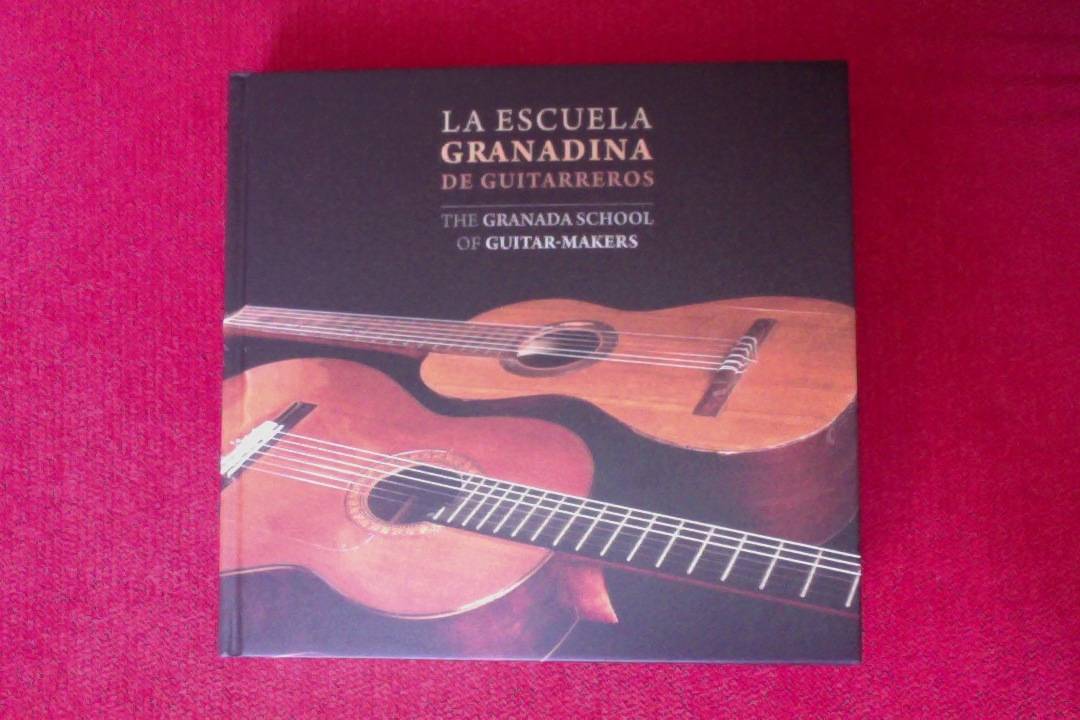
See here for updates on how to buy this book. After three years this book has finally been published by the Granada provincial government. It came out very nice, elegant and with good quality paper and of course the content is top-notch 🙂 and in Spanish and English. I am sorry to say that it is not yet available anywhere except for the book fair in Granada until next week when it will be available in Spain in most bookshops. I will let you know. Internationally I am sending copies to potential distributors in other countries and hope to know something very soon. If you are interested it would not hurt to ask some of the larger music publishers about the book. This might help them to take me more seriously. I have had some negatives and some interest. I think publishers and distributors don’t realize that this type of book has a very loyal market even if it is relatively small. Mostly they are interested in digital content these days but this type of book will always be valued in hard copy.
Binding
Once again, I don’t have any intention of writing tutorials on how to perform different operations in guitar-making but some people like a glimpse into our world.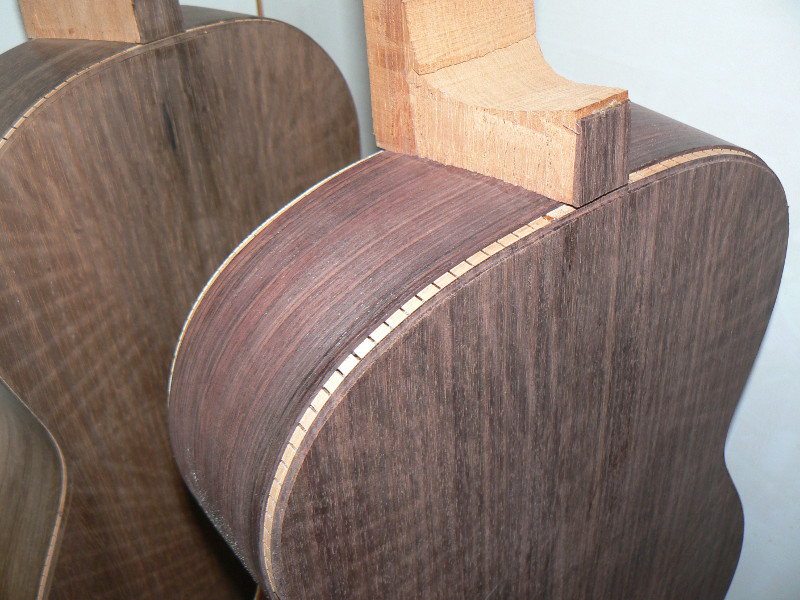 There is a lot of work in binding and purfling, both in preparing it beforehand and bending it and then cutting the rebate in the top and back. In the Spanish method the marking gauge (or more commonly the router) doesn’t reach into the heel area or the neck area so that has to be done freehand. Working on the softwood of the top is quite quick but the back takes some time. I modified a backsaw to approximate the curve of the purfling at the heel and making a series of cuts I can get very close in a short time.
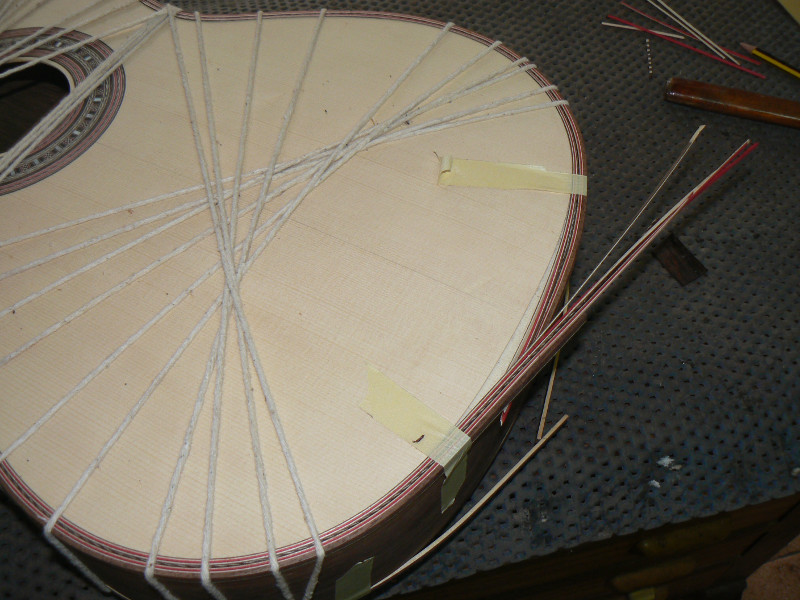 Cutting the various strips in such a way that the union at or near the centreline is as subtle as possible is another challenge. Some cut it at the last minute but I tie it up dry as you see and cut it to size. It usually has to be cut once again at the last minute while glueing but that is just a shaving off one end.
 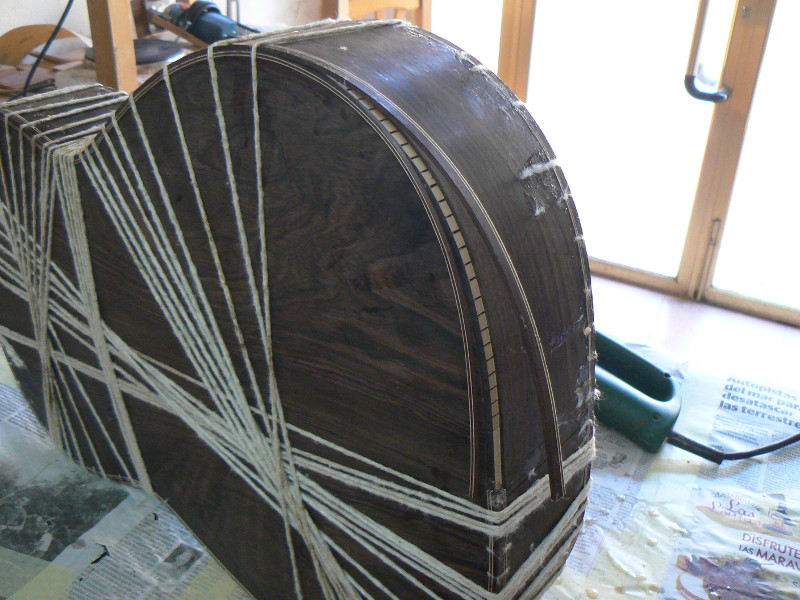 As always, hide glue is the way to go, it sucks the binding right into the channel and the high tack maks it grab when you reheat it making string clamping more than enough pressure. Reheating is extremely important as you use the hot hammer to press the purfling down and the binding in against the side of the guitar. Again, some people do things differently but here we put the end graft in after the binding is dry. You can take all the time you like to fit it and then just pop it in with glue.
Miguel Rodríguez 1961
I am doing more and more guitar restorations and it can be a real challenge as well as immensely satisfying. However, the best part is how much you can learn from great instruments. One of the “laws” of restorations is that you should replace nothing on the instrument; if you do so the instrument loses value. This is a relatively new point of view, traditionally if a guitar was broken, deformed or worn out you replaced the problematic parts and restored it to its status of musical instrument. These days the historical value of the instrument is often such that we want to preserve the information and that takes precedence over the playability. On the one hand I appreciate that because it has allowed me to learn from some very interesting guitars but on the other hand there are instruments which could still be making beautiful music if we restored them to playability and worried a bit less about them being “completely original”. A guitar-maker friend says that this move towards non-replacement or preserving all of the original only benefits the collectors and the dealers as it allows them to assign much higher monetary values to completely original instruments. Obviously these instruments are no longer priced as musical instruments but rather as objects of desire. Speaking of collections, I saw a similar rosette to this one on a Simplicio and made a drawing of it in order to make it one day but still haven’t got around to it.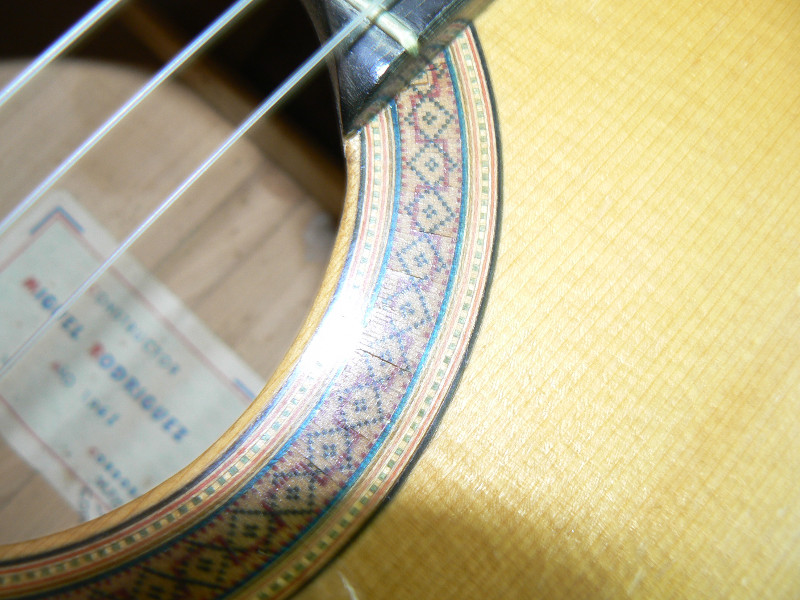
When I get an instrument into my shop for restoration I am often asked what the instrument is worth. A concrete answer is difficult to give but when I check with my contacts I find two answers: one is how much a well-connected dealer might get for the guitar if they sell it to a collector (this allows them to make the owner a much lower offer for the guitar) and the other is how much a working musician will pay for it. Now although I have benefitted from the renewed interest in historical guitars I do believe that we are dealing with musical instruments and that is how they should be priced. Could the day come when historical guitars are no more expensive that what a working player is prepared to pay? Would that be good for players but bad for the market in general? Would I still have a market for the reproductions I make of these guitars?
Instruments by some makers are searched out by collectors and high prices are paid: Torres and Santos Hernández spring to mind. Other instruments are desired by players: Manuel de la Chica, Esteso, and Vicente Arias. 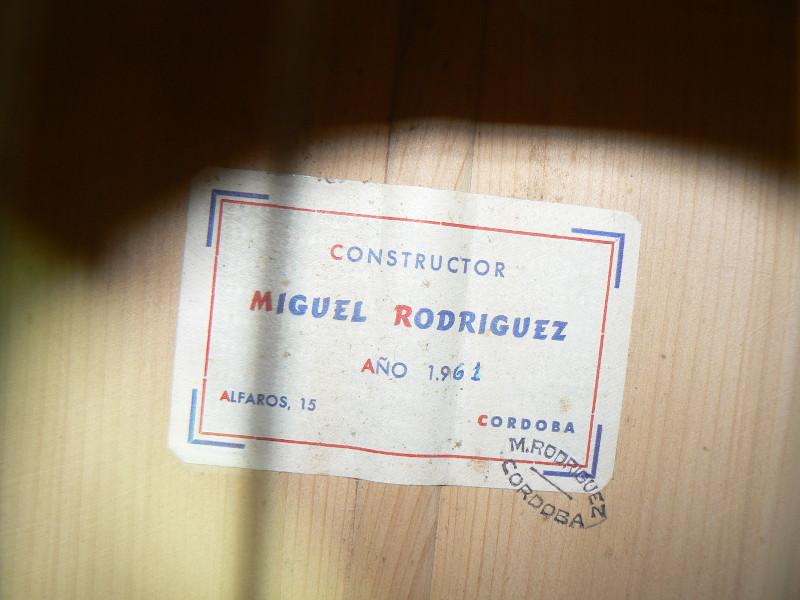 I think that the guitars of Miguel Rodríguez fall more into the second category despite their relatively high value as collector’s items. This one came into the workshop to be restored and as always I was asked what it might be worth. I did the work and found out what I could about the guitar. Turns out it was made by Miguel Rodríguez hijo and these are relatively desirable both in sound and collectability. Based on photographs, I managed to get an offer from a dealer which was subject to a substantial increase contingent on the dealer’s inspection and audition of the guitar. The client decided not to sell but that gave him a better idea of the worth of the guitar.
 This was back before I started doing recordings in the workshop so although the guitar sounded great I can’t give you anything to listen to. You can see the signature bracing pattern with the light bulb inside the guitar.