
A new shipment of books “The Granada School of Guitar-makers” was recently received at Strings By Mail in the U.S. Just in time for Christmas gifts, both guitarist and “luthier” will love this book. 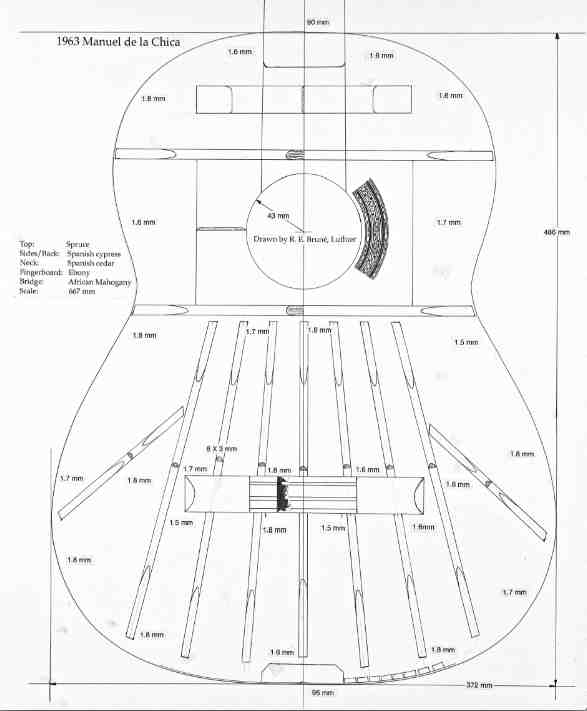 Here is a low resolution capture of a page in the book. Buyers of the book get a full size image file of this plan drawn by Richard Bruné of a Manuel de la Chica. You can find the book in a few other places but this is the only seller in the U.S. that buys direct from the publisher. As I am sure that you know, they are a great source for books, music, strings, recordings and a myriad of other music related products.
Author Archives: johnray
Nuevo reglamento de CITES par el Palosanto de India
This will be in Spanish because it is a call to arms for the Spanish guitar industry which is waiting with bated breath to see how the Spanish government deals with the new controls on Indian Rosewood.
Durante mucho tiempo las administraciones en España sólo hacen caso a empresas muy grandes o al sector del tourismo. Me parece muy importante el tourismo en este pais pero concentrarnos sólamente en ello es una receta para convertirnos en una cultura superficial y una nación sin industria ni avances científicos (por ejemplo). El sector de la guitarra no es el sector más grande de España pero sí tiene importancia económica y cultural. De hecho España tiene muchísimas más gente dedicada a la creación y venta de guitarras que ningún otro país Europeo o quizás de todos ellos juntos. También hay que reconocer que cuando vienen guitarristas o comerciantes de otros paises a comprar guitarras (o sólo a buscar o visitar talleres) comen en los restaurantes, duermen en los hoteles y visitan los monumentos. Quiero decir que además de su importancia económica, la guitarra atrae ese recurso tan perseguido por los políticos que es el tourismo.
Para los que no conocen bien la situación de los guitarreros os cuento que por un lado llevamos mucho tiempo preocupándonos por la madera en peligro de extinción y de los bosques no sostenibles. Por esa razón compramos sobre todo Palosanto de la India por que de toda la vida hemos visto que no hay problemas ni de deforestación ni de destrucción de habitat. Pues en noviembre de este año el tratado del CITES ha puesto al Palosanto de la India en un apendice y con unas normas que hacen que tengamos que pedir permiso de exportación para mandar cada guitarra y los clientes en otros paises tengan que pedir permiso de importación. Todo esto no porque la especie esté amenazada sino por que los agentes aduaneros no son capaces de distinguir entre una especie y otra. Son dos los problemas que se nos crean a nosotros: Primero, hay que registrar toda nuestra madera del genero Dalbergia (no sólo la India está en esta nueva situación) para que luego los permisos se extienden sobre madera legalmente en este país. Todavía no sabemos exactamente como hay que hacer eso para que quede legalmente recogido (a los funcionarios no se lo han comunicado todavía) y sólo tenemos hasta el 2 de enero. ¿Será legalizable una madera del cual no tenemos factura o que hemos heredado? Ya que no saben distinguir las maderas ¿se fiarán de nosotros sobre los nombres botánicos? Secundo, no sabemos como será el sistema de permisos y cuanto tiempo tardarán en dar cada permiso. Nosotros vendemos guitarras a comercios y a particulares cobrando por transferencia y mandando la guitarra por agencia. En estos casos no debe haber problema si hay una espera para los permisos. Sin embargo, también hay muchos casos en que alguien que aquí a comprar una guitarra y se la lleva el día siguiente, ¿Será posible tramitar el permiso en el mismo día? Si les complicamos mucho la vida dejarán de comprar nuestras guitarras y no vendrán a España. Sobre todo pedimos claridad y agilidad.
Para los guitarreros y demás empresas y trabajadores del sector de la guitarra, sigan leyendo abajo:
En la última reunión de los países firmantes del tratado CITES en noviembre de este año acordaron añadir todas las Dalbergias al apéndice II. Además han decidido controlar productos elaborados con estas como pueden ser las guitarras. A nosotros nos afecta esto porque si tenemos Dalbergia latifolia (u otras) almacenadas no tendrá los papeles CITES que nos piden a partir del 2 de enero de 2017. ¿Podremos solucionar este problema? y ¿cómo lo hacemos? También al vender una guitarra tendremos que pedir un permiso de exportación y el cliente uno de importación en su país, en caso de que vaya fuera de Europa. Si este proceso no es ágil y fácil podemos perder ventas mientras esperamos el permiso. Para colmo, los responsables de la administración española no saben todavía como serán estos procesos.
El día 14 de diciembre en Madrid, se celebrará una reunión sectorial supuestamente para pedirnos opinión y sugerencias y por supuesto para informarnos. Ya están invitados: una conocida empresa maderera, un fabricante de muebles y un arquetero pero quieren invitar también a álguien de entre los constructores de la guitarra. A fin de mandar a alguien a esta reunión que pueda hablar en representación de todos hemos formado la “ASOCIACIÓN NACIONAL DE EMPRESARIOS DE LA GUITARRA” intentando unir a constructores, fábricas, vendedores y madereros para que la administración se dé cuenta de la importancia económica de nuestro sector. Con el fin de dar más peso a nuestras peticiones, hemos propuesto que vaya el presidente de la Asociación a esa reunión. Lógicamente lo único que pedimos es poder seguir utilizando la madera que ya tenemos y vendiendo nuestros productos sin tener que perder ventas mientras esperamos que tramiten la documentación. Sobre todo que no se castigue el uso de una madera que no tiene razón alguna para estar en el CITES.
Antes del día 14 nos gustaría contar con todos los del sector como socios de la Asociación así que le pedimos su nombre, dirección, correo electrónico y DNI y en caso de las empresas (personas jurídicas) deben facilitar tanto los datos de la empresa como de la persona designado para representar a la empresa en la Asociación. La reunión tendrá lugar en el Ministerio de Hacienda así que no queremos darles el nombre de nadie que no esté dado de alta. Si no ha podido empezar a cotizar por favor no se postule como socio de la Asociación, de hecho es condición para ser socio el estar afiliado y desarrollar su actividad dentro de este sector. Si esta Asociación tiene alguna utilidad después del día 14 de diciembre convocaremos cuanto antes una Asamblea General y elecciones para que todos nos sintamos mejor representados. Como es de suponer, ahora no hay tiempo.
Me han contactado también desde Comusica (una Organización Empresarial sin ánimo de lucro compuesta por Fabricantes, Importadores y Comerciantes de Instrumentos Musicales de todo el territorio nacional). Mandan también un representante a la reunión del día 14 y quizás es más apropiado para las tiendas de música y fabricantes de accesorios.
Por supuesto si usted tiene alguna sugerencia o preocupación que quiere transmitir en esta reunión escriba a John Ray johnguitar@johnguitar.com, secretario de la Asociación y pasará a formar parte de las alegaciones que lleve el presidente de la Asociación a la reunión. Mientras tanto tenemos unas sugerencias para todos:
Primero, los del SOIVRE sugieren que hagan todos un inventario de cada pieza de palosanto que tengan y que lleven este recuento al representante del SOIVRE en su provincia. Esto es para que conste sus existencias antes de la fecha de la entrada en vigor del control. Se supone que de esta manera luego se pueda inscribir de la base de datos CITES y no habrá problema a la hora de pedir permiso de exportación. Si la madera no está registrada para el día 2 de enero no se podrá exportar en forma de guitarra ni en su actual forma. Nos aconsejan hacer esto con todas y cada una de las maderas que tengamos por si en un futuro se ampliara el alcance de estas normativas.
Segundo, contacten con sus representantes políticos a nivel nacional para mostrar su preocupación por este tema; mientras más ruido hagamos, más posibilidades tenemos de que nos hagan caso.
Por último, pasar este mensaje a todos sus conocidos del sector para que podemos reunir un buen número de socios y así tener más fuerza. Si le llega este mensaje y no es profesional puedes tener igualmente un problema con los palosantos. También debería registrar su palosanto en el SOIVRE.
John Ray
Secretario de la Asociación Nacional de Empresarios de la Guitarra
It’s not about the wood.
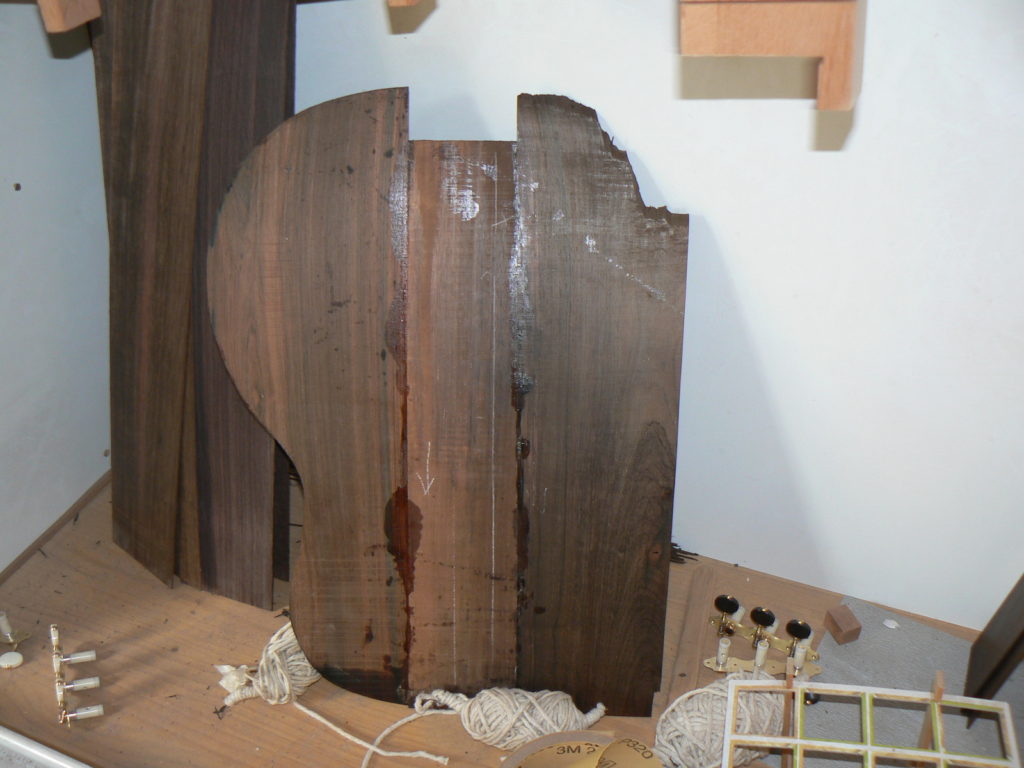 Once again the idea for a post comes from one of the guitar forums: someone asking if a particular guitar is overpriced. Pricing is a very delicate issue for a guitar-maker or, if you consider us to be artists, for any artist at all. You can price yourself out of the market and then have to reduce your prices which can leave you looking very bad. On the other hand you can price too low and lose out on the clients who are looking for “the best guitar money can buy”. The truth is that these people are not usually serious musicians but rather dabblers of one sort or another. But like it or not, a very large number of customers for fine guitars are precisely the collector, the retiree who wants to start playing again, the frustrated guitarist who years ago became a doctor or a lawyer, and of course the wannabe guitarist who believes that if he can just find the right instrument he will be the next David Russell. The guitar appeals to a huge number of people and if you don’t need one as a tool of your trade but have the money that the average guitar-maker asks you may well find yourself in a position to afford a much more expensive one. I am not criticizing these people, after all there is no way that so many guitar-makers could survive if it weren’t for the amateurs buying fine guitars.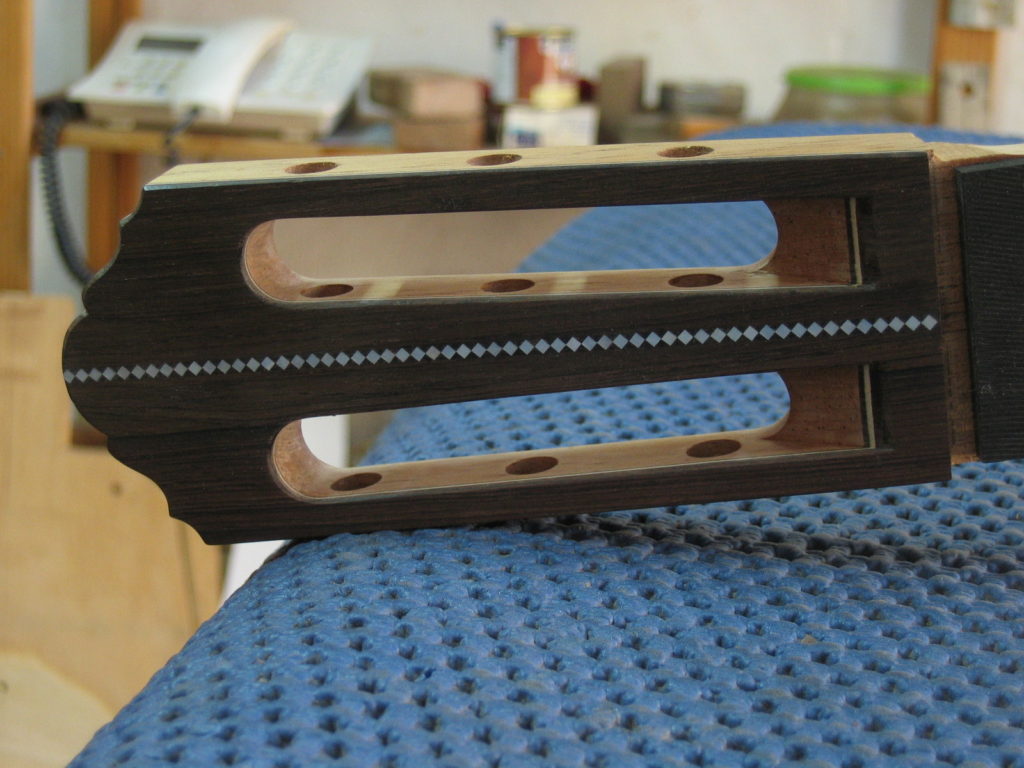
Mostly prices go up as the market allows which either means that clients are realizing that these guitars are great or someone (the maker or a dealer) is doing a fantastic marketing job. I think a majority of makers are all for raising their prices because they are almost always too low considering the amount of time invested and the years that it takes to get to a high level of craftsmanship and consistency. I know one exception and he happens to be the best-known maker in Granada. He holds the philosophy that guitarists should always be able to afford his guitars and so he has kept his prices relatively low to this day. Of course that means that most of us in Granada have to keep our prices quite low too as very few dare to charge more than the “godfather” of all of us.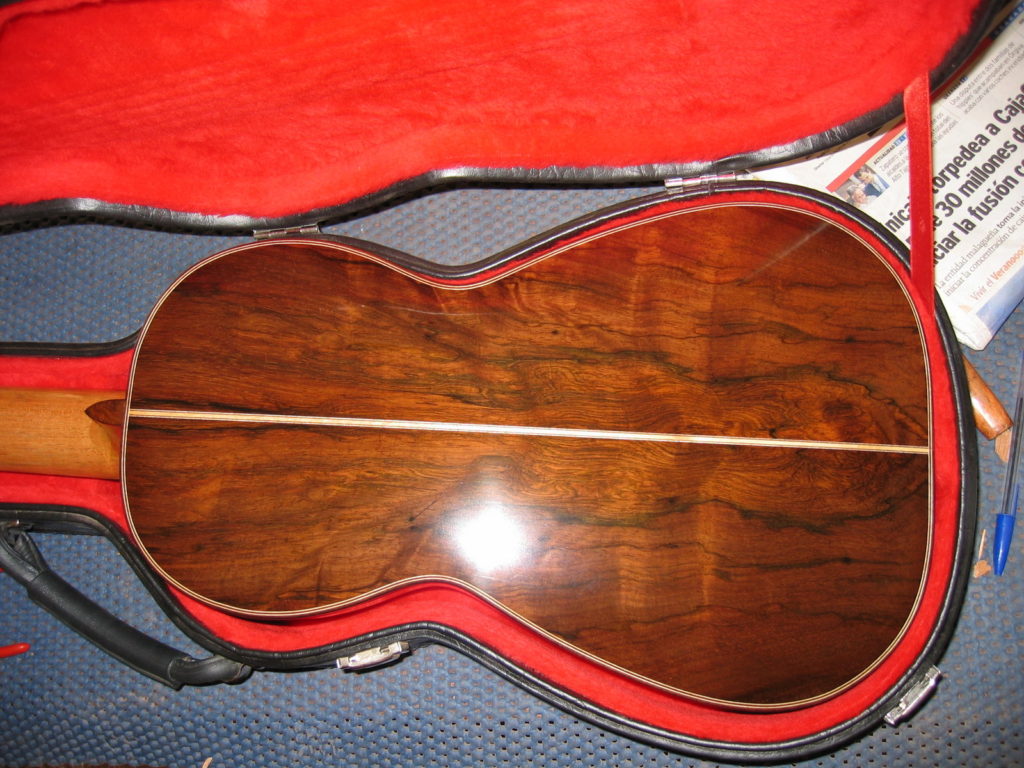
So you keep raising your prices as much as you think you have a right to until one day, pricing is no longer an issue. Your waiting list is years long and the dealers are raising the prices with every guitar they buy from you. Then you discover that the fruits of your blood, sweat and tears are being bought and resold immediately by people who don’t even know how to play the guitar. You may not be the type to try to squeeze the highest possible price out of the client but knowing that an “investor” will buy the guitar and charge the client a much higher price for doing nothing is galling to say the least. So you raise your prices and thereby keep away the unscrupulous buyers and at the same time reduce your waiting list. I say this because while having a long list feels good and can provide some job security, it is much more inspiring to actually make guitarists happy in the short term. Guitarists, especially dedicated amateurs, profesionals, students and teachers are also looking for a more immediate satisfaction. They are rightly disappointed by  a long wait time. For us it is immensely satifying to talk to the guitarist, have the guitarist play, find out what he or she is looking for, show the wood that you might use and then get to the guitar within a reasonable time (less than a year). Somehow with a longer wait time you lose the connection with these people. I have also known people to lose the connection with the builder and cancel the order.
Obviously clients shouldn’t be equating higher prices with higher quality but it is inevitable that the makers who have worked for years and found favour with professional guitarists will have progressively higher prices so you will have to pay for that “guarantee” that comes with their reputations. And it goes without saying that a sought-after maker will become that much more so when he stops working.
English version of Orfeo
New Issue of Orfeo Magazine-Granada!
I am very pleased to see that the new Orfeo focusses on Granada and the most relevant makers here. We all try to get ourselves noticed and would love to be in the magazine but no one can deny the pervasive influence of Manuel Bellido and Antonio Marín, the mastery of Rafael Moreno’s work and the success of Paco Santiago. I can only congratulate the author for choosing his subjects with excellent criteria. These men have taught or influenced everyone working here today with only a few exceptions. As the younger makers come into their own the influence might be indirect and these makers might be called the teachers of our teachers. Rolf Eichinger, Jesús Bellido, René Barslaag, Juan Miguel Carmona and José López Bellido are just a few of those who have continued the tradition of informal (or even formal) teaching which Marín and Bellido perfected.