Here is a little more from my trip to the Museum in Barcelona. Paul Poletti had the time to lend us a hand with examining one of the guitars. He was working on a visualization system for small, dark spaces and we got to try it out.

Here is a little more from my trip to the Museum in Barcelona. Paul Poletti had the time to lend us a hand with examining one of the guitars. He was working on a visualization system for small, dark spaces and we got to try it out.
Carles Trepat is perhaps the most interesting guitarist in Spain right now. His musicality and expression is second to none and his work in composing and arranging is bringing new repertory to our beloved instrument. Not only do I enjoy his playing but I am also a beneficiary of his generosity. As you might know I make a replica of the Torres that he owns and plays. He allowed me to examine it a number of times and then agreed to put the first finished copy through its paces and compare it side by side to the original. So about 30 Torres copies later I see that time as a turning point in my career.
Trepat gave a concert last night here in Granada and it was great on every level. Bach, Llobet’s catalan folksongs and Trepat’s own arrangements of Manuel Quiroga. He has been investigating the life and music of Padre Basilio (to whom we attribute the addition of the sixth string on the guitar) and played two pieces which he recently unearthed. One of his strengths (or weaknesses depending on the type of concert-goer you are) is how seriously he takes the music. From the moment he sat down to play right up to the end, not a word, not a drink of water, nothing. All his energy was focussed on expressing himself musically. My wife remarked on the contrast with Zoran Dukic whom we saw in January and who reaches out to the audience and talked about each piece. However, she enjoyed Trepat’s concert as much or more than Dukic’s.
Trepat is also known for the guitars he plays, he has the Torres I mentioned, the Pagés you see in the video, a Santos Hernandez, an Antonio Marin I have seen him play with an orchestra and last night he was playing on a Romanillos. My experience with Romanillos guitars is very limited but this was much better than the last one I heard, an excellent instrument.
Here is an interview with Trepat, in spanish and a bit more information about him this time in English.
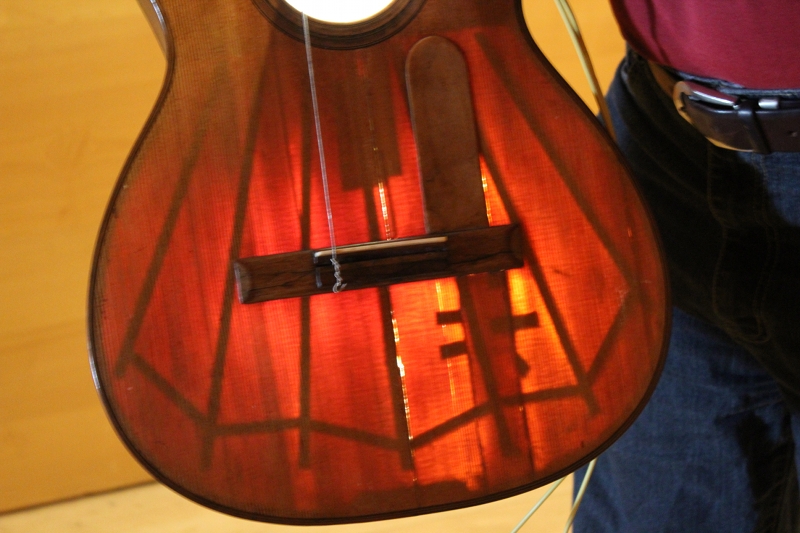
A few months ago I was invited to visit the Museum of Music in Barcelona to examine some very interesting guitars. This came about through my luthier friend Antonio Manjon (Barcelona) who is part of a research project being carried out by Marco Antonio Pérez from the Universitat Politècnica de Catalunya – BarcelonaTech. Among other things they are recording the resonances of guitars in different stages of construction as well as those of various historical instruments. The first guitar we examined was the famous paper mache guitar made by Torres in 1862. Although I can’t see either one of us making a copy of this guitar we took enough photos and notes to allow that if the day were ever to come that we wanted to. Here is the bed that we used to trace the outlines of the guitars. 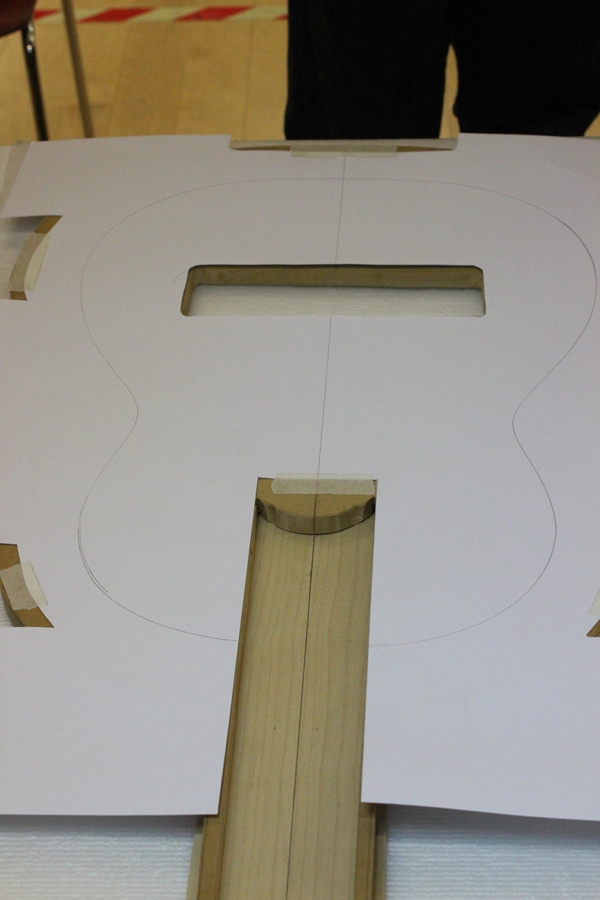 This particular guitar had some nice surprises in store for us, one being the union of the top and sides realized with individual blocks. Quite a few of Torres’ guitars are known to have continous lining and so this was interesting to see. Perhaps the lack of rigid sides meant that linings were impossible to fix to the sides or perhaps Torres was not particularly attached to linings and used “peones” on more of his instruments. Another interesting feature is the structure which takes the place of the typical closing bars. This can be seen in the photo below thanks to the translucent nature of spruce.
  The last photo here is of the inside of the same guitar and shows both the glue blocks and the finger braces between the fans. The video shows Marco who helped us out by acting as official photographer.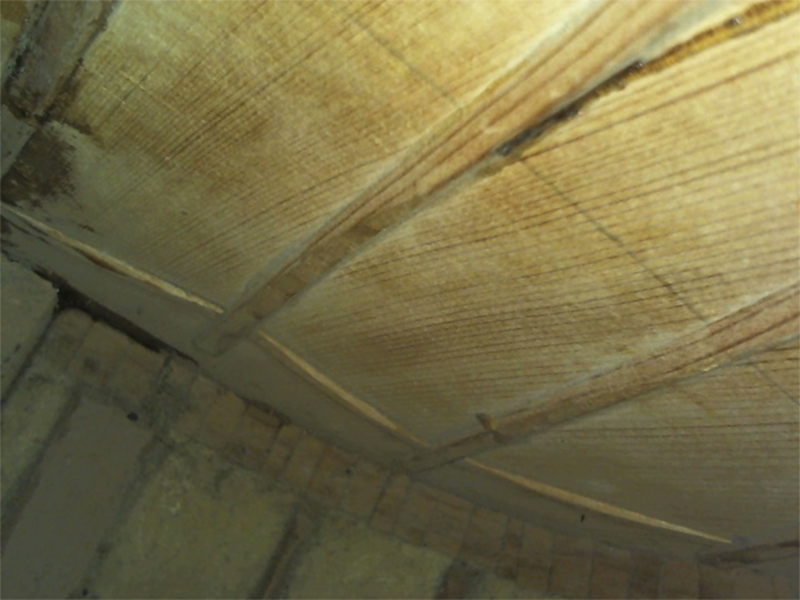
http://www.youtube.com/watch?v=wNaJu2PQShw
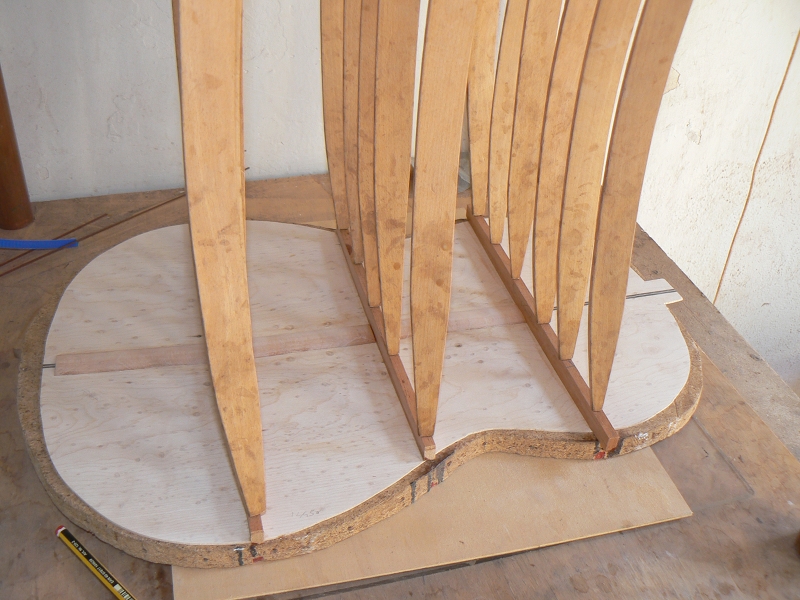
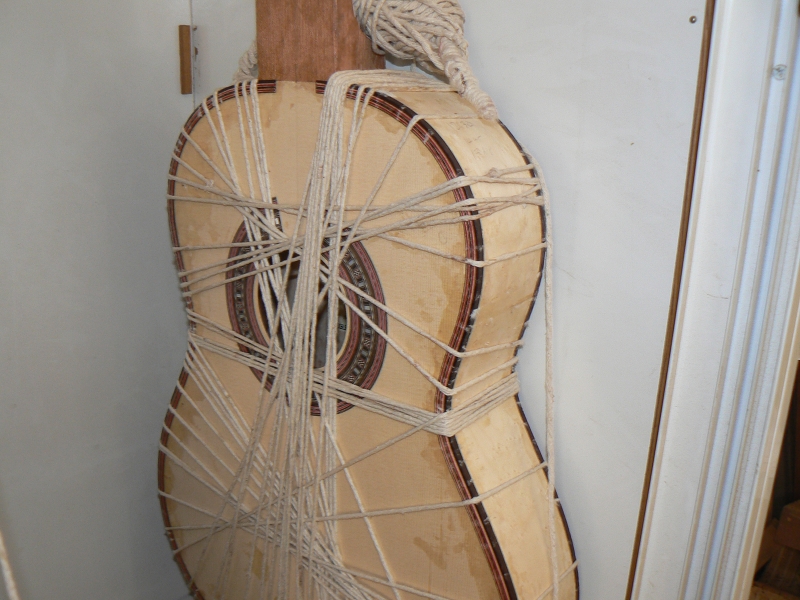
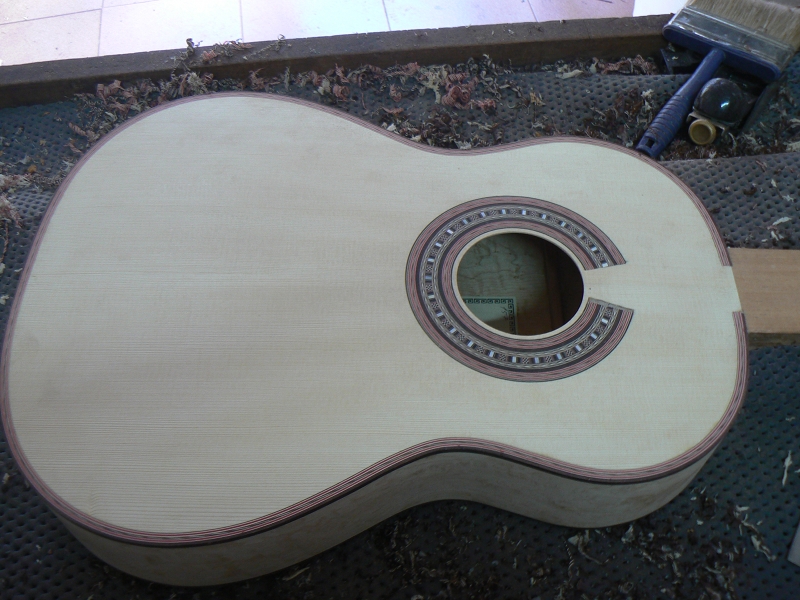
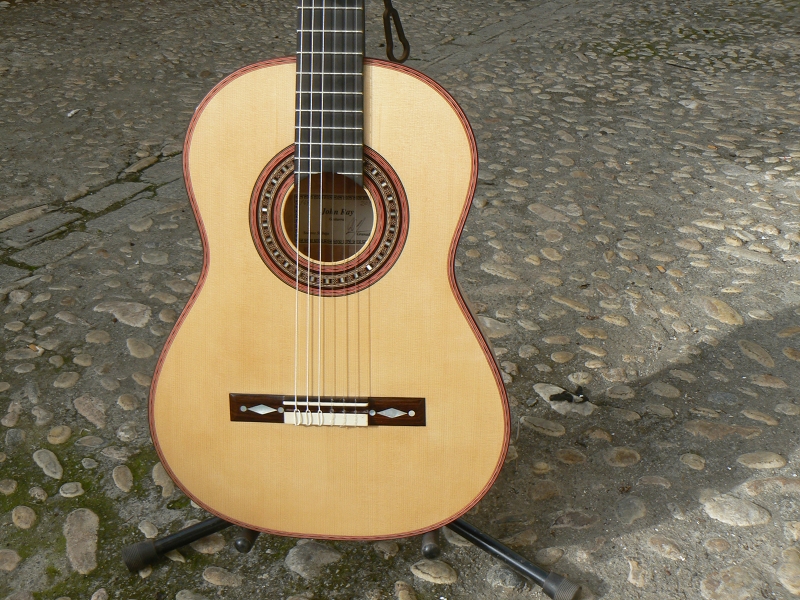
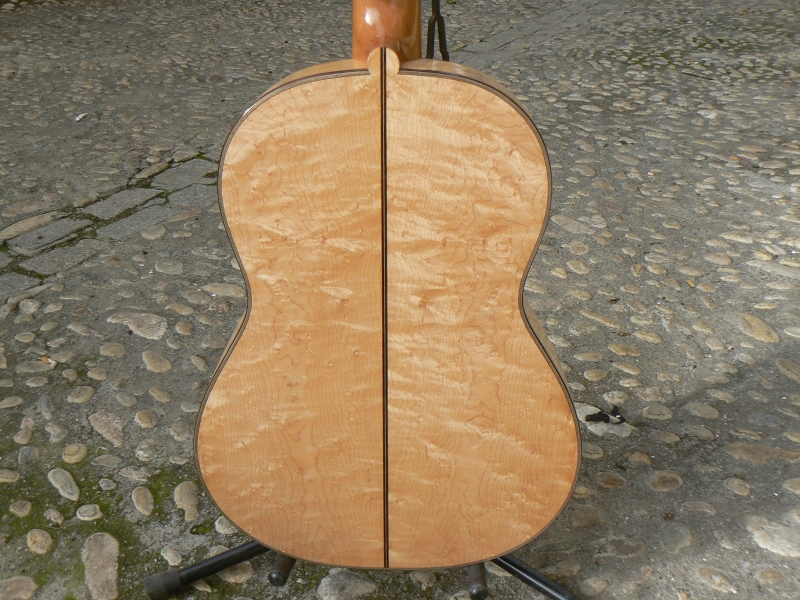
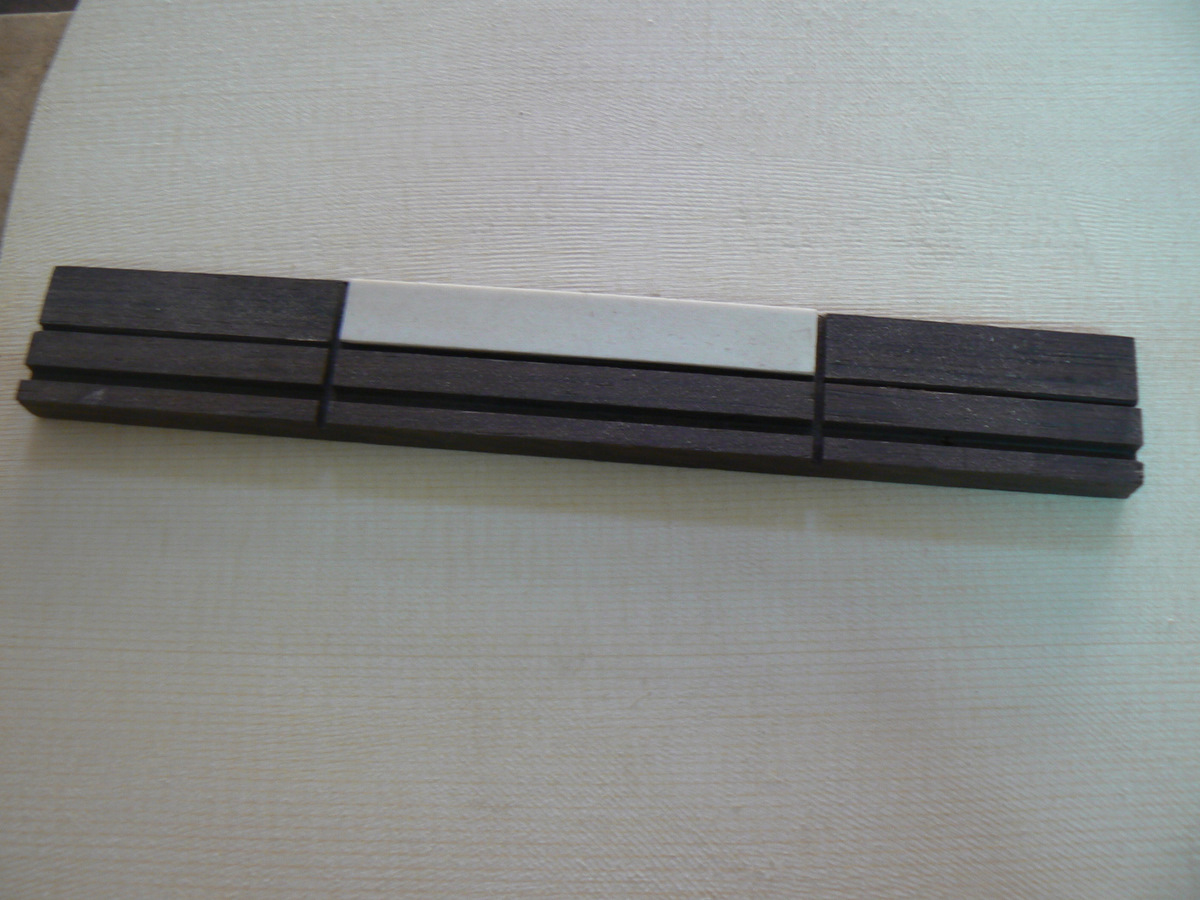
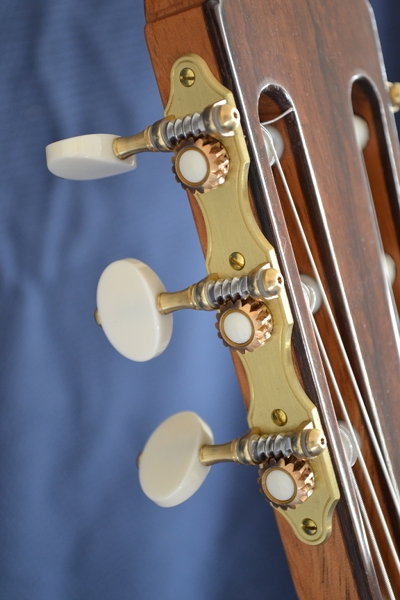
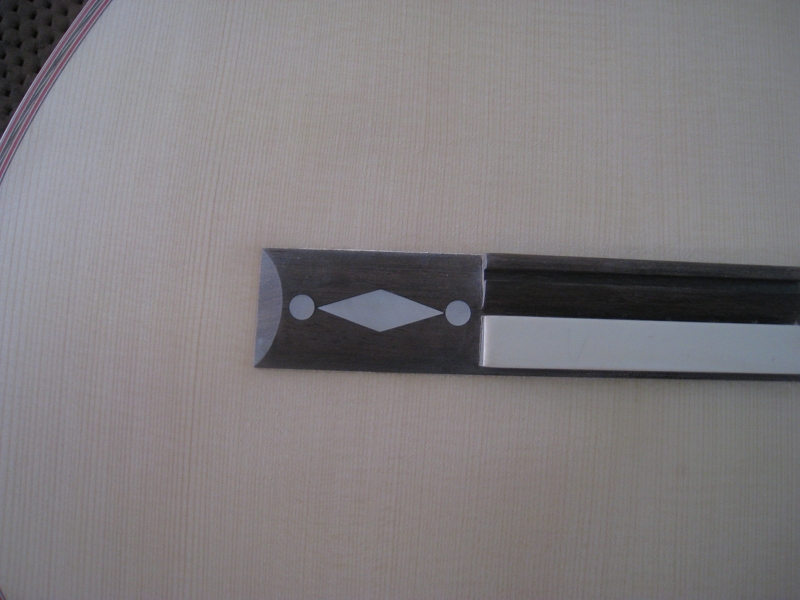
Over on one of the forums there is a discussion “why don’t more makers use maple” and for the most part it seems that other makers like it as muh as I do. I don’t have time to do a proper post so I thought I would just put up some pictures of this guitar as my contribution to that discussion. Yes, maple is great! It is not in danger of extinction and nor do we have to import it illegally. This particular guitar is at the Classical Guitar Store in Philadelphia so if you love maple…
I am a big fan of the old masters but an important part of that is my respect for tradition. My interest in historic instruments has helped me learn but I must admit I have learned so much more from makers here in Granada. I have always maintained that there is a line from the spanish makers of the 18th and 19th century right up to Antonio Marin and Manuel Bellido as well as a lot of the other makers here in Granada. My connection is that my teacher learned from both Manuel and Antonio. Ever since Rolf’s death I have thought that I really should make a “hommage” model and try to get as close as I can to the guitars that Rolf made with that model. Well, among the wood, tools, jigs and junk from his workshop there were quite a few guitar “parts”. 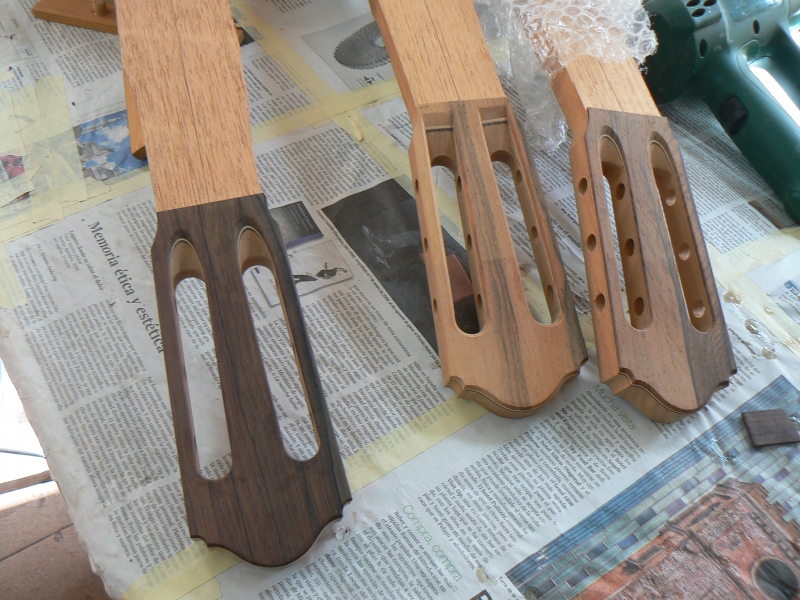 So my first “copies” of his guitar will be made with these parts, I will try to dig up some of his labels and put mine and his on the ones that reflect his work and mine. My biggest challenge will be respecting
  his aesthetic philosophy – Rolf studied industrial design and had a great eye for sober, function-driven aesthetics. In general I imagine that these guitars will sound quite similar to my concert model with the possible exception of the first one. The top is already braced and glued to the neck, sides are bent and the back it braced too. It will be interesting to compare it to one of his own guitars when I finish it.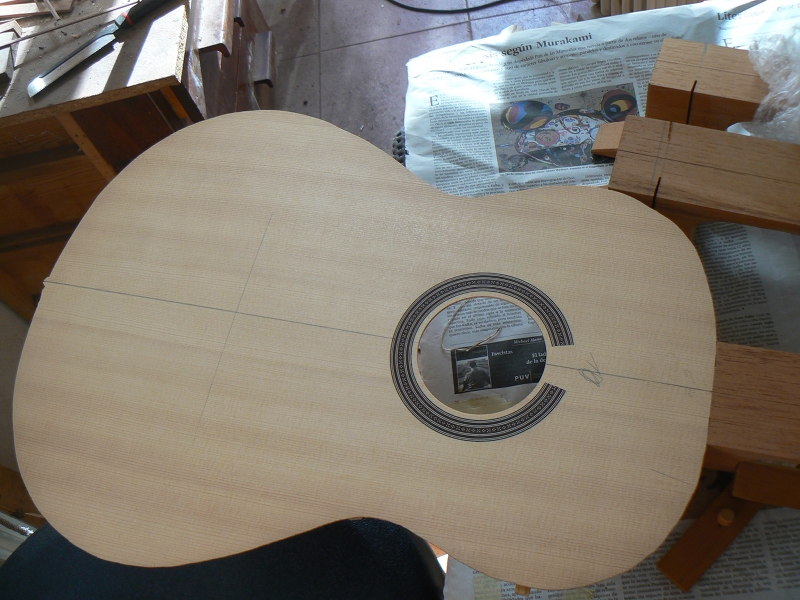
Rolf was neither overly modest nor was he any sort of divo but he did desire to be recognized for the work he was doing. However, as he barely sold guitars in the U.S. and Japan his presence in publications and the internet was minimal. I don’t see how I will come up with the time but I think that a plan of one of his guitars or a method based on his teachings would go over very well.