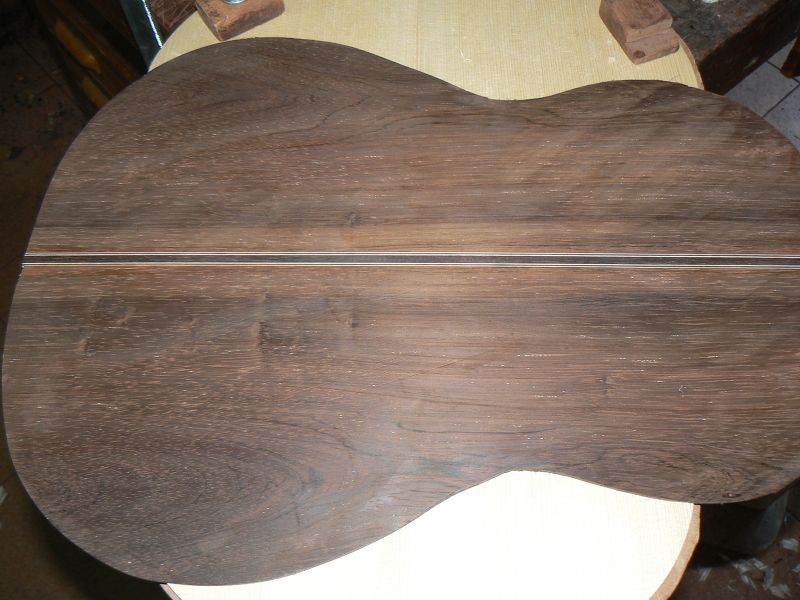
Here is something I wrote about my teacher Rolf Eichinger when he died back in 2009:
http://www.classicalguitardelcamp.com/viewtopic.php?f=11&t=43886 His widow was close to finishing two guitars at that time and then went on to take a guitar making course and hoped to dedicate herself to guitar making. A week ago she called me and told me she had decided not to pursue that idea and that she was selling the contents of the workshop. As I was familiar with the quality of the wood he had stocked up over the years and the intelligence behind the jigs, fixtures and tools that he had made I planned a visit as soon as possible. This first picture shows his Inca table saw (every guitar maker in Granada has one except for me) 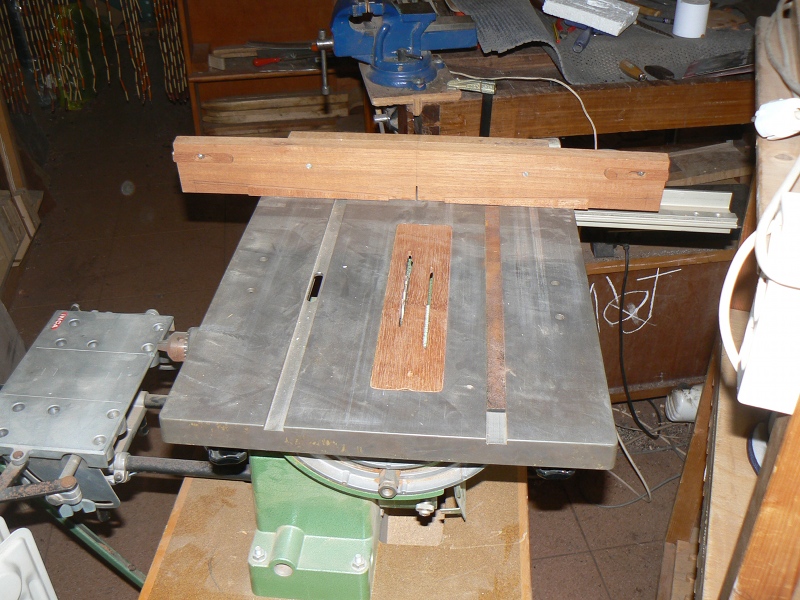 I use a decent Kity but the table is a little too big to allow getting close to fine work; I end up bending over too much. I am looking forward to using this saw. One thing that came out of sifting through his wood is his generosity to me. I found every type of wood with the date written on it in my handwriting. Over the years he had supplied me with seasoned wood by trading his dry wood for my purchases at Maderas Barber or Madinter. I know that makers who are just starting out as I was then can’t always use well-seasoned wood but thanks to Rolf I was using seasoned wood from the beginning. I like my tops and necks to be at least 6 years old, rosewood to be 10 and ebony to be 12. To use wood that is not acclimated to your workshop environment or not seasoned enough to be dimensionably stable is a disaster but I like to go farther than that and let it sit even longer.
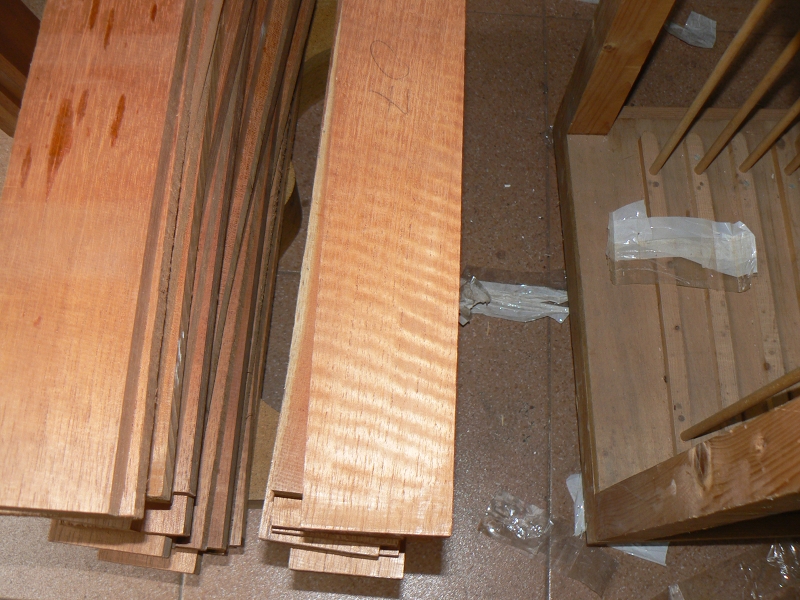
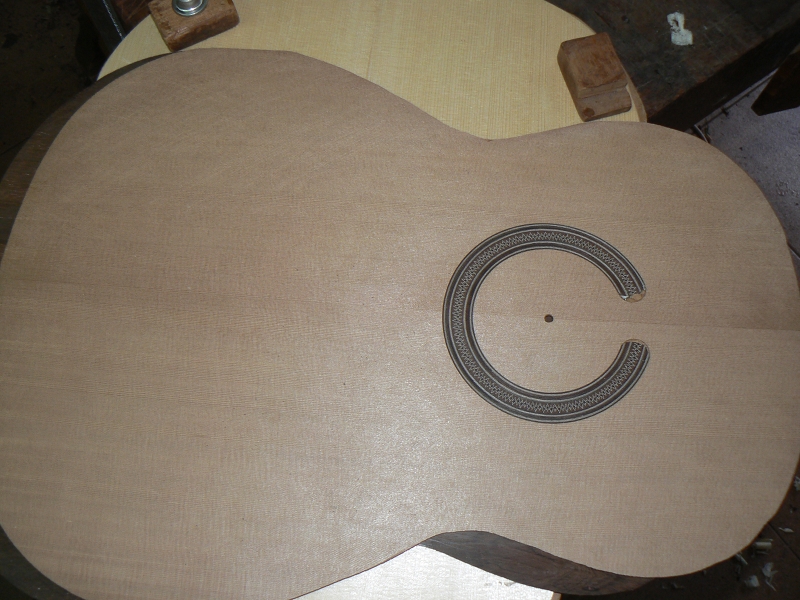
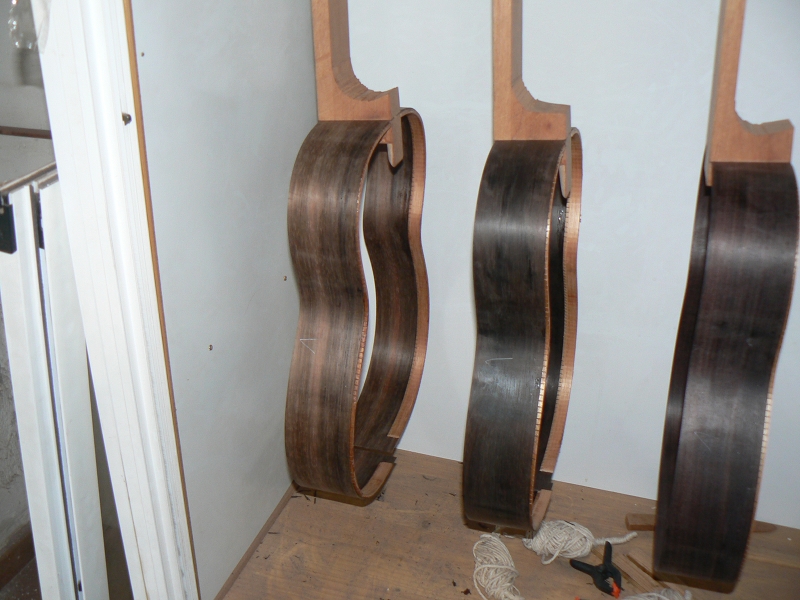
 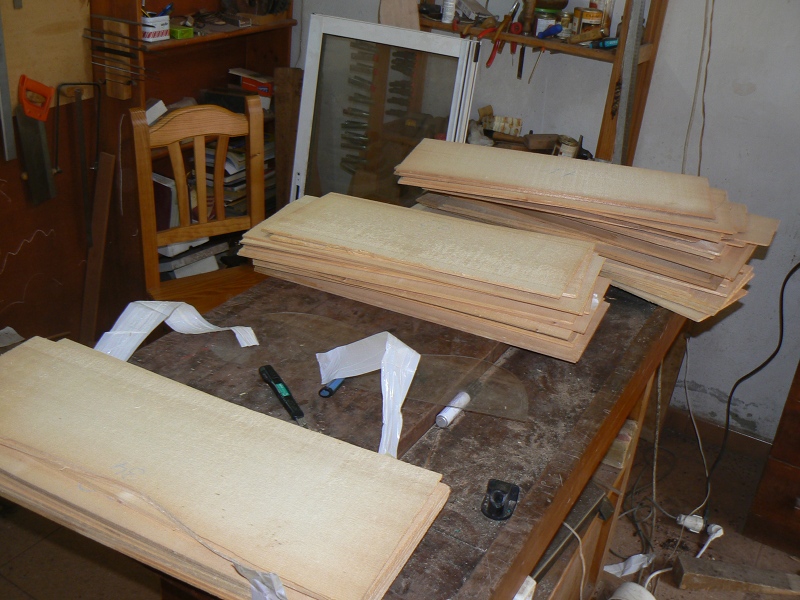 This photo was taken while I was sorting tops, mostly they are excellent but the contents of the workshop had been through two moves and Rolf had always bought more tops than necessary and had lower quality tops on hand. The last shot shows some spectacular curly cedar which Rolf tended to use on his maple guitars. I find it slightly heavy so I may not use it but I do like the idea of combining it with maple.