Wood from Romania

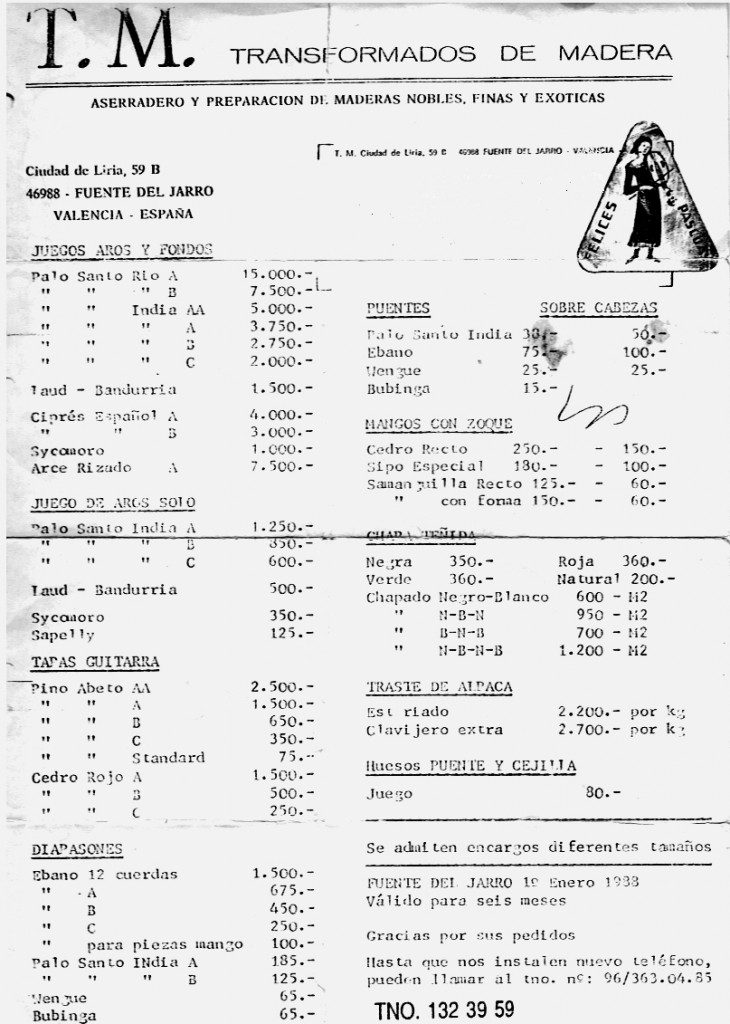
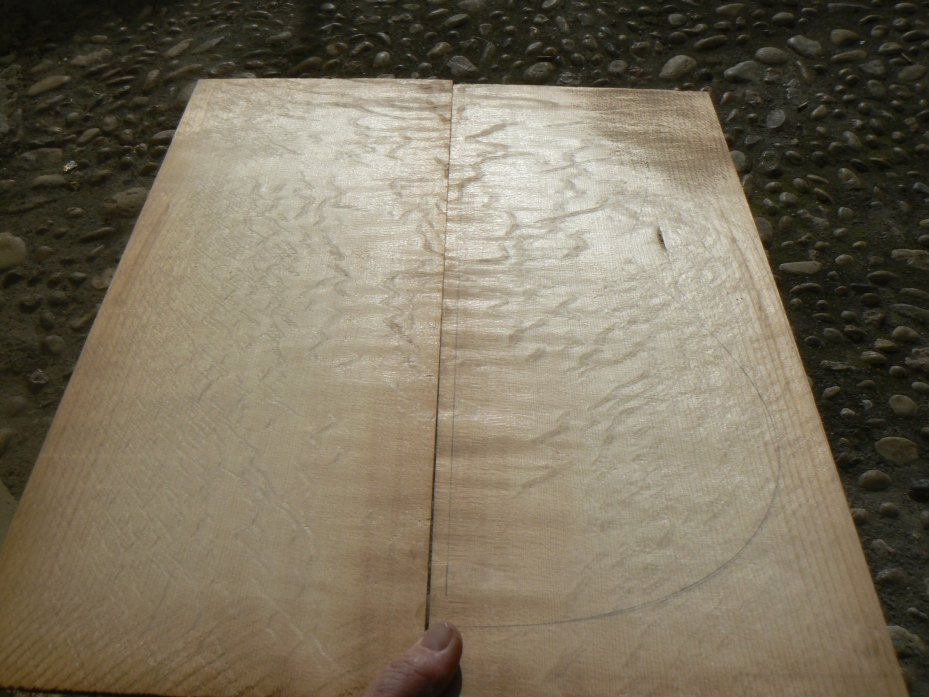
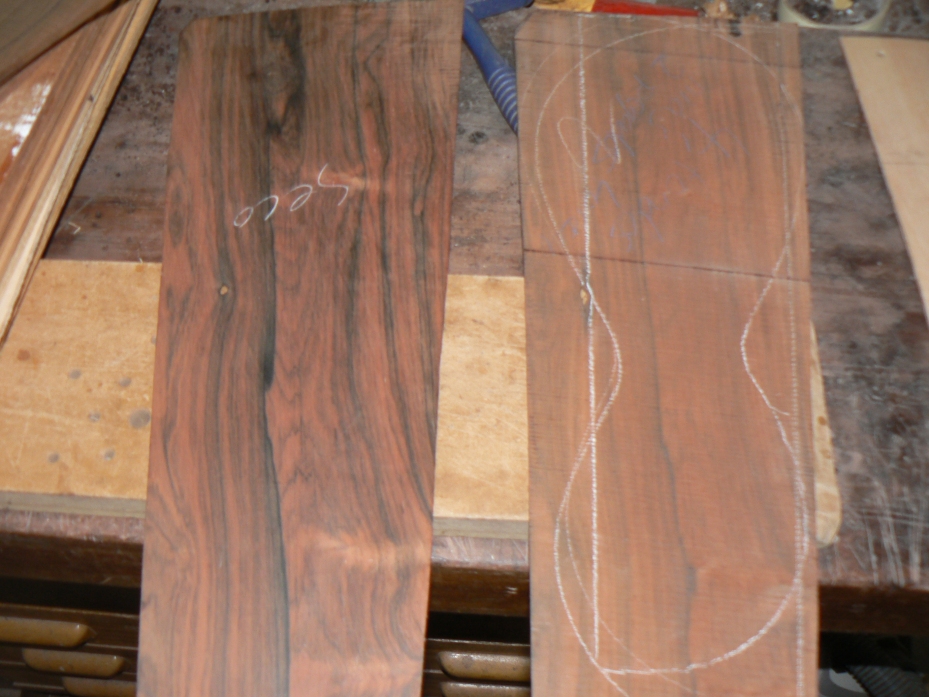
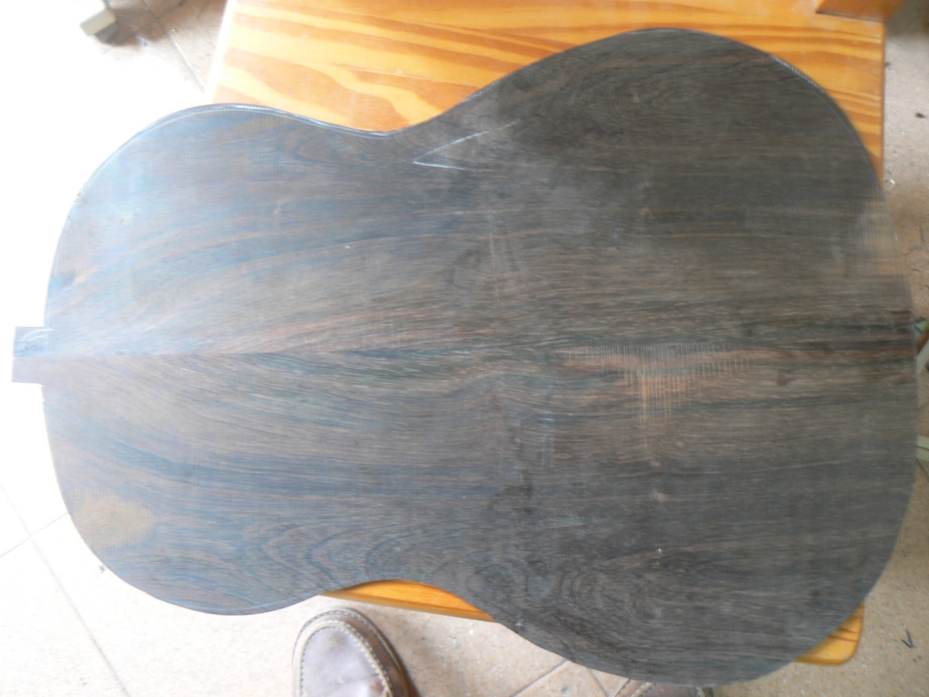
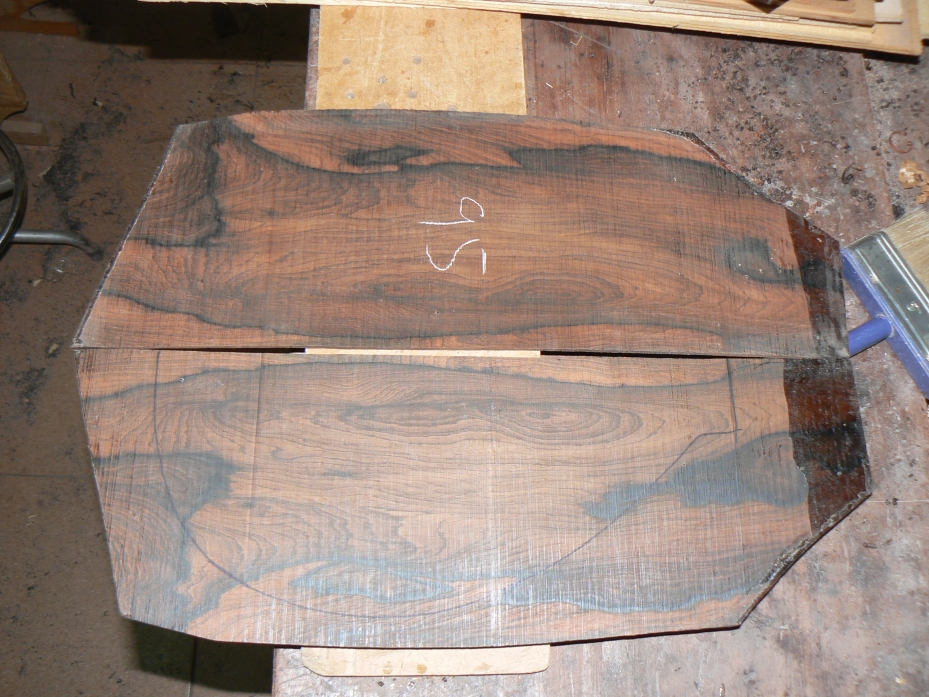
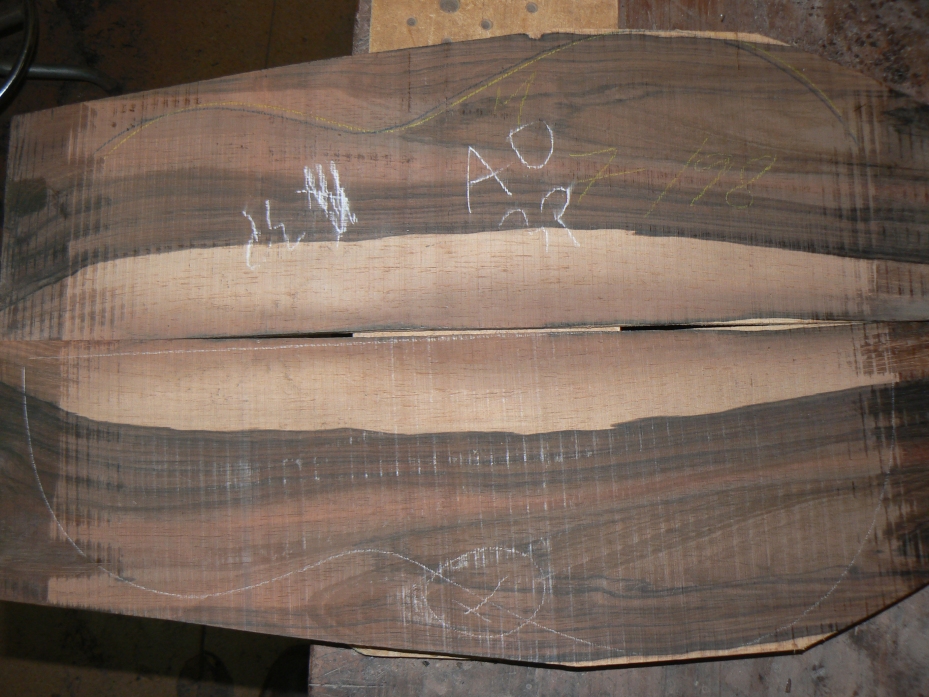
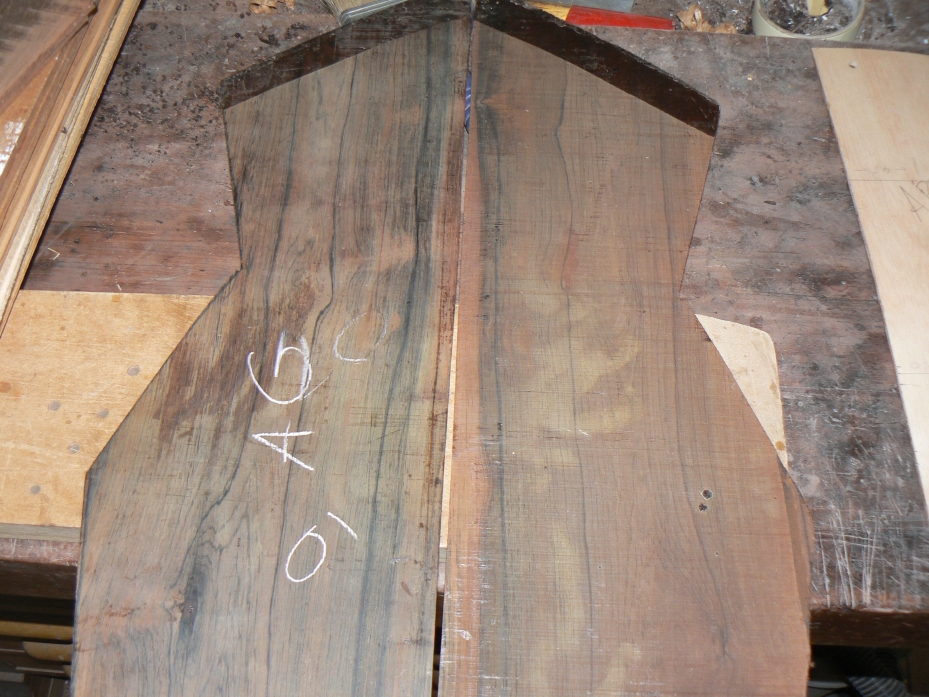
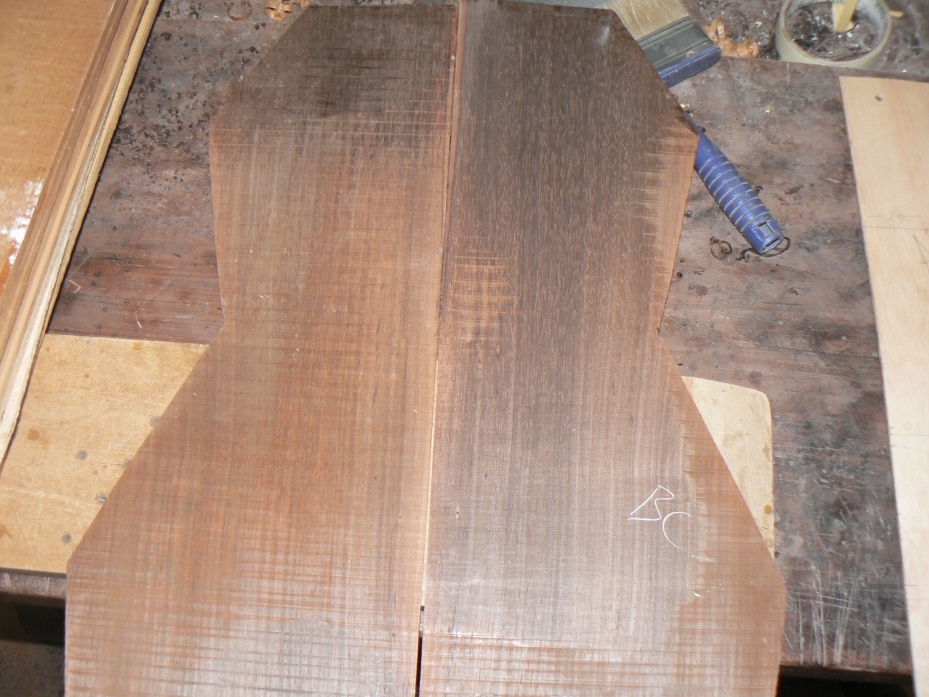
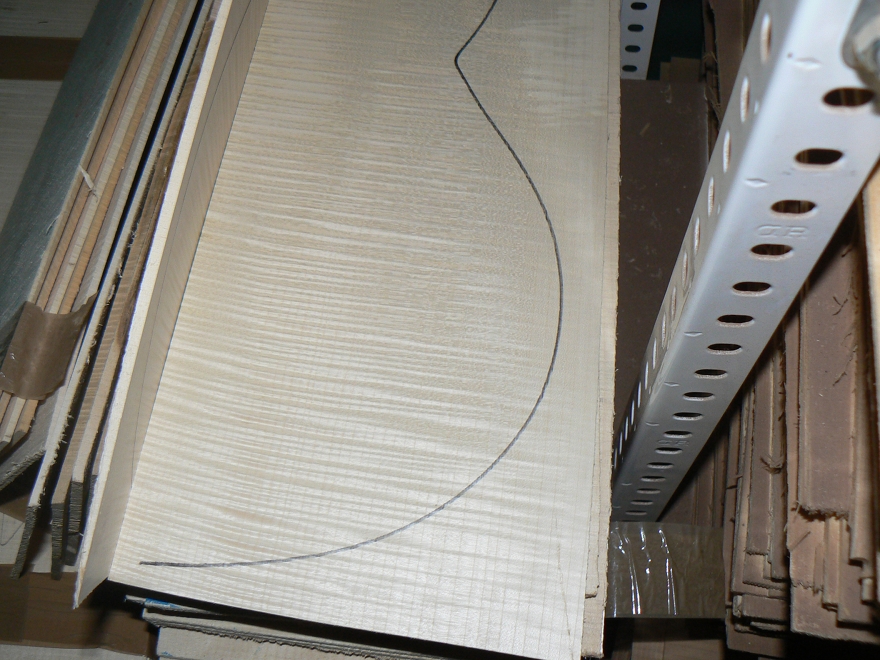
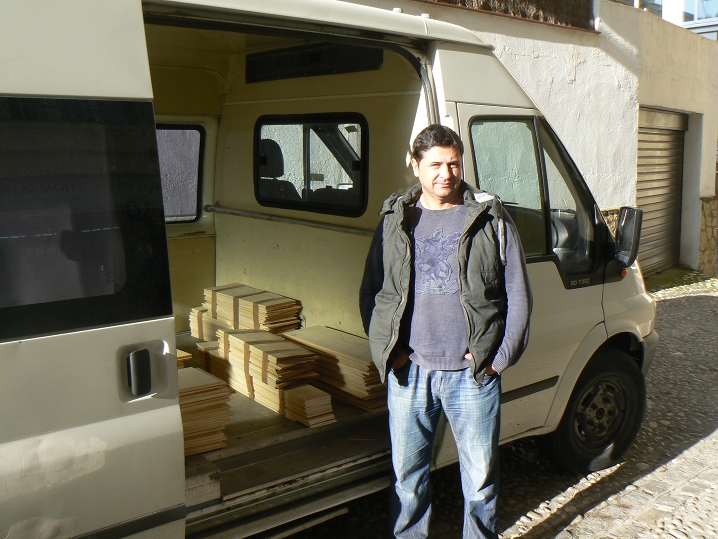
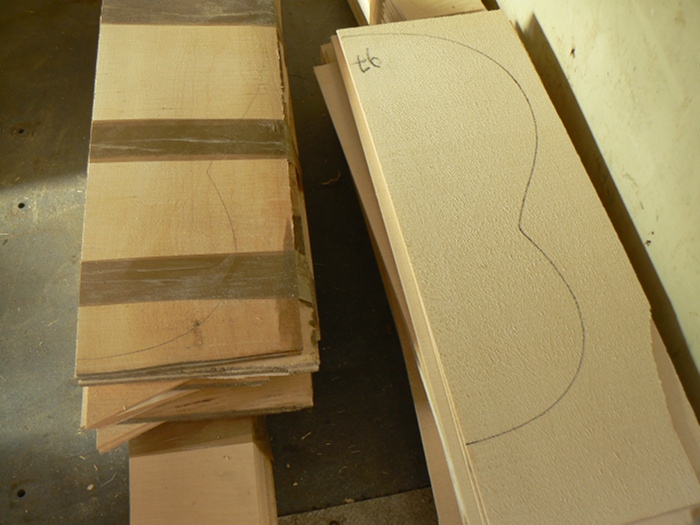
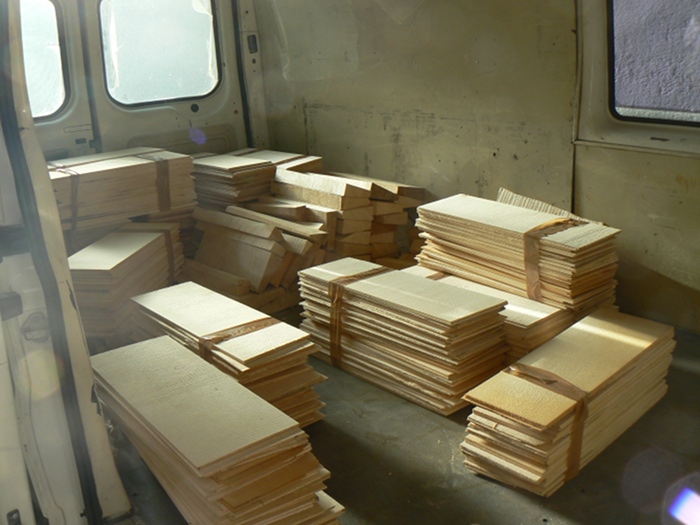
One of the things that I thought I would do as a post was to document a visit to Valencia to one of the wood dealers but I have no plans to go in the near future.  In the meantime I took a few photos yesterday because Ioan Cioloca was here from Romania yesterday.  He comes twice a year with maple and spruce and stops in Madrid, Granada and a few other places.  As with any wood seller the quality can vary wildly but since we get to choose the sets we want that is not a problem.  I have some very nice bearclaw from him, excellent bird’s-eye with tiny little eyes and this time I got some really curly maple.  I liked the look and feel of it and took 100 sets.  That is an awful lot considering that this is not the most common wood for classicals nor for flamencos but the way the Torres copy is selling both in bird’s-eye and curly I think it was a good idea.

I have some space right outside my workshop so “Juan”, as they call him here, parked his van and some of the other builders came by and made their purchases right there.  He promised bird’s-eye for his next trip so I will be putting aside some money for that as well.

Public Radio

The national classical radio station here in Spain has a programme on Sunday nights dedicated to the guitar.  Last week they played music from the two albums that Javier Riba has recorded.  The first one, with music from Albeniz was recorded with my Torres copy and the second one with music written for Andrés Segovia was recorded with the 1900 Vicente Arias.


Copying the Lorca – Els Jageneau

I made the first copy of the Lorca guitar in 1996 or thereabouts.  As mentioned I had examined the guitar and made my own drawing but my technical drawing skills and my guitar-making skills left a lot to be desired.  For the first copy I had access to the instrument and the guidance of an expert luthier (Chacón) but for subsequent copies I think I really didn’t have very good information and had not taken a single photo of the original.  Luckily, I later learned that Els Jageneau, a teacher at a guitar making school in Belgium had made a detailed drawing and a datasheet of the guitar.  The photos she took as well as the detailed information was very helpful as I continued to make this replica.  I will use some of her information here to illustrate the idiosyncrasies of this guitar.  The full plan is available and consists of “a documentation drawing at full size in which the guitar is shown in different views . Next to it there is a appendix with technical information including photos”  Please contact Ms. Jageneau for price and availability.

elsjageneau (at) skynet.be  

or   

Els Jageneau
Schransstraat 19
2530 Boechout
Belgium


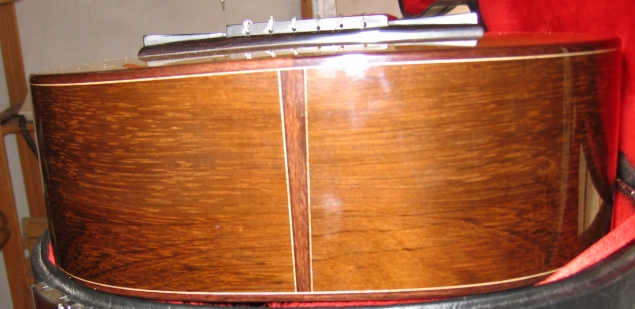
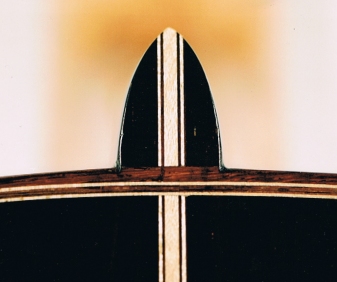
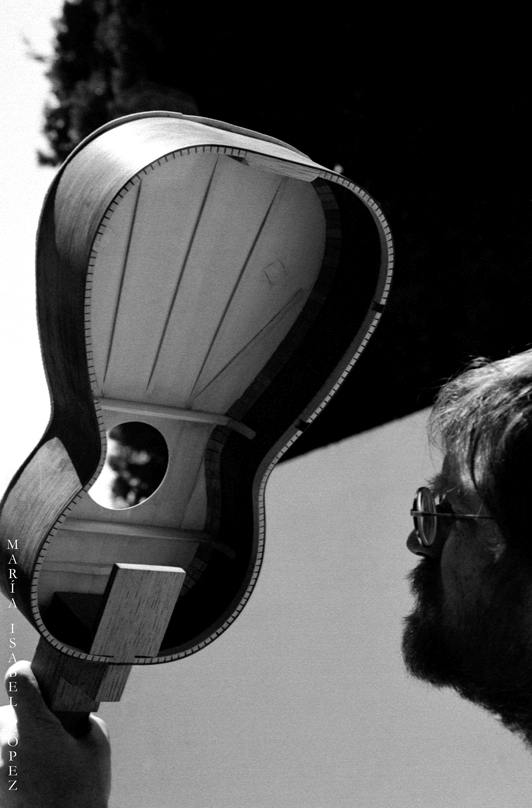
Here is the typical purfling style of instruments of this era.  I have never seen the right-angled mitres that we use today.  In the photo above note the massive ends of the bridge, something not very common then or now.


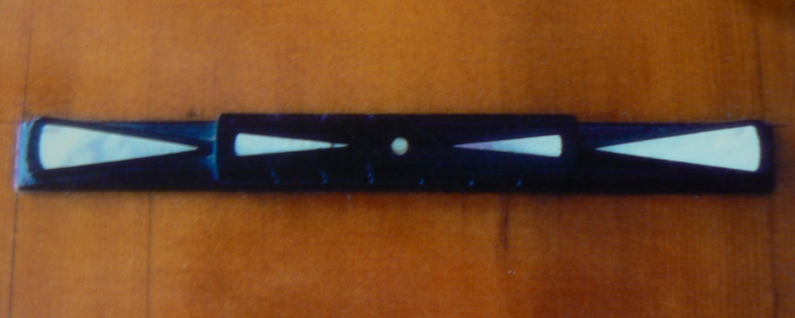
Below you can see that the top has cracked right at the ends of the bridge, explaining why we tend to feather the bridge ends.  Very interesting that another Lorca I have seen from 1871, made by his son, Antonio de Lorca Pino, has the same aesthetic and MOP decoration on the bridge but much lower and less massive bridge wings.  They learned their lesson.


My solution to this problem in making replicas was the diamond shaped patch which so far has worked to stop the crack before it happens.

This photo shows a lot of the other things I want to point out.  The slipper foot is very long and wide to the point of doing away with a back bar in that region.  The fan bracing with the common starting points for braces 1 and 2 as well as for 4 and 5 is present in some of the Pages instruments.  The photo of the endblock purfling above also shows the curve of the top which is extreme even by today’s standards.  It is more a cylindrical curve than a dome.   I believe that this, along with the fan bracing, is what gives this guitar its special voice when compared to other romantic instruments (especially french, italian or german ones).


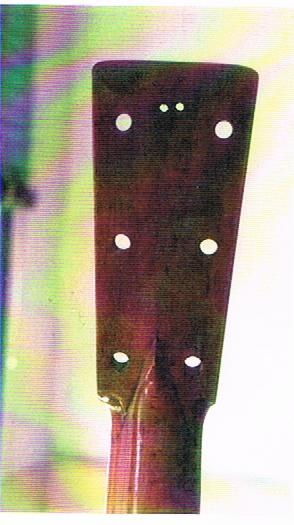
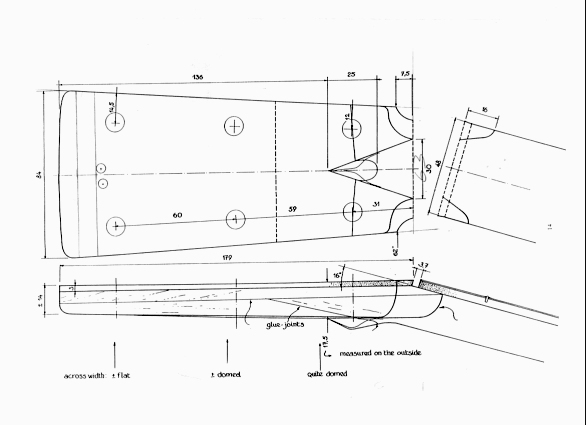
Below is a drawing from Ms. Jageneau’s notes that shows the true nature of the “V-joint” that is used in this gutar.  It is actually a scarf joint with an extra cedar “headplate” under the ebony one and then a false diamond and V carved into the back.  The neck blank was not thick enough to allow the diamond so an extra piece was glued on there.  I have seen other instruments made like this but what is the intention?  Some have suggested that he wanted to copy the V-joint or even Lacôte’s secret joint but didn’t know how.  I personally doubt that he made this elaborate joint out of an inablility or lack of knowledge.  The workmanship as a whole is very good and the acoustic result is also excellent.


To Torres or not to Torres.

Javier Riba was in town this week for some fret work and while he waited he was working on the pieces for his upcoming concert in Italy.  I asked him to record something for me on the Torres copy and the same thing on a cypress concert guitar.  I made the Torres copy in 2005 and the cypress in 2010.  The video was made with a digital still cam, there was a thunderstorm, and a few car noises so sound is about as bad as it gets, let’s say this is just for fun.  Tárrega’s Prelude No. 1


Concert guitar


Maple Torres copy


Antonio de Lorca

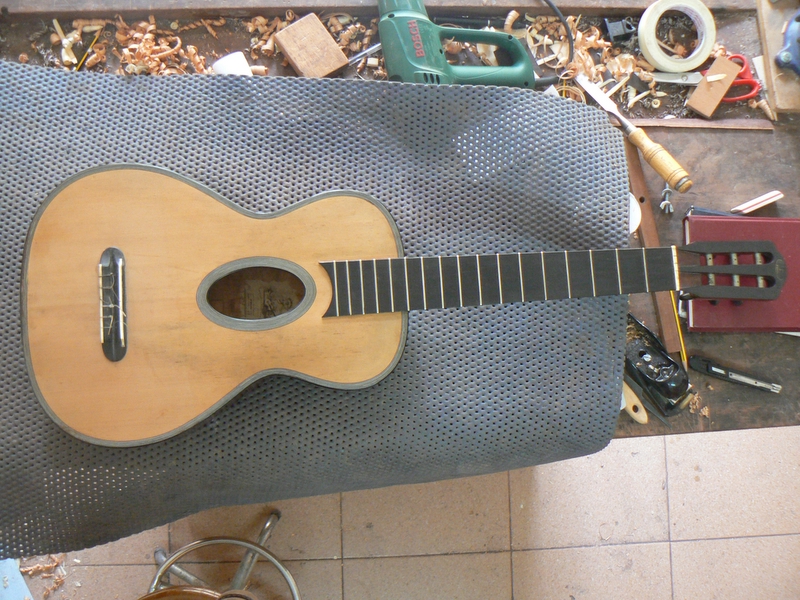
Antonio de Lorca Garcia was a guitar maker in Málaga, Spain in the 19th century.  He was an excellent maker and one of the last to use the elongated body shape in Spain but at the same time used fan bracing.  In the above pictures the only non-original elements are the pegs.  The instrument that I was able to study was part of the collection of Ángel Luis Cañete of Málaga with whom I coincided at the workshop of my first teacher José Ángel Chacon.  This guitar was built in 1847 and is very similar to the Pages guitars that I have seen having a similar shape and almost identical fan braces.