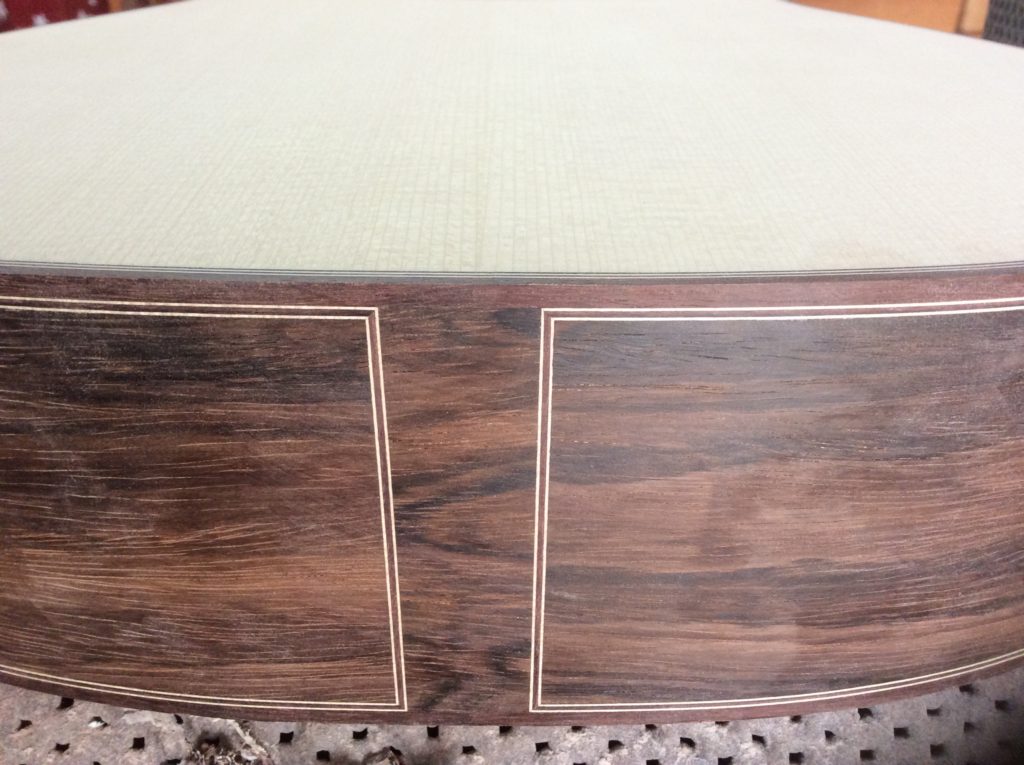
As this blog becomes more popular I get requests from people who wish to sell guitars they have. I don’t mind passing the information on but I reserve the right to pick and choose which guitars I talk about. Manuel de la Chica is one of my personal favorites as he started a trend of making higher quality instruments and might be the strongest link Granada has to Santos Hernández. I don’t know anything about this particular instrument, just that it is in Brussels and was made in 1958. If you are interested email me and I will send you contact details. 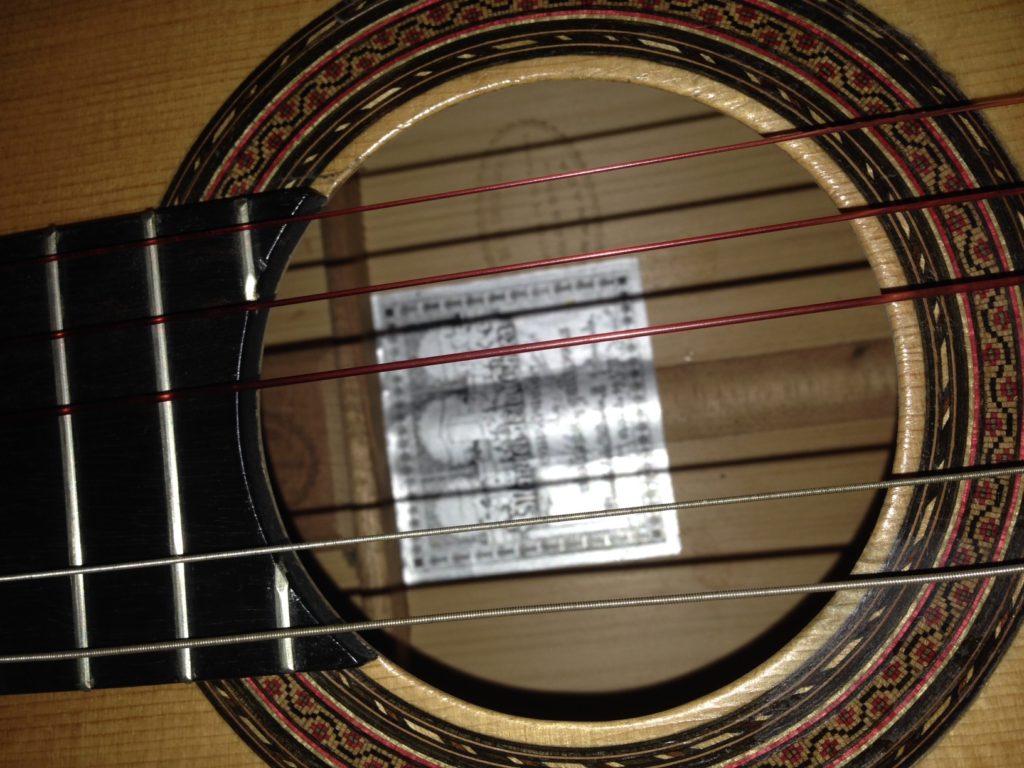
Category Archives: Guitar making
Edmonton guitar scene
I grew up near Edmonton, Alberta and then moved to the city for university and spent a total of four years there. My sister lives there came across an article in a local magazine she thought I might find interesting. I had never heard of Frank Gay and although I find the claims of “one of the greatest players and builders in the world” a bit ambitious that is typical of this little world we love. He may well have been the best ever but how was anyone to know? To be hailed as one of the best today requires only that you have an excellent marketing machine working for you while back in those days (50s and onwards) becoming famous for building or playing was hardly possible. The article tells us of a recently published book about Frank which I am sure will make for good reading and gives me another reason to be proud of my “home town”.
This photo comes from the following page by Marc O’Hara. 
I did a search on the magazine’s webpage for guitar and found the reference to a 20th anniversary concert of the Edmonton Classical Guitar Society (It seems that Frank founded one of those in Edmonton but obviously not this one). The lineup looked good and included Sebastian Robles who won 4th prize in the youth category of the GFA this year. Keep on Truckin’ Edmonton!
Reproductions, replicas and copies
Whatever you call the process, extracting the information from great guitars and taking advantage of that to build new ones is a very common practice. Some try to get the same aesthetics, some are looking to capture that 100-year-old sound and still others are more interested in learning about the processes used by the historical makers. Usually even those makers who are quick to state that they have developed their own models have studied the past masters or some particular guitar they have found to be excellent. The guitar has evolved so much that to ignore what we have collectively learned is unwise to say the least.
In my own case, the first guitar I copied was Antonio de Lorca from Málaga. The original was the earliest fan-braced instrument I had seen at the time and had a very high curve on the top. The owner had some very interesting guitars but this is the one that I chose to study. It captured my attention and the first copy I made proved interesting to some players. I went on to make quite a few and still offer it. In the meantime I was developing my own guitar and its sound using as a starting point the dimensions and bracing of a Hauser guitar. This model has since undergone changes in dimensions, bracing, and aesthetics.
My first experience with a great-sounding Torres (not all of them are) got me excited and I wanted to try to get that sound. Once again, total access to the instrument was very important to discovering all the details that made it great. There must be a lot of guitarists who feel the way I do about that sound as this has become my most popular model.
A lot of factors have to come together for that kind of success and that just didn’t happen with the next guitar that came my way. A 1900 Vicente Arias in perfect condition and very playable once again had me marvelling at the maker´s skill and good taste and making another copy. A large number of makers have asked me for details about this guitar but in general guitarists are not attracted to VIcente Arias the way they are Antonio de Torres.
I have never asked myself, “Which guitar should I copy if I want a commercial success?” but rather I do a restoration or hear a guitar and fall in love with it. Well the latest copy came out of an article I was asked to write about a guitar made by Santos Hernández. 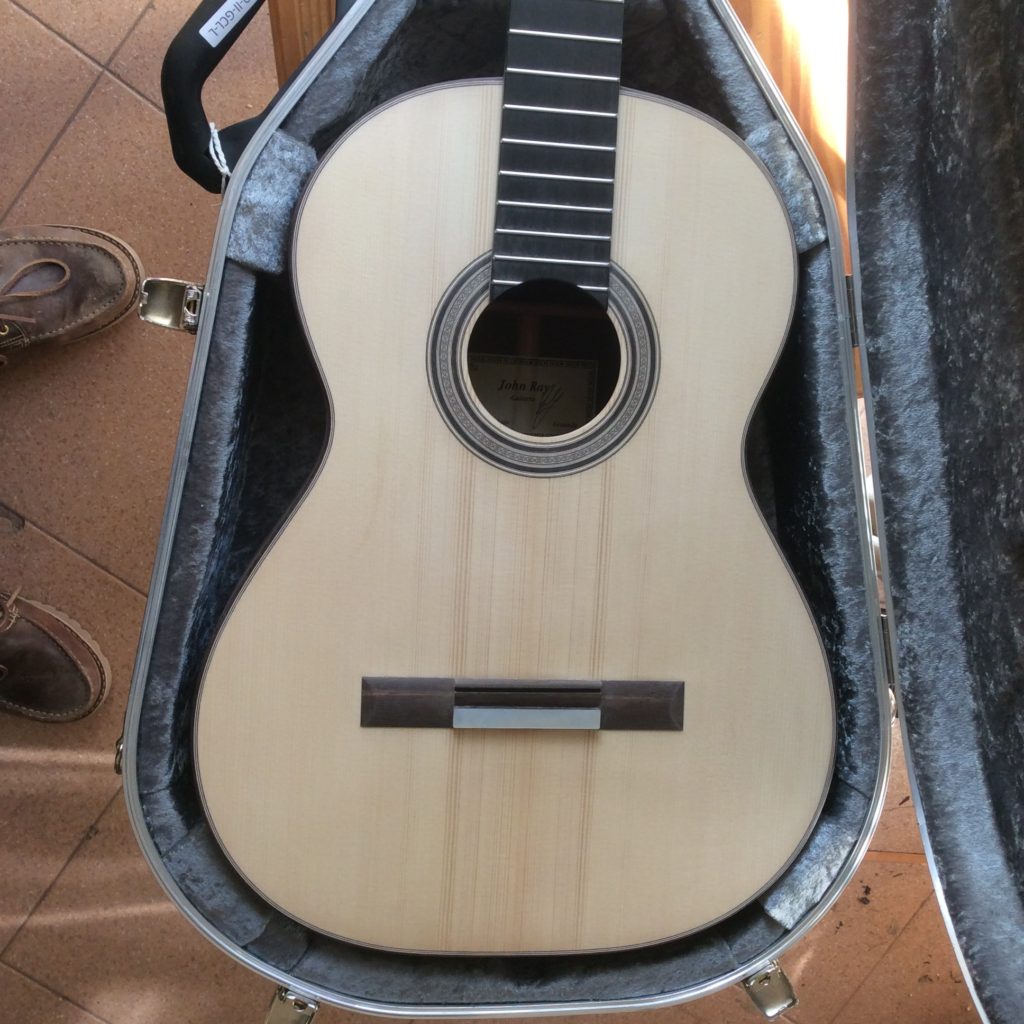 I started by writing the article (in which I include a complete drawing of the guitar) but once again due to the wonderful qualities of the guitar I was asked to make a replica. I just finished it and will soon be sending it to the client.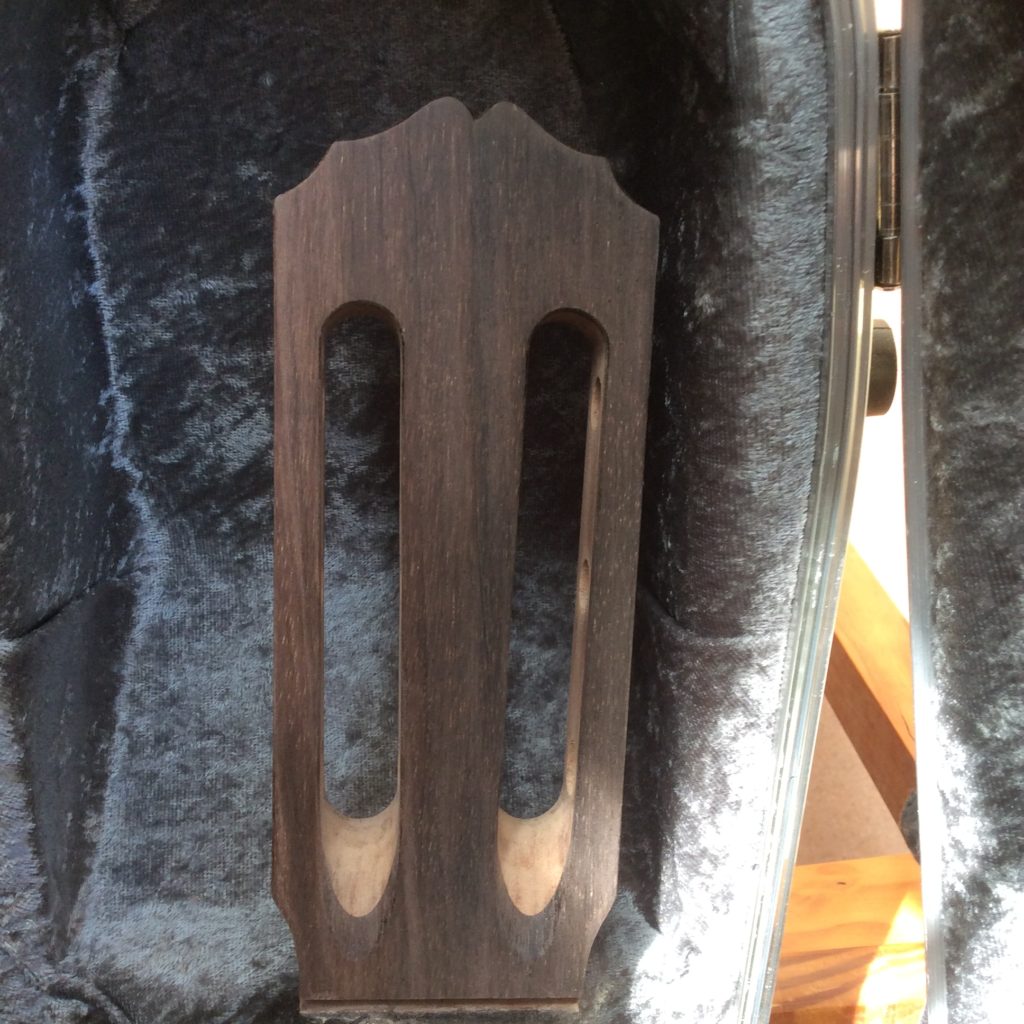
No videos or sound clips yet but I can tell you that this guitar breaks with what I usually do. The top and back linings are solid and not much wider than the purfling and the top is quite thin. In addition, the body is much deeper than my other guitars and all of this combines to create an instrument with a very low air resonance – below F. I also found the rosette particularily well-designed and showed it at different stages of completion in an earlier post. 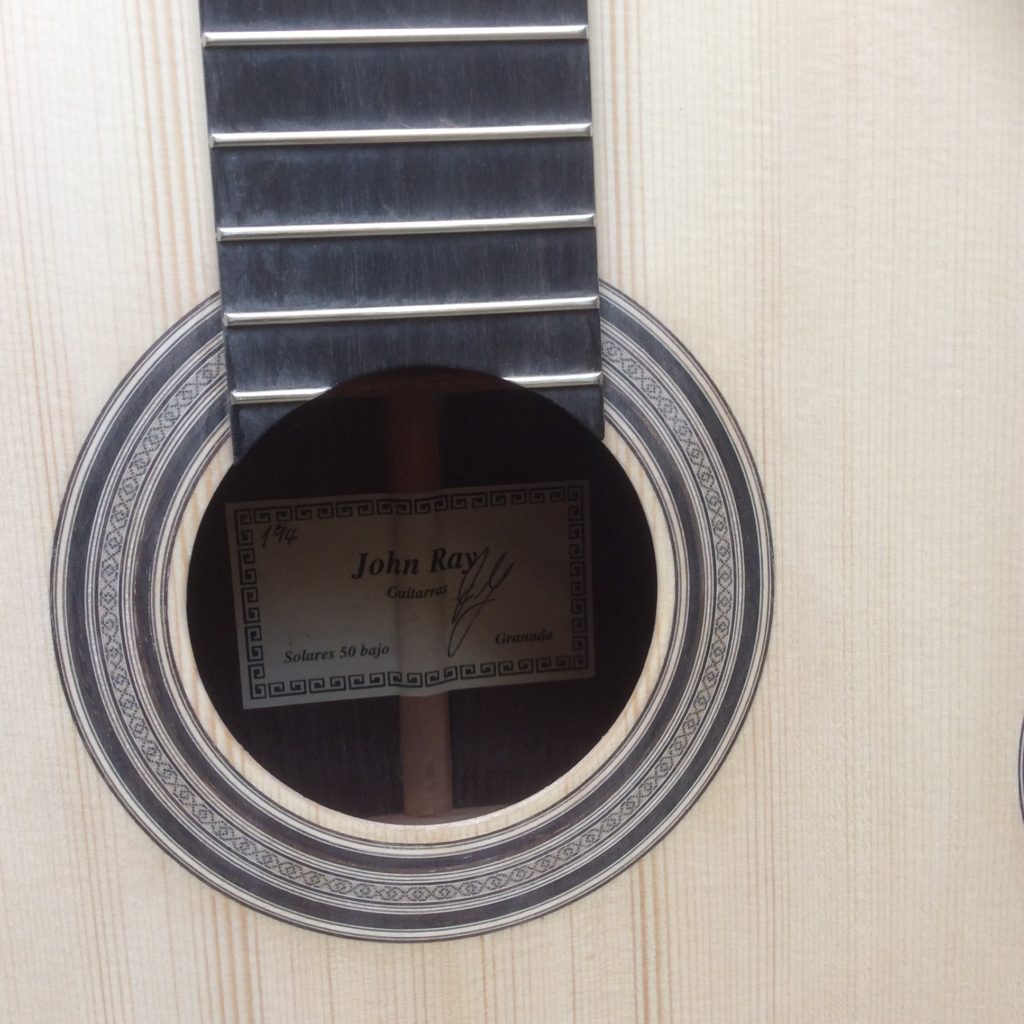
Until now all of the historic guitars that I have studied give the impression of having been built face down and the back being the last element of the box to get glued on. This one still has me stymied. Very little in the way of indications of what the order of assembly was. Richard Bruné states that Santos used three different methods, “peones” face down and glueing the back on last, linings top and back and the back on last but he also used linings with the back glued on first and the top last with some of his guitars. This is no surprise as he was also a violin-maker. The typical clues (tool marks and glue drips) were mostly inconclusive. I made this one face down but the next one might be different.
Frank Wallace
“New and improved” sells as well today as it did back in the fifties when advertisers were using it to peddle the same tired old soap powders to those who were looking for something more. New technology and science are being applied to guitar-making these days and although improvement might be possible, in some cases high technology, “science” and novelty are selling points regardless of the effect on the final quality of the guitar.
Thankfully there are times when we hear guitars; well-played and well made which are completely traditional and for that reason sound just the way we like a guitar to sound. The latest album by composer/guitarist Frank Wallace is a case in point. “Four Spanish Guitars” brings us guitars by Manuel Gutierrez, Manuel de Soto y Solares, Manuel Ramírez and Ignacio Fleta and some wonderful music. Click here for information about Frank’s concerts and here if you want to listen to a few tracks.
Workmanship
I am sure I have written already about the use of the term workmanship here or on one of the guitar forums. Guitar connaisseurs speak of “impeccable workmanship”, often using the term to describe something that in reality is badly made but very busy or ambitious. I suppose it is understandable because these people know nothing about guitar-making. I do wish they would stop though. Good workmanship is the reflection of organized, conscientious effort which reflects an understanding of aesthetics and function. It is by no means about bling. Furthermore, despite the sensation of quality that good workmanship can transmit, it isn’t about perfection either. I took a few pictures yesterday just for illustration. None of these are perfect, one of them could even be considered to be too “busy” but there are elements of refinement in all of them. In the first photo the challenge is planning the job in such a way that the corners of the white veneers line up at all points along the “log” so that each corner on the tiles then 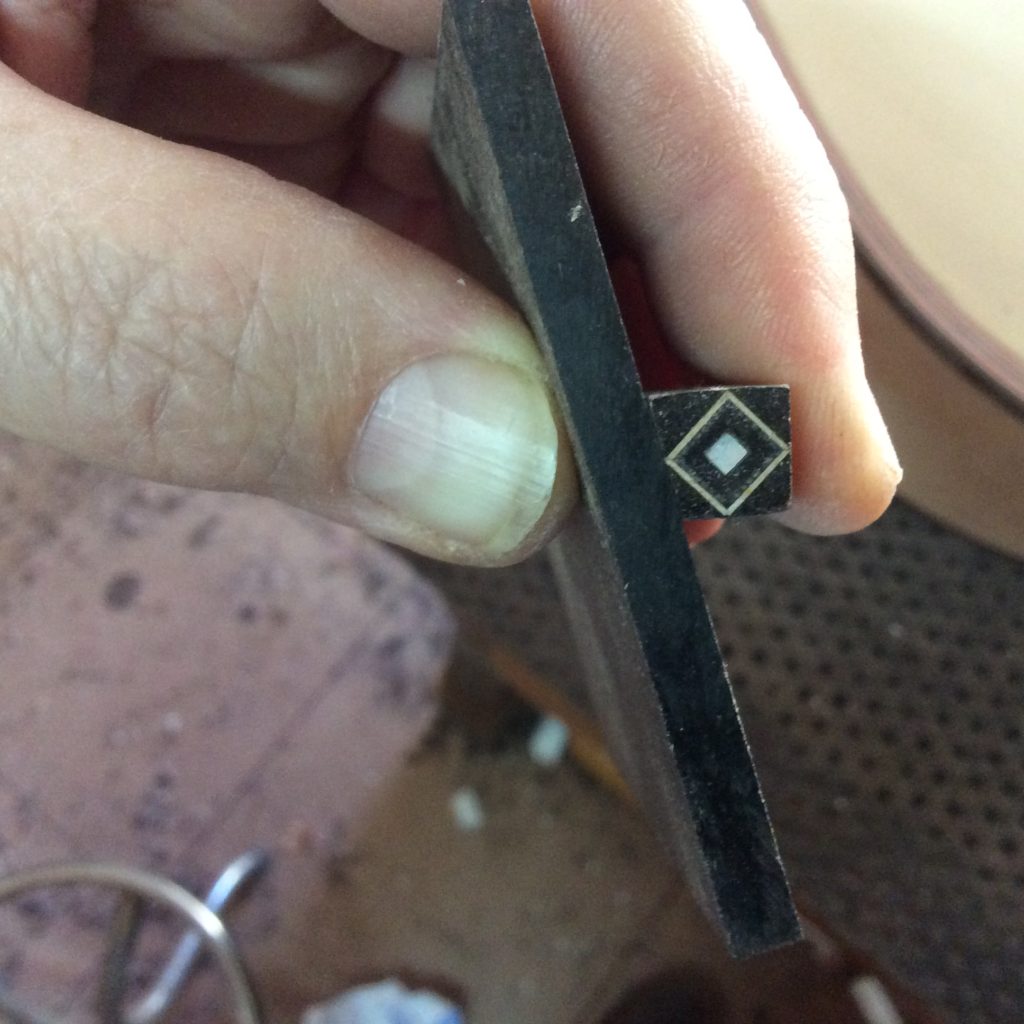 lines up with the next and creates the desired effect. When placed side by side.
Sometimes on purflings I will stagger the joints of the two sides which confuses the observer as to where the joint is. 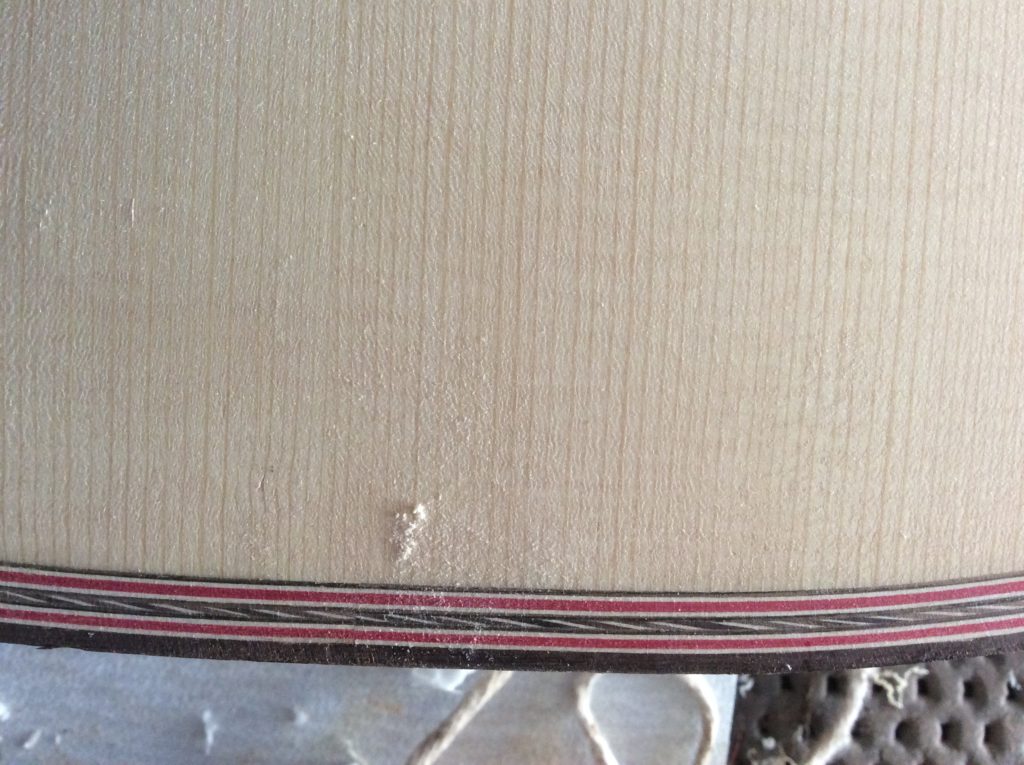 Of course the joint is always placed off-centre as the eye goes automatically to the centre to look for it.
Making the herringbone strips come together both at the centreline and placing a MOP piece on the same line is challenging but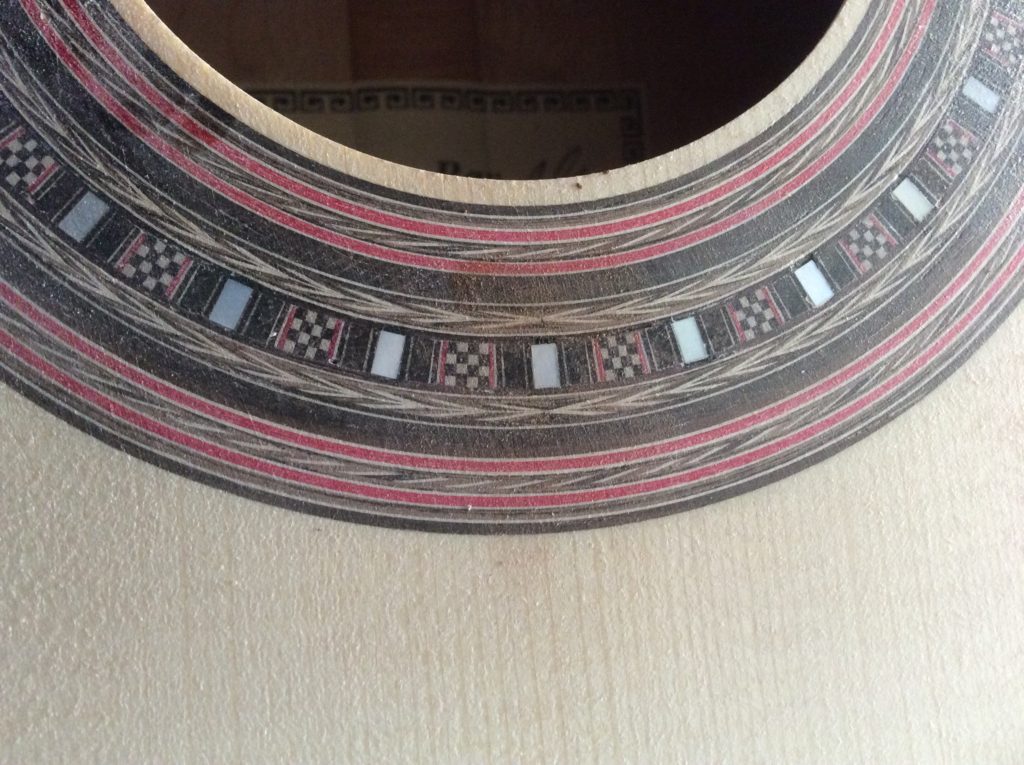 the symmetry Torres used is very nice. Ideally it should look like the thin veneer (backbone) of the herringbone is continuous but joints in white wood meeting at endgrain are almost always visible.
This design obliges me to start glueing binding and purfling at the heel as Iast-minute fitting might go well or might go badly. 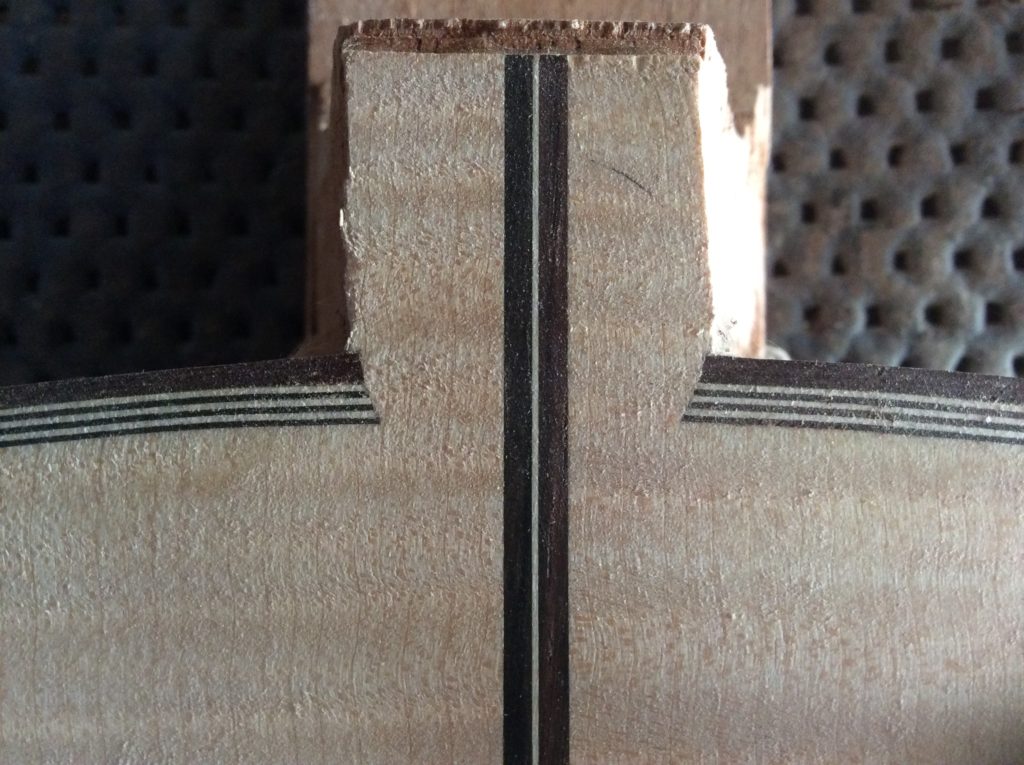 I try to make a continuous circle using the bee-stings and the contour of the heel. On the original it is not quite so clear on the heel but the curve of the bee-stings certainly is.
This last one I took from a bit of a vertical angle so the perspective makes it look like it is wedge-shaped while it really isn’t. I saw this on another maker’s guitar and though I would try it. It is definitely more work than the using just the binding to frame the side the way we usually do.