
I am sure there are Torres yet to be discovered but they don’t surface very often. This one was recently donated to the Museu de la Música in Barcelona. 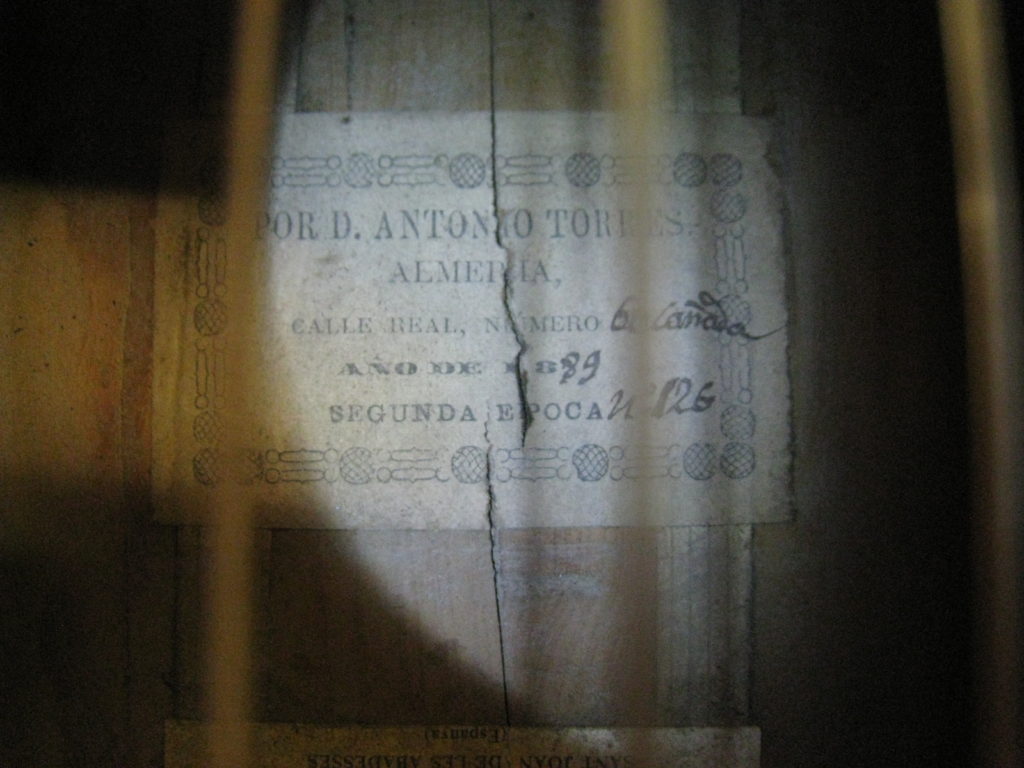 There are a few anomalies with respect to existing Torres guitars but in examining it I also saw many characteristics which convinced me that it is a Torres guitar.
 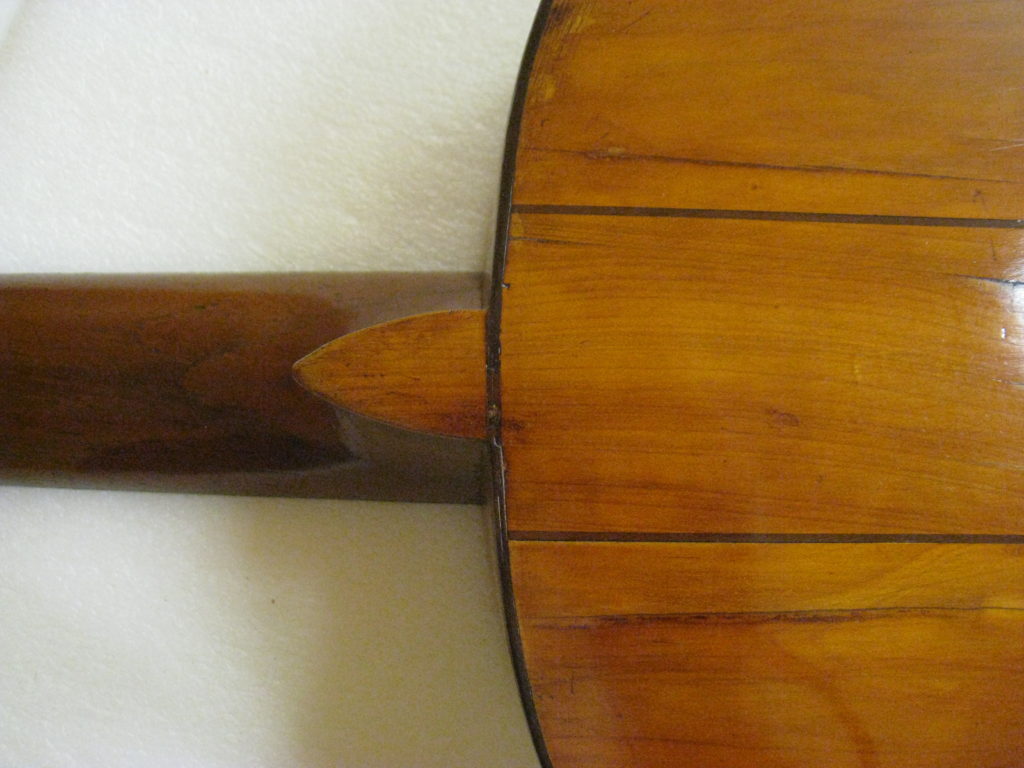 The way he carved the heel transition to the neck to match the shadow of the heel itself is one of those things. The simplicity but elegance of the rosette is another.
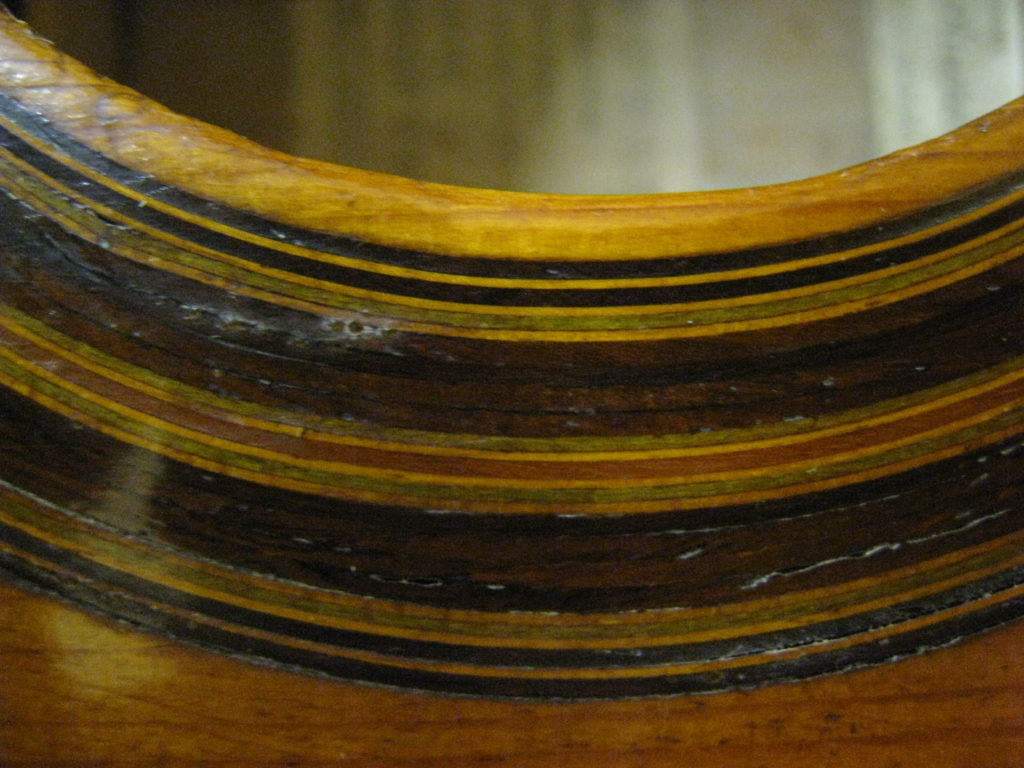 This guitar is one of the less elaborate guitars that Torres made and used wood of lower quality. The collection of guitars in the Barcelona museum is easily the best in Spain and they should be congratulated for the effort and resources dedicated to it. I have always been welcomed and treated well there and this time was no exception.
Category Archives: Guitar making
Experimentation
How did the guitar come to be the fantastic, warm and expressive instrument that it is today? How does an individual maker come to make the best guitar he or she can? Books have been written on how to make a great guitar and hundreds have studied the masters hoping to find the secrets. In reality, the process of evolution followed by the guitar is one of small, gradual changes and, very infrequently, brilliant steps forward. Even the greatest genius of the guitar – Antonio de Torres – really only brought together aspects that were already being put into practice by other makers. The novice guitar-maker must first do his best to internalize all that has been learned up until today and then from that point onward follow the same path of experimentation.
In order for this experimentation to be fruitful it must be very gradual also. Trying out radical new procedures will lead to a different sound but ¿which feature is the one that should be incorporated to your building? Better to make very small changes, evaluate them when finished and if they don’t convince you, your colleagues or the players, eliminate them from your procedure on the next instrument. Simple things like the angle of the fan braces, the soundhole diametre, the weight of the bridge wood and the dimensions of the back braces can be important. I have been working this way for years and I am very pleased with the results: an instrument which improves constantly despite the odd instance of a step backward followed by two steps forward.
On the guitars I am working on I am experimenting rather more radically than I advise so do what I say, not what I do. In the one case I have laminated two layers together for the sides for the first time. I don’t think the difference will be very large compared to a normal side of the same thickness but you really can’t predict these things.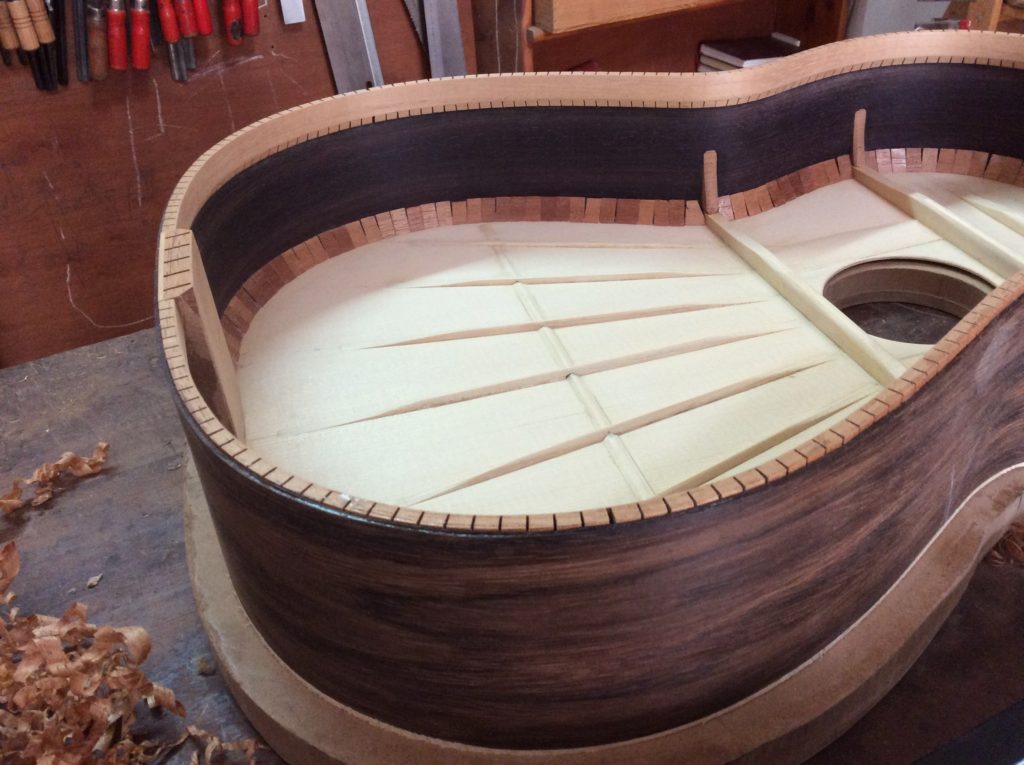 The other thing I am doing for the first time is an assymmetrical bracing. I feel justified in using an entirely new bracing system because it is a copy of a historical instrument.
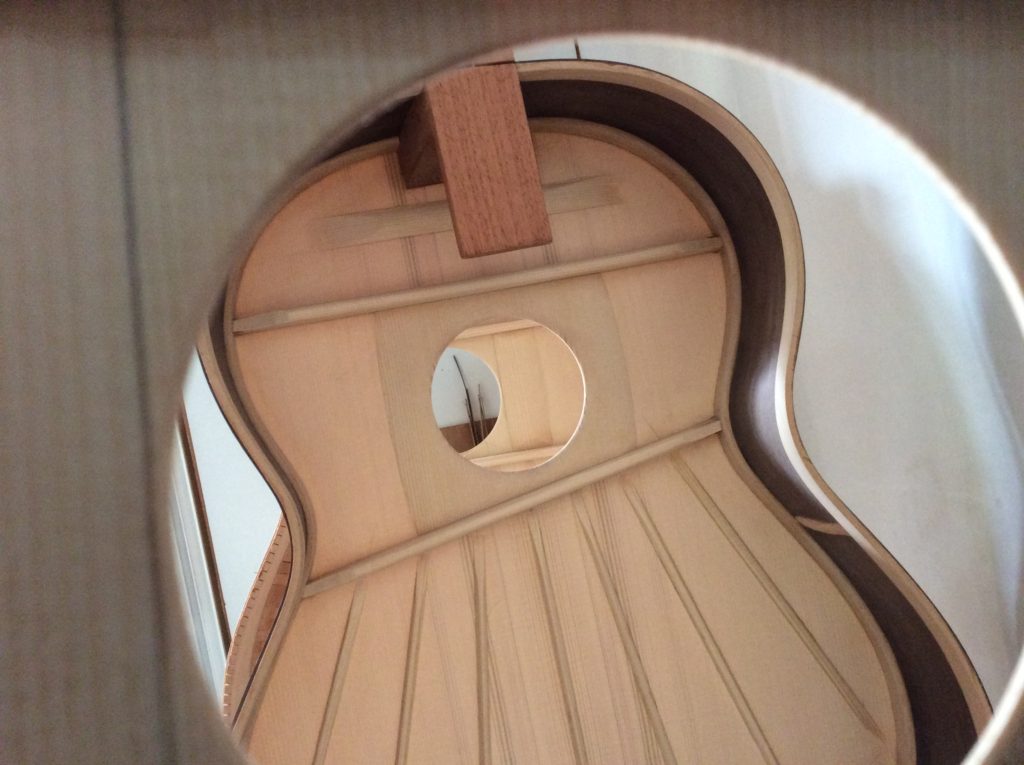 Stay tuned to find out if I keep these modifications or if this is the first and last time I use them.
Eusebio Rioja – First edition
I’ve been wanting to get my hands on this book for some time now. The first edition, published in 1976 is one that very few have seen as only 500 copies were printed and each is numbered by hand by the author. For the second and third editions (almost identical) the information was expanded and I was told that some changes were made due to pressure from certain guitar-makers. Now I get to find out the truth. The real reason, however, for buying this book is to make sure that a copy gets into the museum of the guitar in Granada. The project is just getting started so it may be some time before you can come and visit and see guitars made by the historical greats, documents like this book and maybe even some of the old tools used by Eduardo Ferrer and Manuel de la Chica.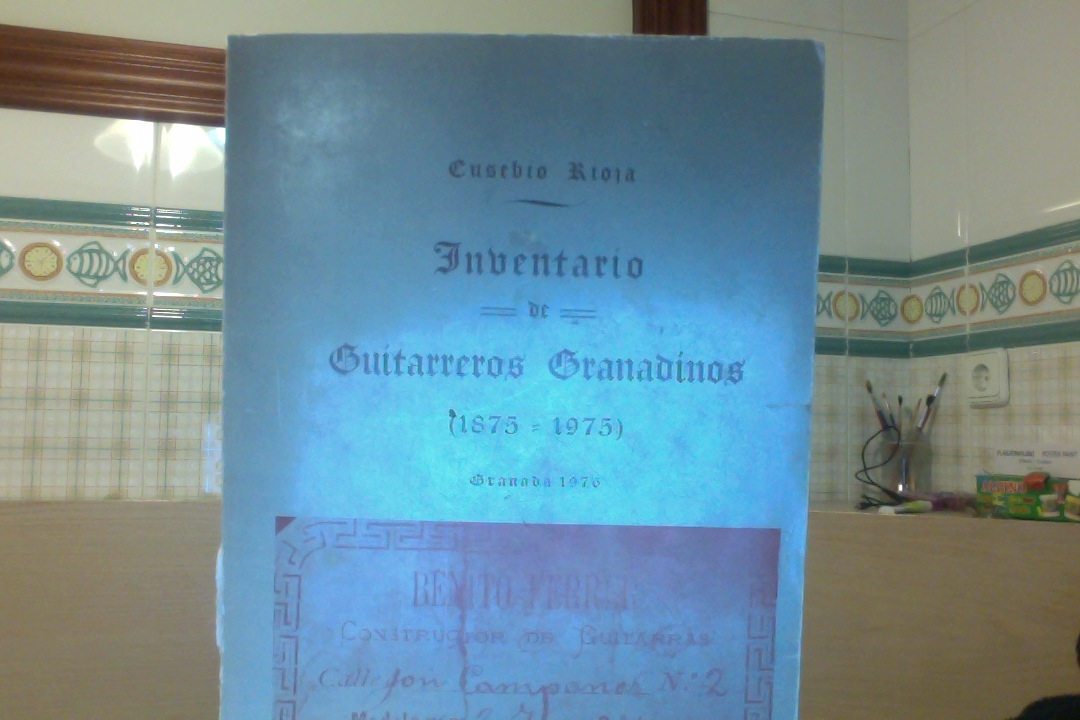
Los Angeles Classical Guitar
I have known of this place for some time now but I never knew that he carried so many books. What a selection! He has guitar books that are out of print and very hard to find. He even has a few copies of a wonderful book about the Granada makers 😉 signed by the members of the Marin family. 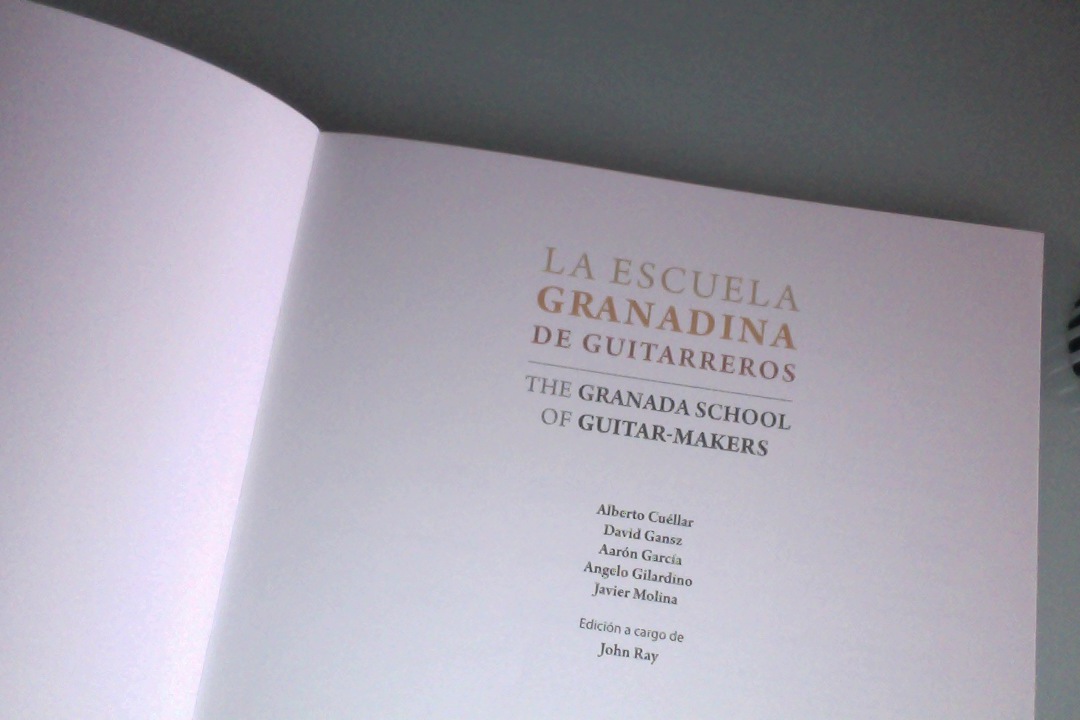
Books on guitar-making
I have always encouraged amateurs to get some training from a working professional if they are serious about this business; there is just so much to learn from the day-to-day and so many things you just don’t think to put in a book. 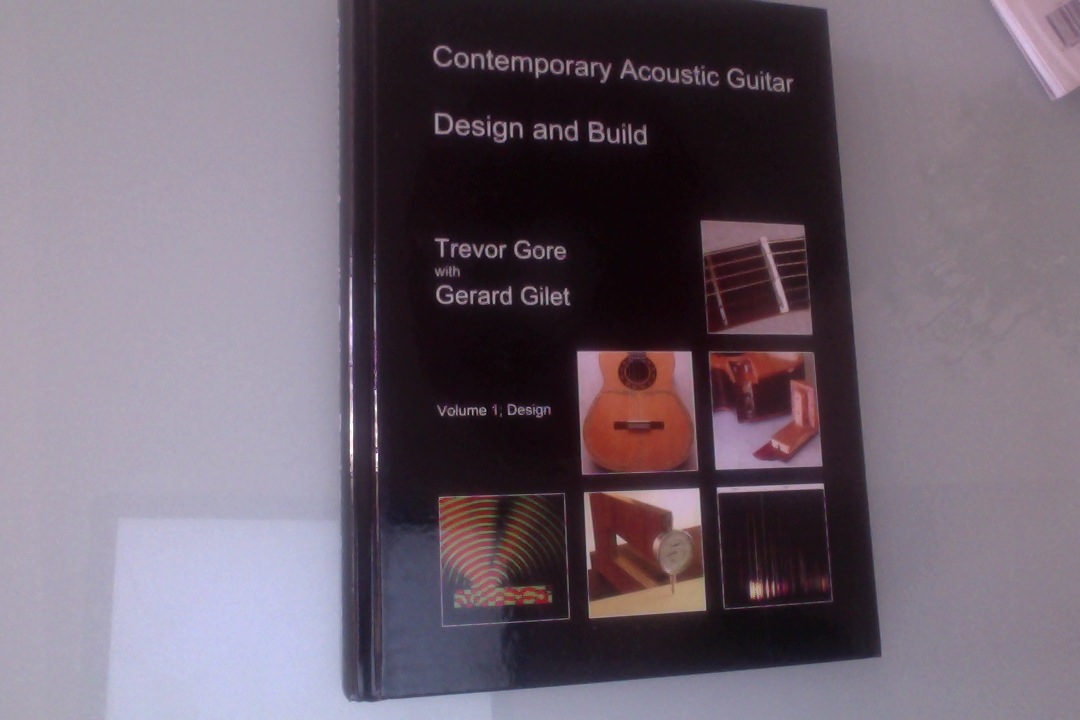 I recently bought this book and am looking forward to reading it (this is the first volume- Design) as it deals in the theory of making a great guitar. I am often dismissive of the worth of things like this but in this case I have seen that the author really has a lot to offer about how wood and sound work together. If something good comes out of reading it and using it then (just as with good tools) the price is well worth it. Find it here.