
Once again I was invited to participate in a WoodMusICK conference; this time on the question of the Effects of Playing on Early and Modern Musical Instruments. I am collaborating on a project headed by Dr. Marco Antonio Pérez (and involving the Museu de la Música) which we presented together. The idea of WoodMusICK is to bring together scientists, museums, builders and restoration experts in an attempt to work towards sharing knowledge and reaching some agreement about how we should treat wooden musical instruments. 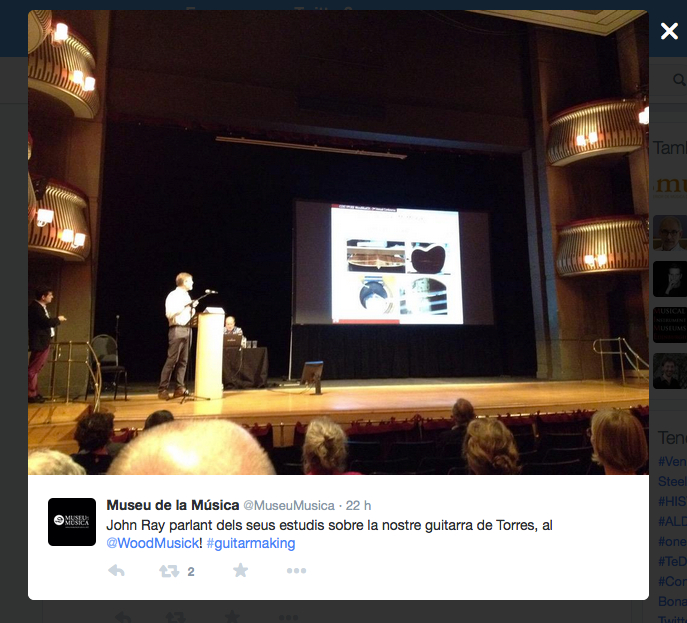 We also got to visit the collection at the RCM which has some extremely interesting pieces including what might be the oldest surviving stringed keyboard instrument (the clavicytherium) and what is argued to be the earliest guitar.
 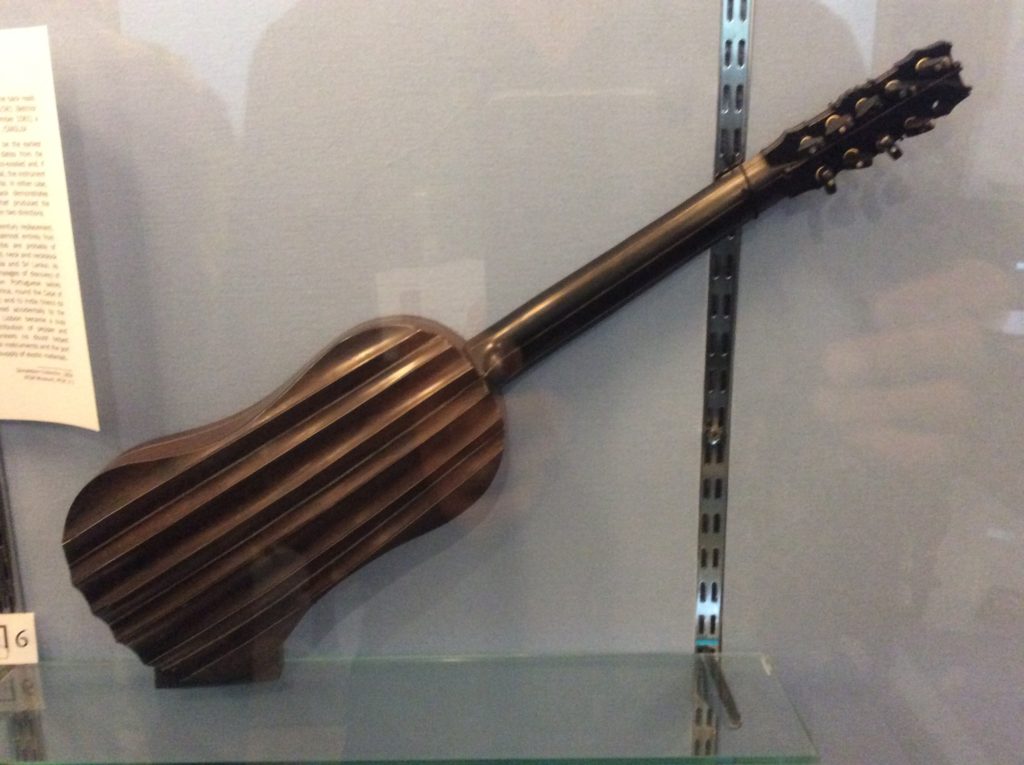 I have included the exhibition notes because I don’t know much about guitars from that period. If you click on the last photo you can probably read it. If you are interested and cannot read it I can send you the original.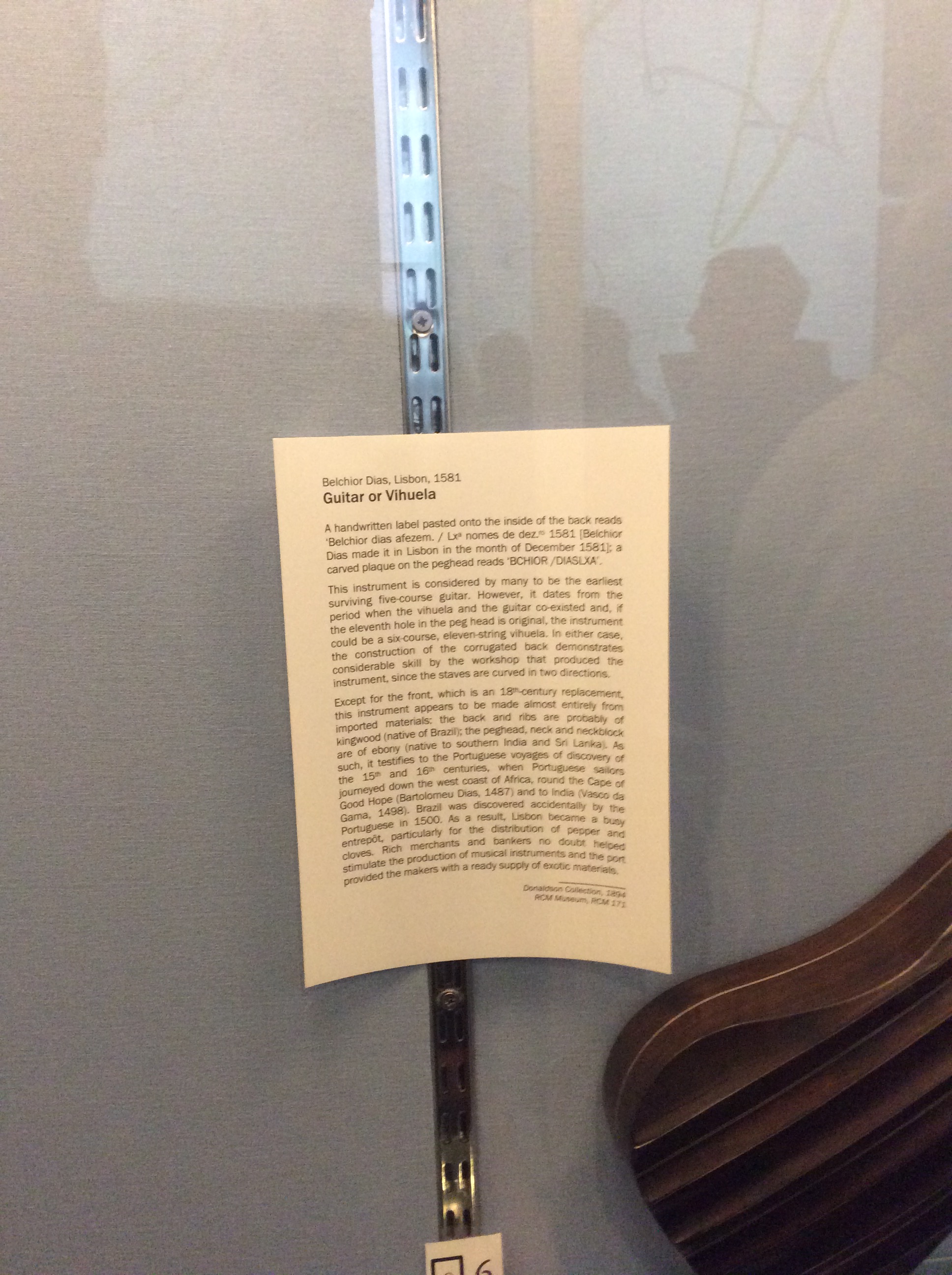
Category Archives: Guitar making
Musikinstrumenten-Museum Berlin
I just got back from Berlin, an incredible city no matter what your interests might be. Of course I visited the Museum of Musical Instruments and took a few pictures. I was very impressed with the museum; very large open spaces with room to see the instruments from all angles in their glass cases or in the case of the keyboard instruments in the open.
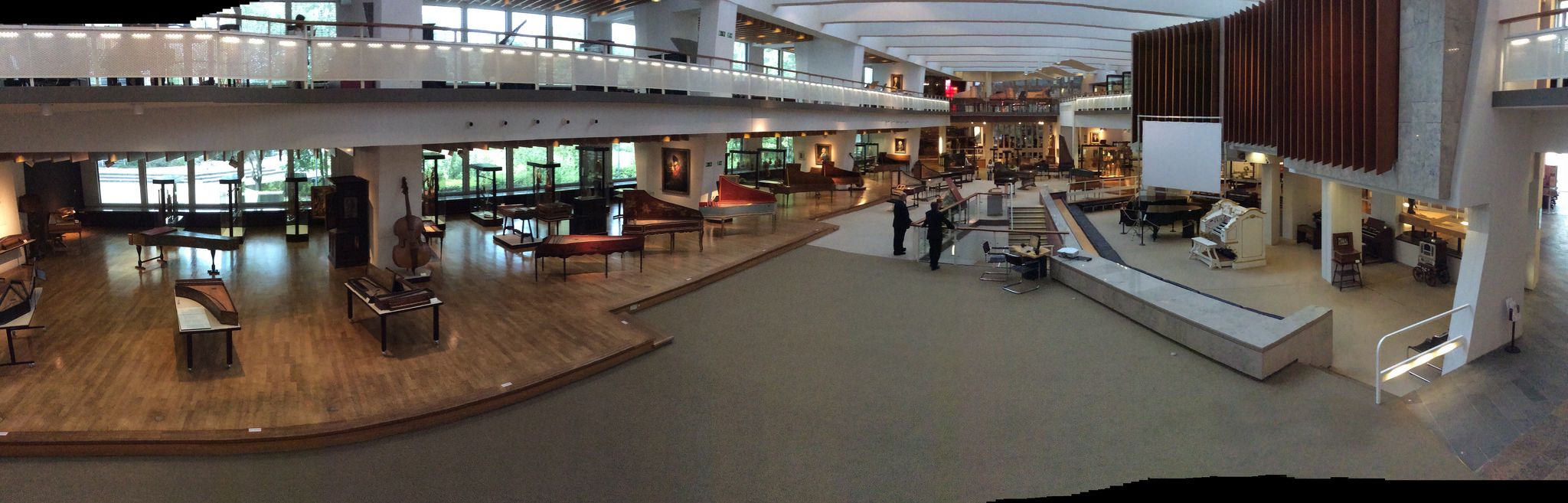 There are instruments by Steiner, Tielke, Gélas, Stauffer and other very relevant historic makers. The audio guide includes recordings from many of the instruments and from time to time concerts are offered on those instruments that can safely be played.
I have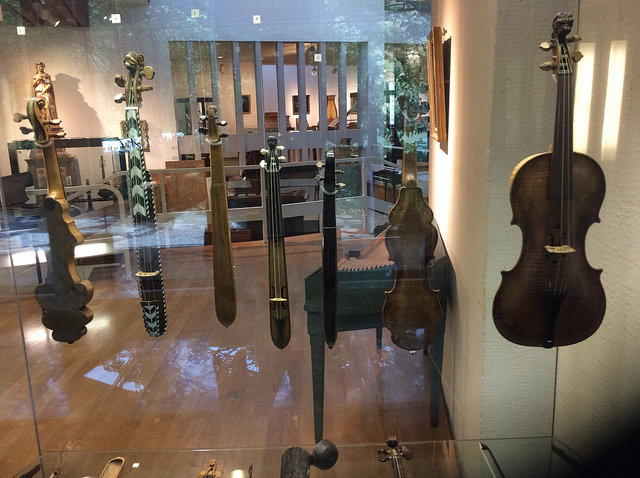 never been interested in making violins but if I make one someday it will be a kit or pochette. For some reason I find these fascinating and would enjoy the challenge of making one that would sound nice. The kit was used apparently by dance teachers to save cost, space and obviously wear and tear on a good violin they might have. We can imagine also that these might be used by musicians also to practice if noise were an issue. The word pochette and probably even kit come from the words for pocket where the violin was carried in the long pockets of the coats they wore back then. The one that looks like a normal violin actually has a very small chamber which you can see from the back and a full top and half sides. This kind of defeats the purpose of a kit but maybe the intentions were different.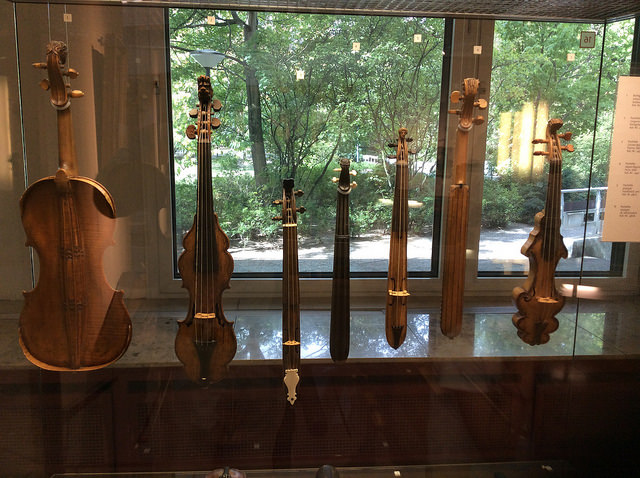
A few low-key 😉 exhibits appropriate for children and a decent meal for an excellent price in the cafeteria downstairs made this one of the highlights of our trip to Berlin.
Englelmann Tops
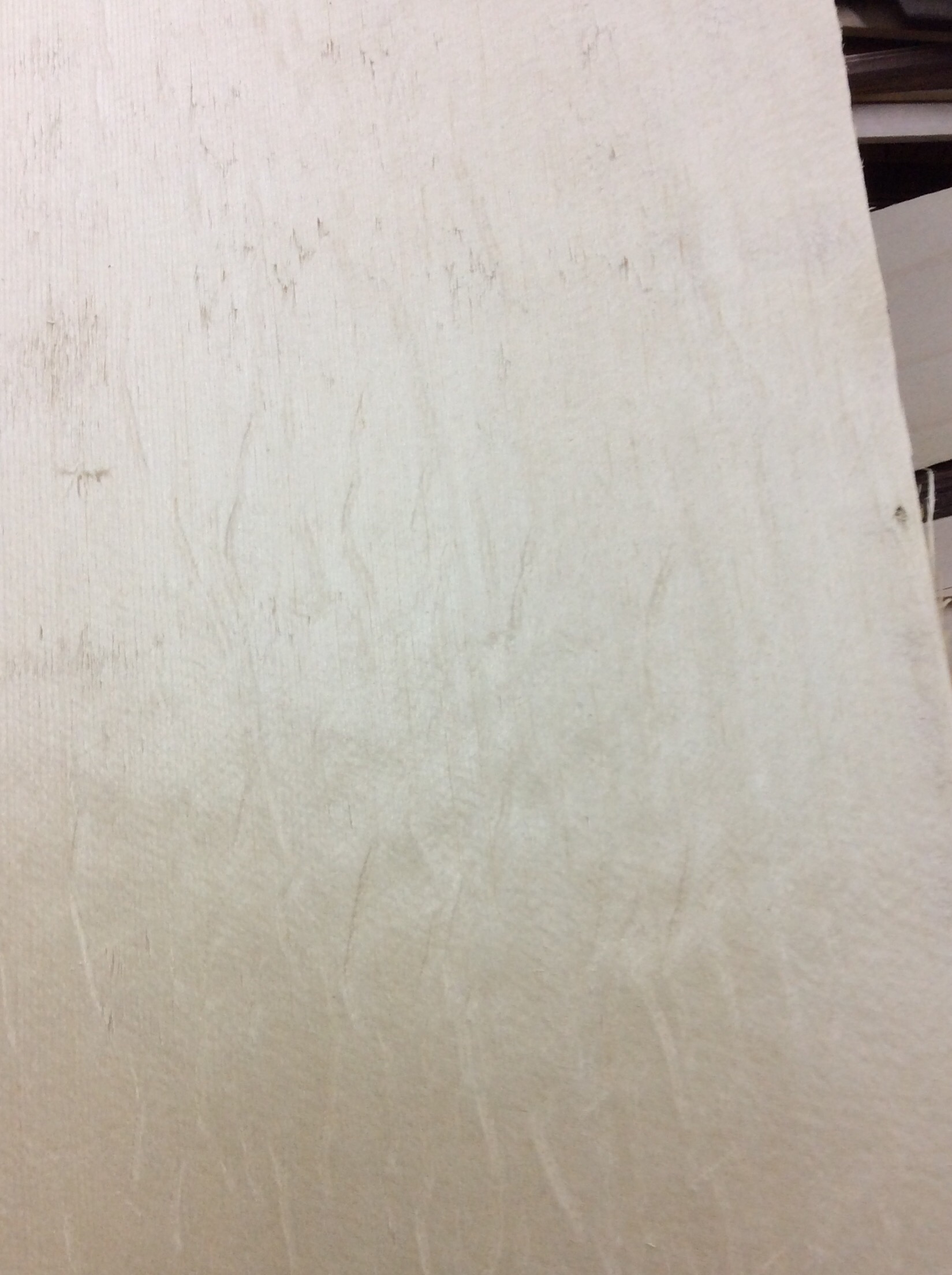
I received a shipment of Engelmann not so long ago from Boltwood Tonewood in Canada. I have chosen to use European spruce almost exclusively and have been lucky enough to have a large supply. However, Iam always interested in quality wood. Canadian forests produce some of the best spruce in the world and Boltwood seems quite well situated to take advantage of this. I got some top grade Engelmann and also some excellent bearclaw. As you can see from the photos the colour is very good and uniform, as is the texture. These particular pieces are also very stiff. I am not much in favour of buying wood sight-unseen but if the price is right and the seller understands your needs it can work out fine.

Small rosette patterns
My teacher Rolf Eichinger used a technique which I think was new in rosette-making although it was surely used for making wide purfling or decorative strips in other fields.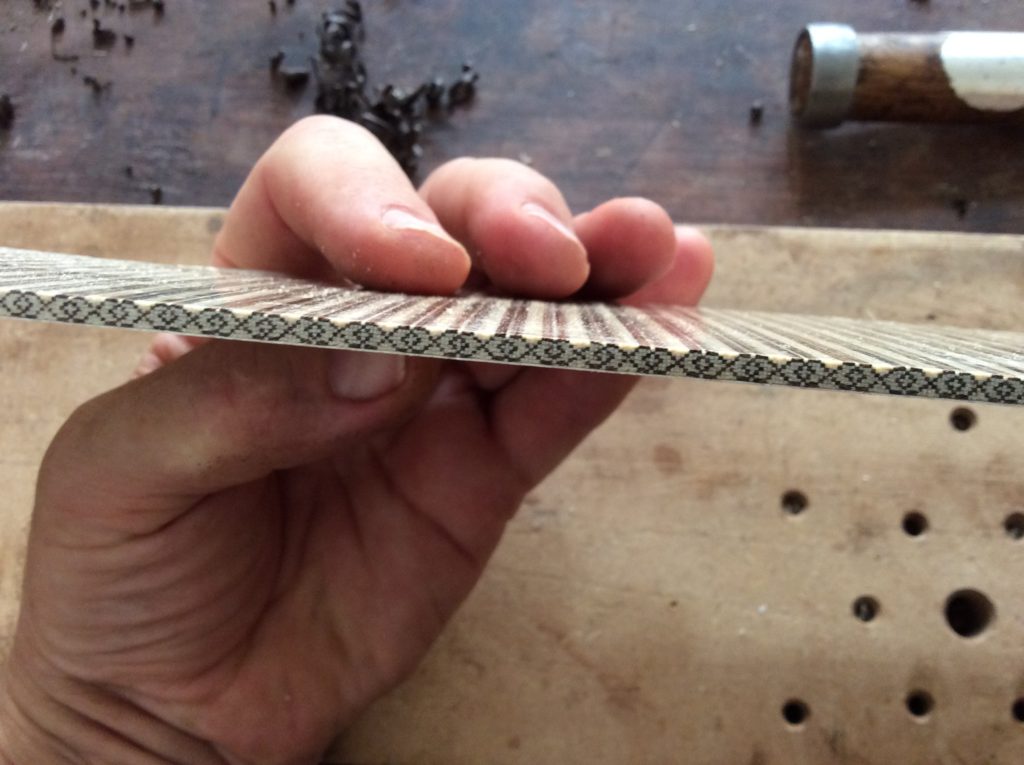 The fact that the “logs” are not glued to each other but are glued to a veneer strip allows them to bend into a circle. There is a limit to how tall a design can be and still bend without breaking. Here is one more picture just for aesthetic value, nothing like a nice sharp plane.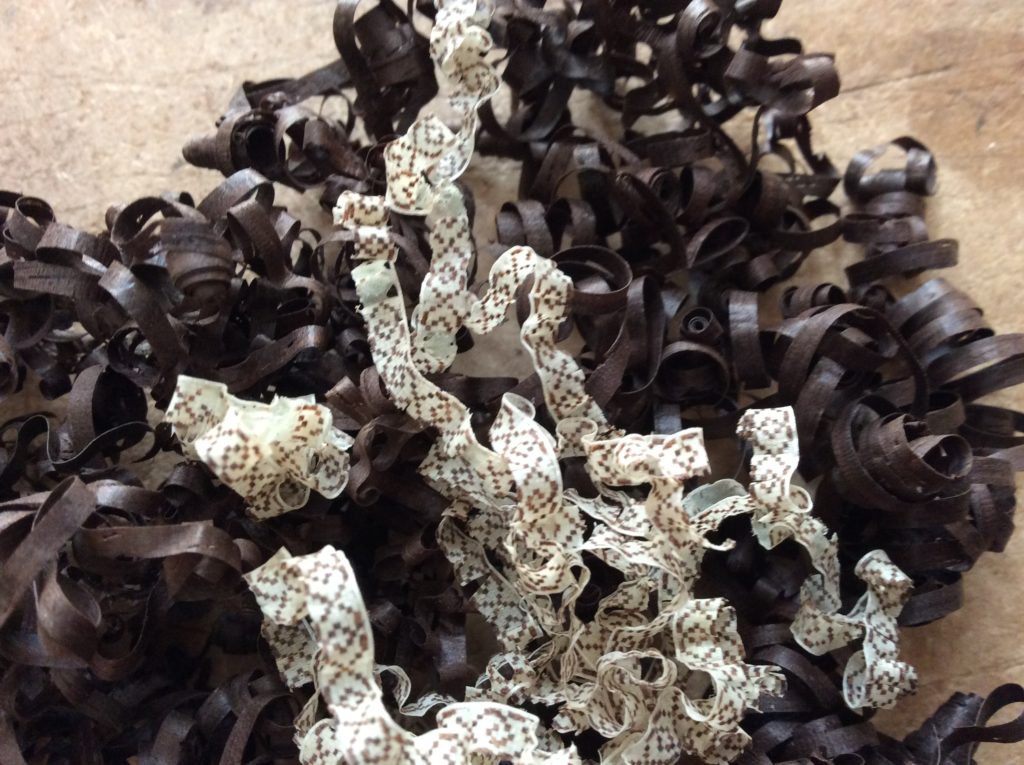
Santos Hernandez
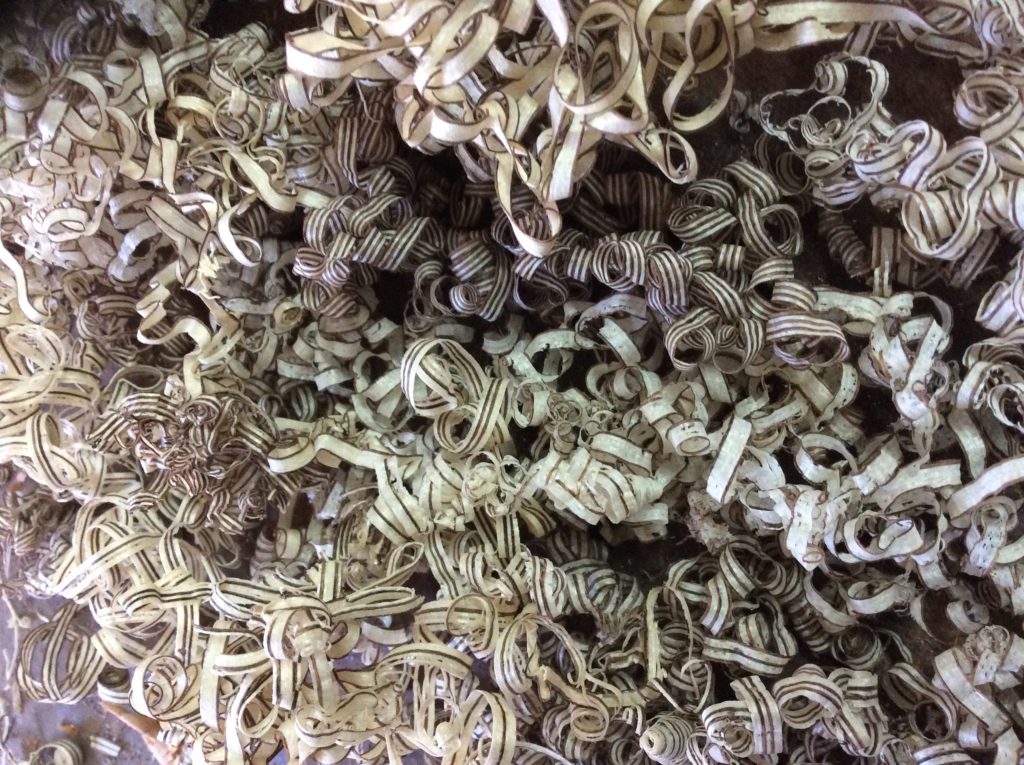
I am making a new rosette, a copy of one by Santos Hernandez which I saw and liked. The process has been shown many times in many different places so I won’t explain it in detail. I decided to post these photos just because I am excited about this rosette and I think you will like it when you finally see it completed.
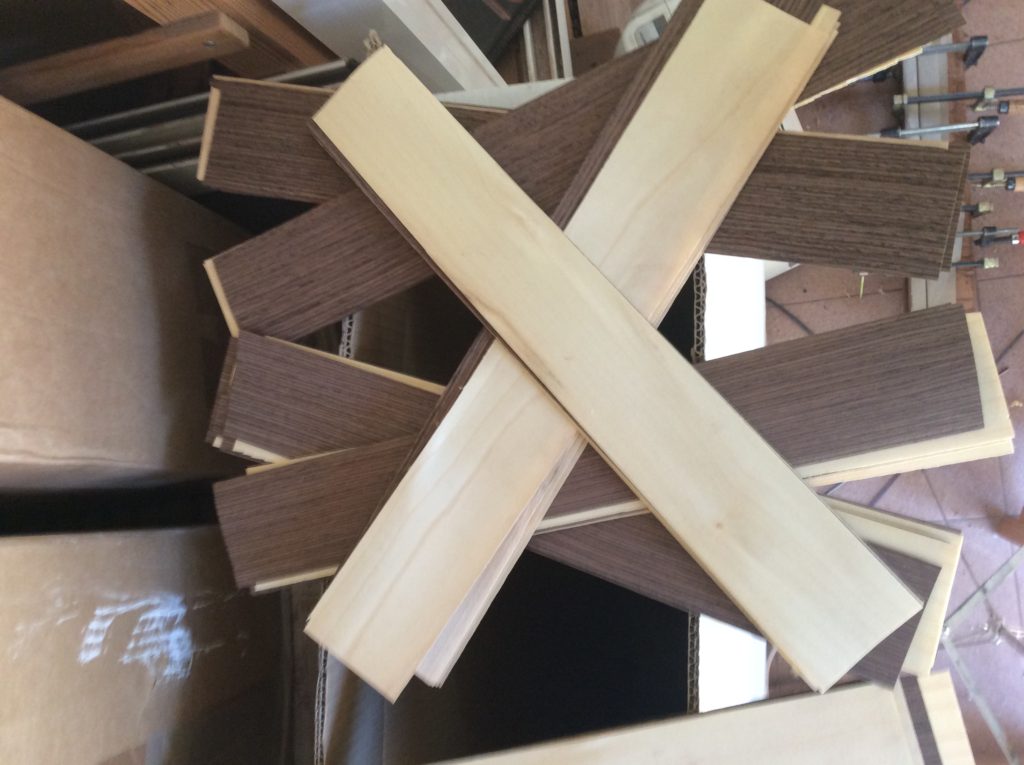
Veneer stacks ready for glueing.
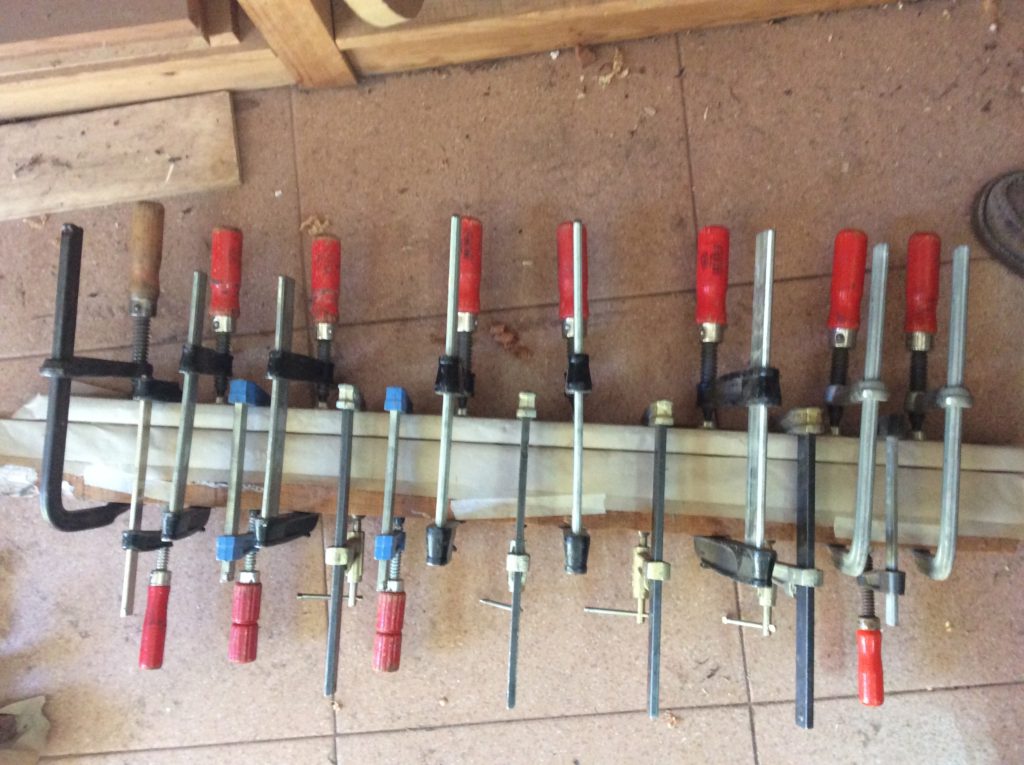
Clamping the glue-up.
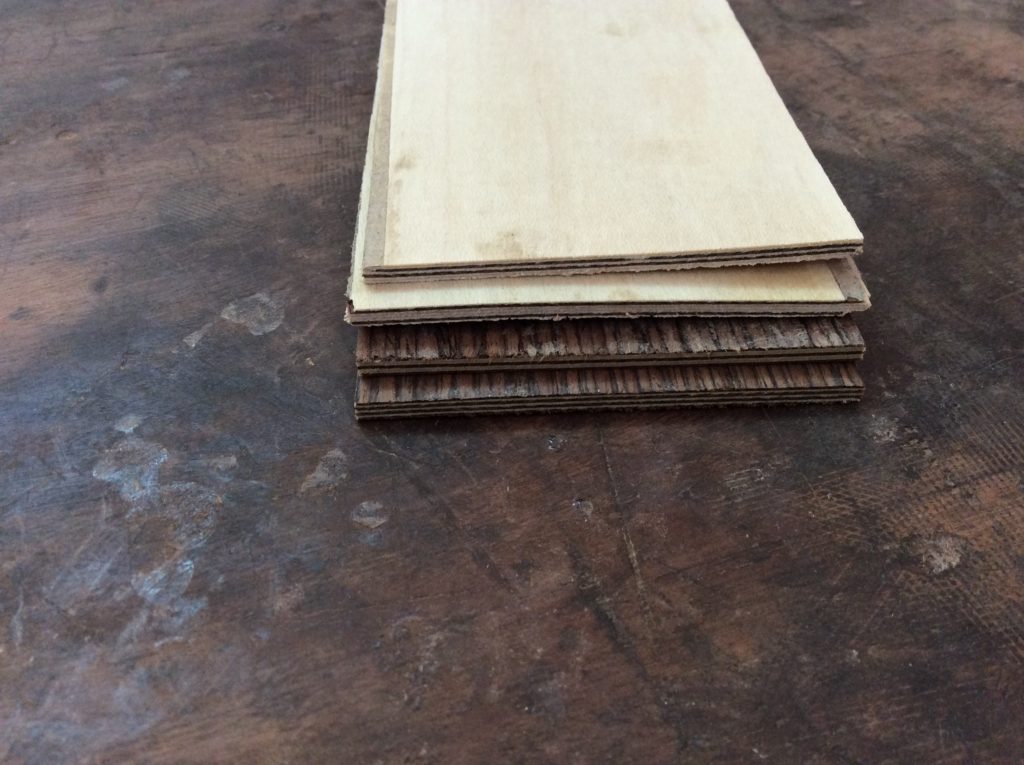
Just before planing and slicing into strips
Abstract
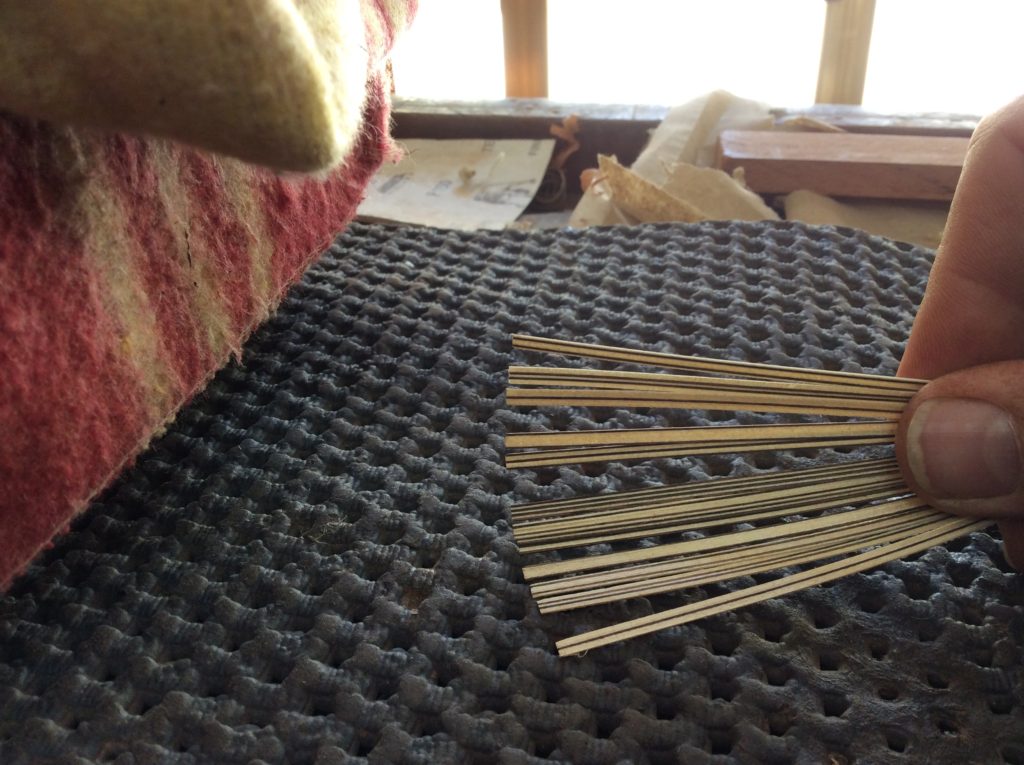
Strips thicknessed to 0.4mm.
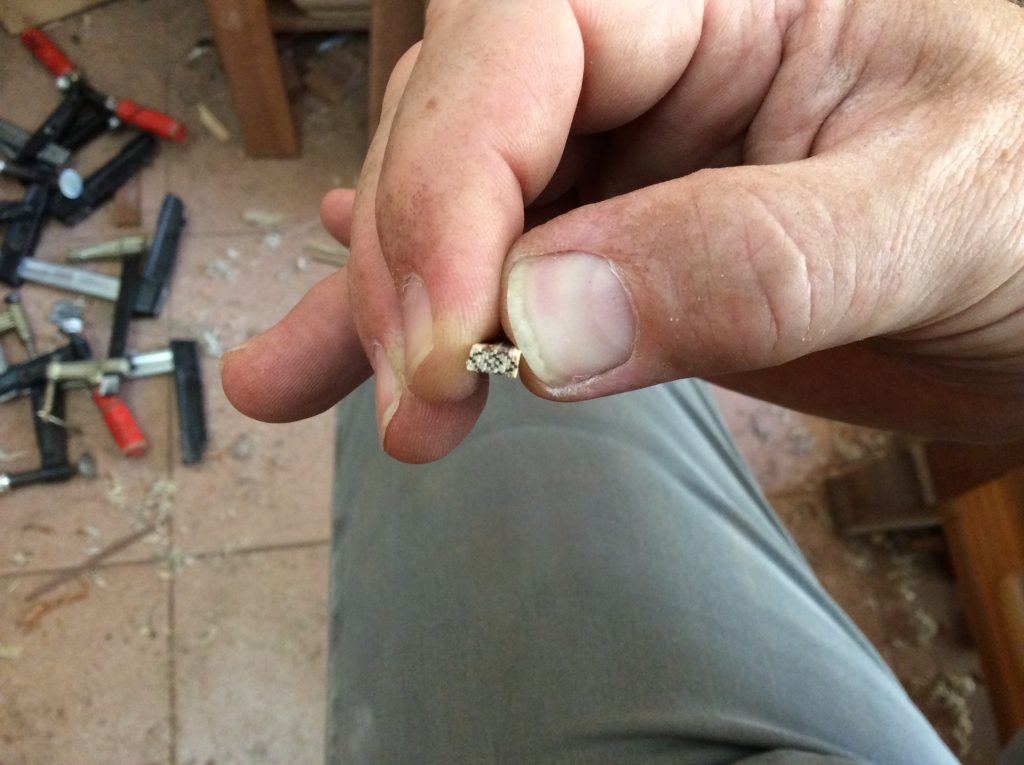
This will show more clearly once it is glued and scraped clean.